


The search landscape is experiencing its most dramatic transformation since Google’s inception. Google’s Search Generative Experience (SGE), now evolved into AI Overviews, isn’t just changing how we search, it’s fundamentally reshaping how websites must optimize for visibility. With AI Overviews appearing in 47% of Google search results and causing click-through rates to plummet by 34.5%, the traditional SEO playbook needs a complete rewrite.

AI Overviews coverage varies dramatically across industries, with healthcare and B2B tech seeing the highest penetration while e-commerce remains largely unaffected
The Seismic Shift: From Blue Links to AI Answers
Gone are the days when ranking #1 guaranteed traffic success. Google now processes over 6.3 million searches per minute, but the way results are presented has changed forever. Instead of the familiar ten blue links, users increasingly encounter AI-generated summaries that answer their questions without requiring a click.
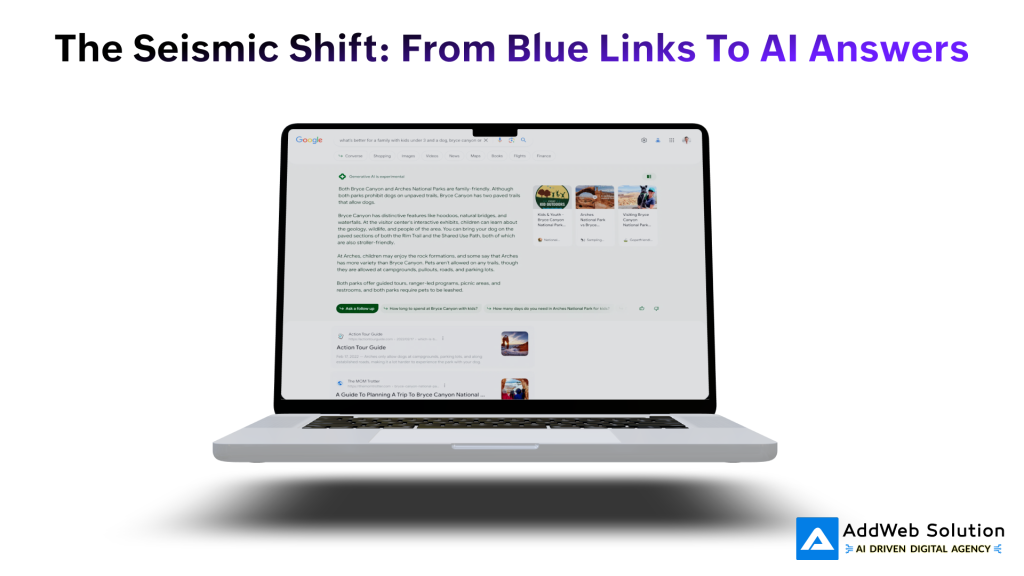
An example of Google’s Search Generative Experience showing an AI-generated answer on a search results page, illustrating how AI enhances search results with summarized information and interactive options
This transformation represents more than a cosmetic change it’s a fundamental shift in how information flows from websites to users. AI Overviews now appear for 58% of informational search queries, directly answering user questions and reducing the need to visit source websites.


The Numbers Don’t Lie: Traffic Impact Across Industries
The impact of AI Overviews varies dramatically across different sectors, creating winners and losers in the new search economy. Our analysis reveals stark differences in how industries are being affected:
Most Impacted Industries:
- Healthcare: 90% of queries now show AI Overviews
- B2B Technology: Coverage jumped from 36% to 70%
- Insurance: Increased from 17% to 63%
Least Affected Sectors:
- Ecommerce: Only 4% of queries trigger AI Overviews
- Finance: Moderate 47% coverage due to YMYL restrictions

AI Overviews have dramatically reduced click-through rates across all search positions, with the top-ranking position experiencing a 34.5% decline in CTR
Real-World Impact Stories
The human cost of this transition is becoming increasingly apparent. The Planet D, a popular travel blog, lost 90% of its traffic in just 90 days after SGE implementation, forcing staff redundancies. Similarly, Mail Online experienced a 56.1% CTR drop on desktop and 48.2% on mobile when AI Overviews appeared, even while maintaining their #1 organic ranking.
Understanding the New Ranking Factors
The AI era has fundamentally altered what Google considers important for rankings. Traditional SEO factors are evolving, with new emphasis on how content serves AI models:
Critical Changes in SEO Priorities

E-A-T (Experience, Expertise, Authoritativeness, Trustworthiness) has become even more critical. Google’s AI models prioritize content from recognized authorities, making brand credibility essential for AI citation.

AI’s role in SEO strategy evolution visualized through key components like content strategy, voice search, local SEO, and data analysis
The New SEO Playbook: Optimizing for AI
Success in the AI era requires a fundamental strategy shift. Here are the essential tactics:
1. Content Structure for AI Consumption
- Write for conversational queries: Optimize for how people naturally ask questions to AI
- Use clear, hierarchical structure: AI models favor well-organized content with proper headings
- Include direct answers: Provide concise answers within the first 100 words
- Add FAQ sections: Structure common questions and answers using schema markup
2. Technical Optimization for AI Models
Schema Markup Implementation is crucial. Key schema types include:
- FAQ Schema for question-and-answer content
- How-to Schema for instructional content
- Article Schema for news and blog content
- Local Business Schema for location-based services
3. Authority and Trust Building
AI models heavily weigh authoritative sources. Focus on:
- Expert author bylines with clear credentials
- Citation of authoritative sources within content
- Original research and data that others reference
- Consistent publishing of high-quality content
Strategic Responses to AI Overviews
For Content Publishers
Diversify Traffic Sources: Don’t rely solely on Google organic traffic. Build:
- Direct traffic through email marketing and brand awareness
- Social media presence on multiple platforms
- Newsletter subscriptions for direct audience access
- Partnership opportunities with other publishers
For E-commerce Sites
Good news: Ecommerce queries show only 4% AI Overview coverage, making traditional SEO still highly effective for product searches. Focus on:
- Product schema markup for rich snippets
- Local SEO optimization for “near me” searches
- Visual search optimization for image-based queries
For Service Businesses
With B2B tech seeing 70% AI Overview coverage, service businesses must:
- Create authoritative thought leadership content
- Optimize for “how to” and “what is” queries
- Build local authority through Google My Business optimization
The Rise of Alternative Search Platforms
While Google maintains 89.57% market share globally, AI-powered alternatives are gaining ground:
- ChatGPT Search: Growing rapidly with unique conversational interface
- Perplexity AI: Focusing on research and fact-checking
- Microsoft Copilot: Integrated with Office ecosystem
29% of Gen Z users now perform searches on AI platforms like ChatGPT, indicating a generational shift in search behavior.
Future-Proofing Your SEO Strategy
Essential Action Items
- Audit current content for AI-readability and user intent alignment
- Implement comprehensive schema markup across all content types
- Create FAQ sections answering common customer questions
- Build topical authority through expert content clusters
- Monitor AI citation performance using tools like Search Console
- Develop alternative traffic channels beyond organic search
Metrics That Matter in the AI Era
Traditional ranking metrics are losing relevance. Focus on:
- AI Overview citations and mentions
- Brand search volume and direct traffic
- User engagement signals like time on page and return visits
- Conversion rates from remaining organic traffic
Tools and Resources for AI-Era SEO
Several platforms now offer AI-specific SEO tracking:
- Peec.ai: Monitors brand mentions in AI results
- Advanced Web Rankings: Google AI Overview tracking
- BrightEdge: AI Overview coverage analysis
- Search Console: Basic AI Overview performance data
Future-Proof Your SEO Strategy in the Age of AI

Pooja Upadhyay
Director Of People Operations & Client Relations
Looking Ahead: The Future of Search
Predictions for 2025-2026:
- AI Overviews will expand to 75% of informational queries
- Voice search optimization will become critical for AI platforms
- Visual and multimodal search will gain prominence
- Traditional SERPs may evolve into API-like interfaces
The transformation isn’t slowing down. 75% of organizations expect to use AI chatbots as primary customer service channels by 2027, indicating this shift extends far beyond search.
Conclusion: Adapt or Fall Behind
The SEO landscape has fundamentally changed, but opportunity still exists for those willing to adapt. While AI Overviews have reduced traditional organic traffic by 15-25% industry-wide, they’ve also created new avenues for visibility and authority building.
Success in the AI era requires:
- Understanding how AI models consume and cite content
- Building genuine expertise and authority in your niche
- Optimizing for user intent rather than just keywords
- Diversifying beyond Google for sustainable traffic growth
The businesses thriving in this new landscape aren’t fighting the AI revolution, they’re embracing it, creating content that serves both human users and AI models effectively.
The future of SEO isn’t about gaming algorithms; it’s about becoming the authoritative source that AI systems naturally want to cite and recommend. Those who master this approach will find themselves not just surviving the AI transformation, but dominating it.
Ready to future-proof your SEO strategy? Start by auditing your content for AI-readability and implementing structured data markup across your most important pages. The AI era rewards preparation, authority, and user-focused optimization above all else.
