


In the ever-evolving digital landscape, content creators, artists, and businesses constantly strive to connect with their audience and understand their reactions. The sheer volume of feedback, however, can be overwhelming. How do you sift through countless comments, reviews, and social media mentions to truly grasp what your audience feels? The answer lies in combining robust web development frameworks like MERN (MongoDB, Express.js, React.js, Node.js) with the power of Sentiment Analysis.
This blog post will delve into how creators can leverage MERN to build platforms that integrate sentiment analysis, providing invaluable insights into audience feedback. We’ll explore the technical underpinnings, practical applications, and the immense benefits this synergy offers.
The Creator’s Conundrum: Drowning in Data
Imagine you’ve just launched a new product, published a compelling article, or released a captivating video. The feedback starts pouring in: comments on your website, replies on Twitter, reviews on e-commerce platforms, and messages on forums. While this engagement is fantastic, manually analyzing each piece of feedback for its emotional tone, key themes, and overall sentiment is a Herculean task.
Challenges Faced by Creators:
- Volume: The sheer quantity of data makes manual analysis impractical.
- Subjectivity: Different individuals interpret feedback differently.
- Time-Consuming: Manually categorizing and understanding sentiment is a massive time sink.
- Lack of Actionable Insights: Without a structured approach, it’s hard to extract actionable insights from raw feedback.
This is where technology steps in.
Unpacking MERN: The Full-Stack Powerhouse
Before we dive into sentiment analysis, let’s briefly understand the MERN stack. It’s a collection of powerful, open-source JavaScript-based technologies that provide an end-to-end framework for building dynamic web applications.
- MongoDB: A NoSQL database that stores data in flexible, JSON-like documents. Ideal for handling large volumes of unstructured or semi-structured data, which is common with user feedback.
- Express.js: A minimalist web framework for Node.js, providing robust features for web and mobile applications. It handles routing, middleware, and API endpoints, forming the backend of your application.
- React.js: A JavaScript library for building user interfaces. React’s component-based architecture makes it efficient for developing interactive and responsive front-end applications, providing a seamless experience for creators to view their sentiment data.
- Node.js: A JavaScript runtime built on Chrome’s V8 JavaScript engine. It allows developers to run JavaScript on the server side, enabling a unified JavaScript codebase across the entire stack.
Why MERN for Creators?
The MERN stack offers several advantages for creators looking to build their own feedback analysis platforms:
- Full-Stack JavaScript: A single language for both frontend and backend development reduces context switching and speeds up development.
- Scalability: MERN components are designed for scalability, capable of handling growing user bases and increasing data volumes.
- Flexibility: The NoSQL nature of MongoDB and the flexibility of JavaScript allow for rapid iteration and adaptation to evolving needs.
- Community Support: A large and active community means abundant resources, libraries, and solutions to common problems.
Diving into Sentiment Analysis: Understanding the “What” and “Why”
Sentiment Analysis, also known as opinion mining, is a natural language processing (NLP) technique used to determine the emotional tone behind a piece of text. It aims to categorize opinions expressed in a text as positive, negative, or neutral. More advanced sentiment analysis can even identify specific emotions like joy, anger, sadness, or surprise.
How Sentiment Analysis Works (Simplified):
- Text Preprocessing: Raw text is cleaned by removing irrelevant characters, stop words (like “the,” “a,” “is”), and converting text to a consistent format (e.g., lowercase).
- Tokenization: The text is broken down into individual words or phrases (tokens).
- Feature Extraction: Relevant features are extracted from the tokens. This might involve using lexicons (lists of words with associated sentiment scores) or advanced machine learning models.
- Classification: Based on the extracted features, the text is classified into a sentiment category (positive, negative, neutral). Machine learning algorithms (e.g., Naive Bayes, Support Vector Machines, deep learning models) are often trained on large datasets of labeled text to perform this classification.
Why is Sentiment Analysis Crucial for Creators?

Integrating MERN with Sentiment Analysis: A Practical Approach
Building a MERN application to perform sentiment analysis on audience feedback involves several key steps.
1. Data Ingestion (Backend – Node.js/Express.js & MongoDB):
Your MERN application needs a way to collect feedback. This could be from:
- Direct Comments: Users leaving comments on your MERN-powered blog or product page.
- Social Media APIs: Integrating with Twitter, Facebook, YouTube, etc., to pull mentions or comments (requires API keys and adherence to platform policies).
- Review Platforms: Scraping or using APIs from sites like Yelp, Amazon, or app stores.
- Forms: User submission forms designed to gather specific feedback.
The Express.js backend will handle incoming data requests and store this raw feedback in MongoDB. MongoDB’s flexible schema is perfect for storing diverse feedback types.
Data Flow Example:
User Feedback -> Express.js API Endpoint -> MongoDB Database
2. Sentiment Analysis Processing (Backend – Node.js/Express.js):
This is where the magic happens. You’ll integrate a sentiment analysis library or API into your Node.js backend.
Popular Sentiment Analysis Libraries/APIs for Node.js:
- VADER (Valence Aware Dictionary and sEntiment Reasoner): A lexicon and rule-based sentiment analysis tool specifically attuned to sentiments expressed in social media. It’s often implemented in Python but can be used via child processes or web APIs from Node.js.
- Natural Language Toolkit (NLTK): A comprehensive NLP library for Python. Similar to VADER, it can be integrated through a Python microservice that your Node.js backend communicates with.
- Google Cloud Natural Language API: A powerful cloud-based API that offers advanced sentiment analysis, entity recognition, and syntax analysis. This is an excellent choice for robust, scalable solutions.
- AWS Comprehend: Amazon’s NLP service, offering similar capabilities to Google’s, including sentiment analysis.
- Azure Cognitive Services (Text Analytics): Microsoft’s offering for text analysis, providing sentiment detection.
Your Express.js routes will receive the raw text, pass it to the chosen sentiment analysis tool, and then receive the sentiment score/label back. This enriched data (original text + sentiment) is then stored or updated in MongoDB.


Processing Flow Example:
Raw Feedback (from MongoDB) -> Node.js Service -> Sentiment Analysis Tool -> Sentiment Score/Label -> Update in MongoDB
3. Data Visualization (Frontend – React.js):
The power of sentiment analysis is truly unleashed when the data is presented visually. React.js is ideal for building dynamic dashboards that display sentiment trends, distributions, and key insights.
Visualizations You Can Create with React:
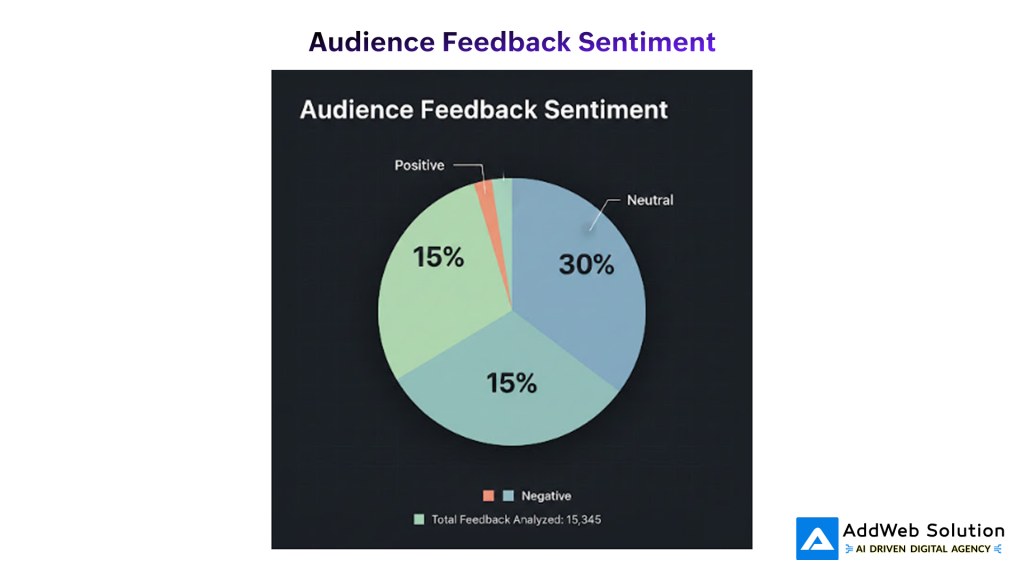
- Sentiment Distribution Pie Chart: Shows the percentage of positive, negative, and neutral feedback.
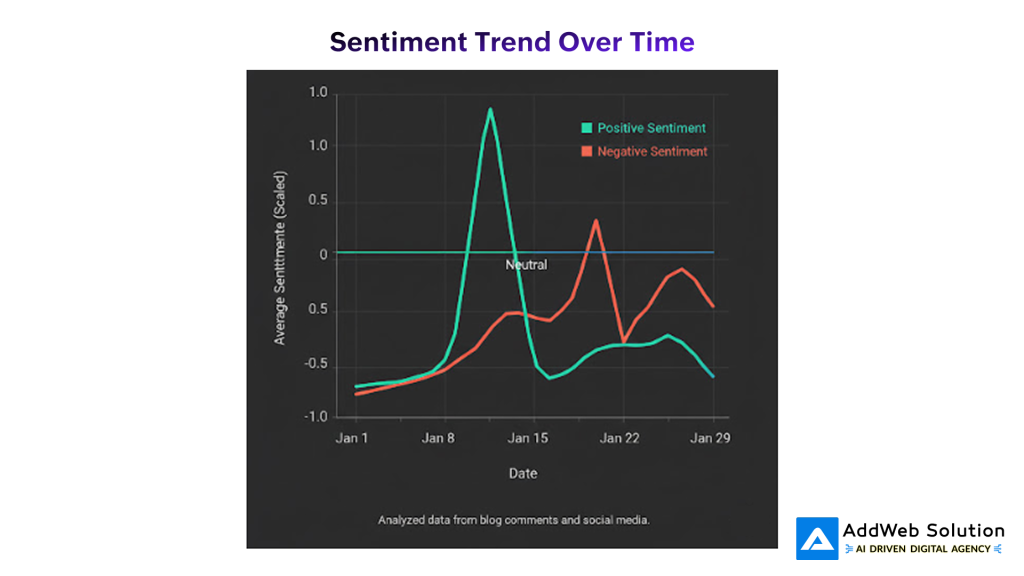
- Sentiment Over Time Line Graph: Tracks sentiment trends, helping to identify reactions to specific events or content releases.
- Word Clouds: Visualize frequently occurring words in positive or negative feedback.
- Top Positive/Negative Comments: Display actual feedback snippets categorized by their sentiment, allowing creators to drill down into specific examples.
- Sentiment Score Histograms: Show the distribution of sentiment scores across all feedback.
React will fetch the processed sentiment data from your Express.js API and render these visualizations using charting libraries like Chart.js, Recharts, or Nivo.
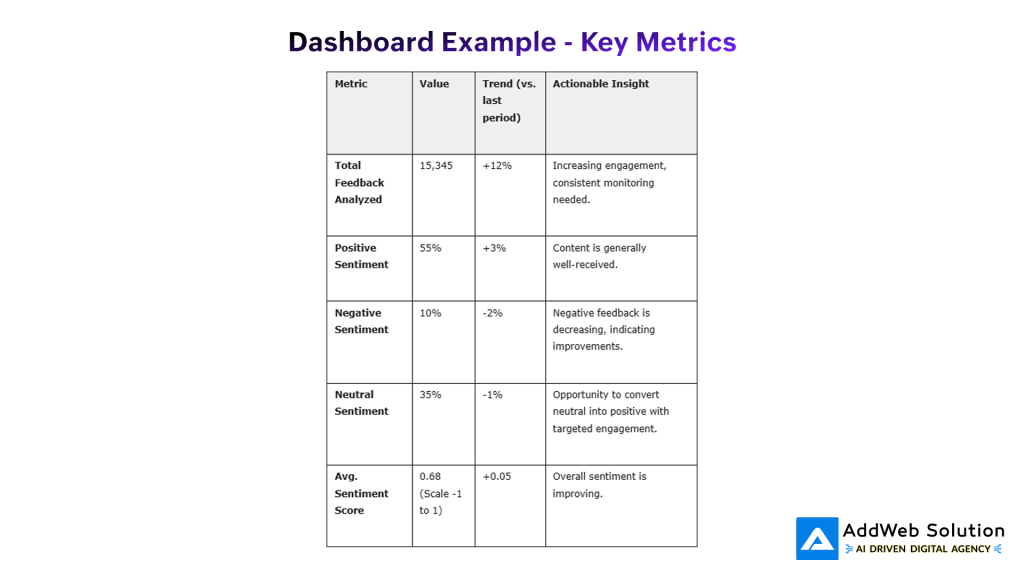
Dashboard Example – Key Metrics
Real-World Applications for Creators
The combination of MERN and Sentiment Analysis can revolutionize how creators interact with their audience:
- Bloggers & Publishers: Analyze comments on articles to understand reader reception, identify popular topics, and refine writing style.
- YouTubers & Podcasters: Process video comments and podcast reviews to gauge audience enjoyment, identify moments of engagement or disinterest, and inform future content planning. Settling on youtube channel name ideas before launch means the channel you are measuring stays consistent, so historical sentiment data is comparable over time.
- E-commerce Store Owners: Analyze product reviews to understand customer satisfaction, identify product strengths and weaknesses, and improve product descriptions or features.
- Software Developers: Process user reviews and bug reports to prioritize features, understand user frustrations, and improve user experience.
- Artists & Musicians: Gauge reactions to new releases, album art, or performances to connect with fans and understand emotional impact.
- Online Course Creators: Analyze feedback on modules or lessons to identify areas where students struggle or excel, improving course content and delivery.
Challenges and Considerations
While powerful, implementing sentiment analysis isn’t without its challenges:
- Accuracy: Sentiment analysis models aren’t always perfect, especially with sarcasm, slang, or nuanced language. Context is crucial.
- Domain Specificity: A general sentiment model might not perform well in specific domains (e.g., medical jargon, technical reviews).
- Multilingual Support: Analyzing sentiment in multiple languages requires specialized models.
- Data Privacy: Ensure compliance with data protection regulations (e.g., GDPR, CCPA) when collecting and analyzing user feedback.
- Computational Resources: Analyzing massive datasets can be computationally intensive, requiring efficient infrastructure.
- Cost of APIs: Using cloud-based NLP APIs can incur costs, especially at scale.
The Future: Beyond Basic Sentiment
The field of NLP and sentiment analysis is constantly evolving. Future MERN applications for creators could integrate:
- Aspect-Based Sentiment Analysis: Identifying the sentiment towards specific aspects or features (e.g., “The camera quality is excellent, but the battery life is terrible”).
- Emotion Detection: Going beyond positive/negative to detect specific emotions like anger, joy, fear, or surprise.
- Topic Modeling: Automatically identifying key themes and topics discussed in feedback, combined with sentiment for each topic.
- Personalized Feedback Loops: Using sentiment data to provide personalized recommendations or responses to individual users.
Dive into MERN and sentiment analytics to understand your audience, boost engagement, and tailor your creations with data-driven insights.

Pooja Upadhyay
Director Of People Operations & Client Relations
Conclusion
For creators in today’s digital age, understanding audience feedback is not just beneficial; it’s essential for growth and relevance. The MERN stack provides a robust and scalable foundation for building custom platforms, while sentiment analysis offers the intelligence to decipher the emotional pulse of your audience. By combining these powerful tools, creators can move beyond guesswork, make data-driven decisions, and cultivate a deeper, more meaningful connection with their community.
Invest in understanding your audience, and watch your creations flourish.
Ready to transform how you understand your audience? AddWeb Solution specializes in building custom MERN stack applications that integrate advanced data analytics and sentiment analysis. Contact us today for a consultation and let’s bring your vision to life!
References:
1. https://www.mongodb.com/docs/
4. https://nodejs.org/en/docs/
5. https://vadersentiment.readthedocs.io/en/latest/
6. https://cloud.google.com/natural-language/docs
