


Are today’s CTOs losing sleep over compliance deadlines and cybersecurity risks? You’re not alone. As digital transformation sweeps across regulated industries from finance to healthcare, technical leaders are under pressure to deliver platforms that meet global compliance mandates—without compromising agility or user experience. In this evolving landscape, there’s one open-source platform quietly winning the trust of CTOs facing the strictest standards: Drupal. But what makes Drupal the go-to for compliance-heavy projects in 2025? Let’s unravel the real data, surprising trends, and expert insights.
Why Secure Digital Platforms Matter in 2025
2025 is shaping up as the year of regulatory shake-ups—AI and data privacy laws (EU AI Act, DORA), stricter enforcement of GDPR, and a surge in digital operational resilience frameworks have raised the bar for compliance. CTOs must now design platforms that withstand audits, support continuous monitoring, and document every key activity. Enterprise threats, from supply-chain hacks to advanced ransomware, mean platforms require layered defense, rapid patch cycles, and audit trails out of the box.
Security isn’t just a technical checkbox; it’s the backbone of digital trust. For banks, hospitals, universities, and governments, choosing the right CMS can literally be the difference between regulatory peace of mind and headline-making data breaches.
Drupal in Real-World Compliance Projects
Drupal’s reputation for security isn’t just hype—the stats back it up. As of 2025, Drupal powers 71% of all government CMS sites and is the backbone of high-compliance portals for global giants like Tesla, Pfizer, and the Australian Government.
Drupal’s compliance toolkit covers GDPR, PCI DSS, IRAP, and industry-specific standards like HIPAA for healthcare and SOC 2 for financial services. Features like audit trail logging, granular permissions, and dedicated security advisory teams make these deployments robust yet agile.
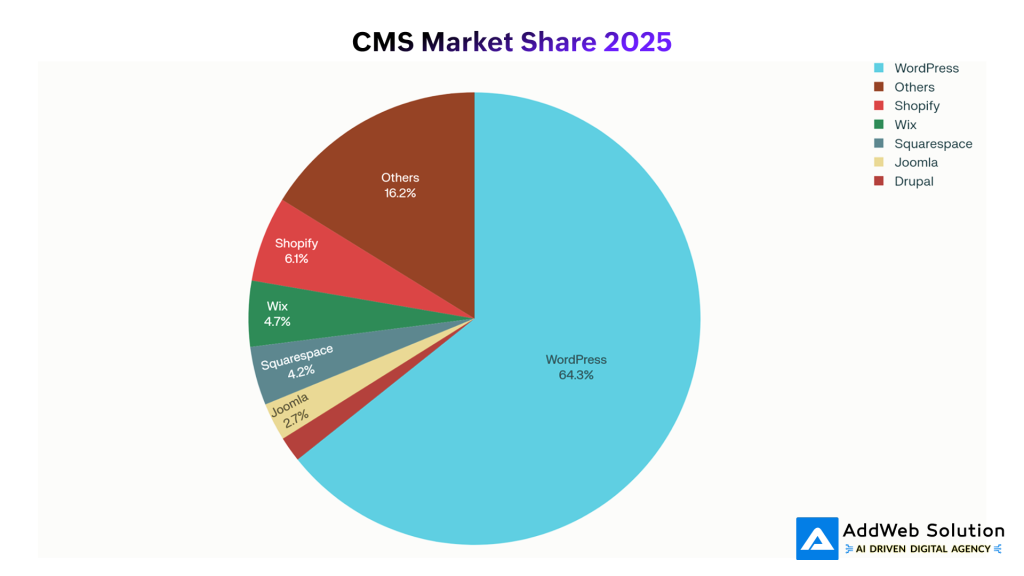
2025 CMS Market Share by Platform


Comparing Security and Compliance for Leading CMSs
Choosing a CMS for regulated digital projects isn’t about popularity – it’s about compliance, security governance, and architectural discipline. This is where Drupal’s “secure by design” foundation stands apart from WordPress and Joomla.
Strong Security at the Core
Drupal ships with enterprise-grade security controls – granular roles, strict access policies, CSRF protection, database abstraction, and auto-escaping templates.
WordPress and Joomla rely far more on plugins, increasing the risk surface.
Backed by a Dedicated Security Team
Drupal has a global security team continuously auditing core and modules, issuing advisories, and enforcing coding standards.
WordPress’s scale is huge, but plugin vulnerabilities remain its biggest weakness.
Built for Compliance
Regulated industries need audit trails, workflow governance, multisite control, and privacy-ready architectures.
Drupal provides these natively; other CMSs require multiple extensions and third-party patches.
Predictable Update & Governance Model
Drupal’s structured release cycle and LTS roadmap make it safer for long-term, compliance-heavy operations.
Enterprise Proven
Governments, financial institutions, and large enterprises trust Drupal not for trends – but for its security maturity and regulatory readiness.

CMS Security & Compliance Feature Comparison (2025)
Drupal’s Adoption in Regulated Industries
The shift toward digital operational resilience is visible in sector data: Most Drupal implementations happen in industries where regulations are strict. A whopping 34% of government digital portals use Drupal, followed by 22% in higher education, 18% in nonprofits, and 14% in healthcare. This trend is accelerating as auditability and role-based access controls become business essentials.
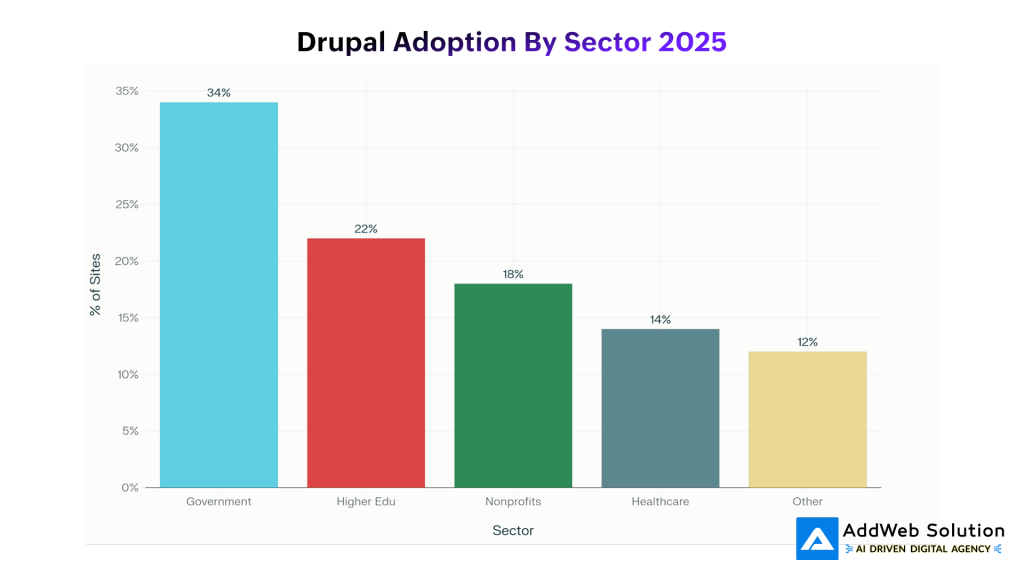
Sector-wise Adoption of Drupal (2025)
Conclusion
What’s the bottom line? CTOs steering compliance-heavy projects in 2025 need platforms that don’t flinch under audit, scale with business growth, and adapt rapidly as new laws and threats emerge. Drupal is trusted by enterprise and public sector innovators for its mature security governance, granular access control, and unmatched auditability. Partnering with a team like AddWeb Solution brings not only deep technical skill but “first-time-right” execution that turns compliance from a cost center into a strategic advantage.
For regulated businesses aiming to stay ahead in digital transformation, Drupal isn’t just a choice – it’s peace of mind with a competitive edge.
Turn Drupal into a complete digital experience platform

Pooja Upadhyay
Director Of People Operations & Client Relations
Source URLs
- https://www.drupal.org/project/usage/drupal
- https://electroiq.com/stats/drupal-statistics/
- https://www.globalmediainsight.com/blog/drupal-statistics/
- https://blog.sparkfabrik.com/en/drupal-cms-security-compliace-regulated-sector
- https://blog.sparkfabrik.com/en/drupal-cms-a-comparison-with-the-main-alternatives
- https://www.coherentmi.com/industry-reports/secure-access-service-edge-market
- https://www.cognitivemarketresearch.com/operating-systems-market-report
