
AI Mobile App Development That Builds Smarter With Every Interaction
Most AI mobile apps are intelligent at launch and irrelevant within a year. The model was trained once, the pipeline was never built to retrain, and the behavioural data your users generate every day feeds nothing useful. We build mobile apps where the intelligence compounds, so the app in month 18 is measurably smarter than the one users downloaded on launch day.









Why Enterprise Teams Come to Us
The Real Reasons AI Mobile Projects Stall Before They Scale
These are not hypothetical technical risks. They are the specific failure patterns we see in enterprise AI mobile app projects every quarter, and the exact problems our practice is built to prevent.

AI bolted on after architecture is locked
Most teams decide on their data model, API structure, and infrastructure before considering AI requirements. When machine learning gets added later, it forces compromises that permanently cap the intelligence ceiling of the product. Every AI capability becomes a workaround instead of a native feature.

On-device AI performance killing user retention
Enterprise apps that run AI inference in the cloud create latency that users feel immediately. A 3-second delay for a product recommendation or a smart search result is enough to drop session length by 40%. On-device model optimization is not optional for consumer-grade intelligent apps, it is the baseline.

Personalization that does not actually personalize
Rule-based recommendation engines and basic collaborative filtering look like personalization on a slide deck. Real users see through them in two sessions. Without continuous learning pipelines that update models on actual behavioral signals, your personalization layer depreciates in value every week post-launch.

AI model drift destroying product quality over time
A model trained on historical data performs well at launch and progressively worse as user behavior evolves. Without MLOps infrastructure, automated retraining pipelines, and drift monitoring baked into your system design, your intelligent app becomes a liability within 6 to 12 months of shipping.

Integration gaps between AI layer and existing enterprise systems
Your ERP, CRM, and backend data warehouses are where the signal lives. AI mobile apps that cannot connect cleanly to these systems are working with incomplete or stale data. The result is recommendations, predictions, and automations that contradict what your other systems know about the same customer.

Regulatory and data governance exposure from AI features
GDPR, CCPA, and emerging AI-specific regulations require that intelligent systems can explain decisions, honour deletion requests for training data, and disclose automated decision-making to users. Retrofitting compliance into an AI mobile app after launch is expensive. Designing for it from the start is not.
How We Solve It
We Design the AI Architecture Before We Write the First Screen
Our AI mobile app development practice does not separate intelligence from engineering. We embed machine learning engineers, data architects, and mobile platform specialists into a single team from discovery through deployment. The result is an app where AI is structural, not cosmetic.
We have delivered intelligent mobile experiences for enterprise healthcare platforms, B2B field operations tools, consumer retail apps, and fintech products. In every case, the apps we deliver are still improving 18 months after launch because they are built with systems that learn, not features that age.

AI-First Architecture Review
Every system design decision is evaluated against your AI requirements before infrastructure is provisioned.

On-Device Model Optimization
Core ML, TensorFlow Lite, and ONNX models fine-tuned for your target hardware and battery constraints.

Continuous Learning Pipelines
Behavioral data feeds directly into model retraining cycles so the app improves with usage, automatically.

AI Governance and Compliance Layer
Explainability, consent management, and data deletion built into the ML pipeline architecture.

Enterprise System Integration
AI features connect to your ERP, CRM, and analytics stack so intelligence acts on complete, real-time data.

Expert Developers

Web Solution Delivered

Years of Experience
Core Capabilities
AI Mobile App Development Services Built Around Business Outcomes
Every capability we offer is designed to produce a measurable commercial result.
- Generative AI Integration
- Natural Language Processing and Conversational AI
- Computer Vision and Image Intelligence
- AI Personalization Engine
- Predictive Analytics and Decision Intelligence
- Voice AI and Multimodal Interfaces
- MLOps and Model Lifecycle Management
- On-Device AI and Edge Inference

We integrate large language models, image generation, and multimodal AI into native iOS and Android apps. From in-app copilots to AI-generated content workflows, we build the inference layer, prompt engineering, and fallback handling required for production-grade generative features.
Result: 3 to 5x content output velocity with human-quality results and guardrails.
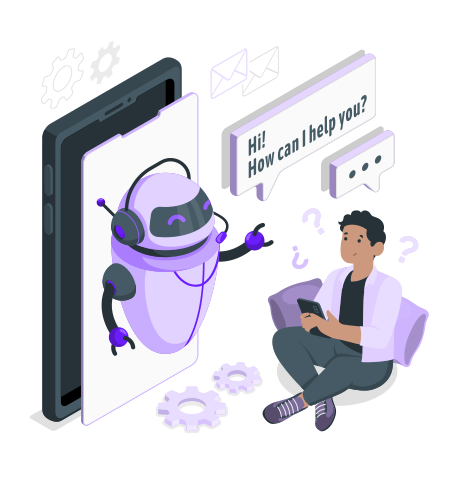
Intent recognition, entity extraction, and dialogue management are built into your mobile product. We design NLP pipelines that understand domain-specific language in healthcare, logistics, finance, and retail, not just generic commands.
Result: 60 to 80% reduction in support ticket volume for apps with AI-powered conversational interfaces.

Real-time object detection, OCR, barcode scanning, and visual search running on-device. We build computer vision features that work in low-light, offline, and high-throughput environments where cloud round-trips are not an option
Result: Field inspection time cut by 65% for enterprise asset management apps using on-device vision.

Recommendation systems, dynamic content ranking, and behaviorally adapted UX that update based on individual usage patterns. We build the data pipeline, feature store, and model serving layer so that personalization actually personalizes
Result: 25 to 45% increase in session engagement and average order value within 90 days.

Churn prediction, demand forecasting, risk scoring, and anomaly detection are built into your mobile workflow. Decision models run on real-time data from your enterprise systems and surface recommendations at the moment of action, not in a dashboard the user has to open separately
Result: 30% improvement in frontline decision accuracy for B2B field service applications.

Wake word detection, speech-to-intent, and voice-first workflows optimized for hands-free enterprise environments. We build voice AI that performs in noisy warehouses, clinical settings, and retail floors, not just quiet offices.
Result: Hands-free task completion reduces error rates by 40% in field operations apps.

CI/CD pipelines for model deployment, A/B testing of model variants, drift detection, automated retraining, and rollback capability. We treat your ML models as software that must be tested, versioned, and monitored with the same rigor as your application code.
Result: Models that maintain accuracy SLAs 18 months post-launch without manual intervention.

Model compression, quantization, and neural engine optimization for Core ML and TensorFlow Lite. We deliver AI features that run locally, preserve user privacy, work offline, and respond in under 200ms without a network call.
Result: Sub-200ms AI feature response with full offline capability and zero cloud inference cost.

Why AddWeb
What Separates an AI Partner from a Mobile Development Agency
Enterprise teams evaluating AI mobile app development companies are usually comparing agencies who build apps with some ML features bolted on. We are a different category. Our practice is organized around AI systems engineering, not mobile development with an AI checkbox.
Our ML engineers join the first stakeholder session. Data requirements, model architecture, and inference strategy are defined before wireframes exist. This single practice change eliminates the most common cause of failed AI mobile projects.
We have shipped intelligent apps in healthcare, retail, logistics, fintech, and field services. We know what fails in production that worked in staging, and we design against those failure modes from the start.
Our team holds active certifications across Google Cloud AI, AWS Machine Learning Specialty, Apple Core ML, TensorFlow, and PyTorch. We are not generalists who read documentation before each project.
We scope engagements against measurable outcomes: accuracy thresholds, latency targets, engagement lift, and automation rates. Milestone reviews are tied to these numbers, not to Figma screens or feature completion percentages.
Your ML engineer, mobile architect, data engineer, and delivery manager stay on your project for the full engagement. The person who designed your model architecture is the same person debugging production drift 9 months after launch.
We evaluate every AI capability against your payback period. Sometimes the right answer is a fine-tuned open-source model. Sometimes it is a third-party API. We tell you which, and why, before you spend a dollar on engineering.
Industries and Use Cases
AI Mobile App Development Across Enterprise Sectors
We apply intelligent mobile app development across industries where data richness is high, decision complexity is real, and the ROI of AI compounds over time.
- Retail and Ecommerce
- Healthcare and Clinical Ops
- Fintech and Financial Services
- Logistics and Field Operations
- B2B SaaS and Enterprise Software
- Manufacturing and Industrial IoT

AI-powered visual search, voice reorder, hyper-personalized product feeds, and real-time inventory intelligence. We build the mobile commerce stack that turns behavioral data into revenue, not just analytics reports.
Result: 61% increase in repeat purchase rate for a DTC retail app post-AI personalization launch.

On-device clinical decision support, NLP-powered intake forms, diagnostic image analysis, and patient engagement AI. We build HIPAA-compliant intelligent mobile apps where accuracy, explainability, and offline capability are non-negotiable requirements.
Result: 48% reduction in clinical documentation time for a hospital system mobile app with NLP intake.

Real-time fraud detection, AI underwriting assistance, spending behavior analysis, and predictive cash flow tools. We engineer intelligent financial mobile apps that meet SOC 2, PCI-DSS, and explainable AI requirements simultaneously.
Result: 73% improvement in fraud detection speed for a lending platform mobile app with on-device ML.

Route optimization, computer vision for damage inspection, voice-guided workflows, and predictive maintenance alerts. We build AI mobile apps for the 60% of enterprise employees who work outside an office and need intelligent tools that function without reliable connectivity.
Result: 38% reduction in field inspection time for an asset management app using on-device computer vision.
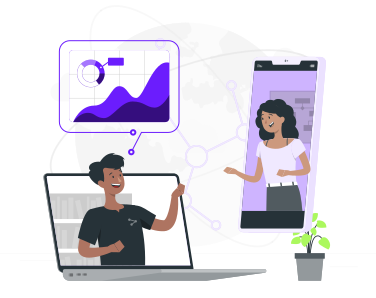
AI copilots embedded into existing workflows, natural language query interfaces for enterprise data, and intelligent notification systems that surface the right insight at the right moment. We add intelligence to your existing platform without a full replatform.
Result: 44% increase in daily active usage for a B2B SaaS app after AI copilot feature launch.
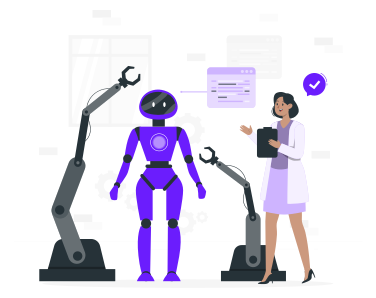
Predictive maintenance AI, quality control vision systems, and operator assistance tools that run on-device in environments with intermittent connectivity. We connect edge AI with your existing SCADA, MES, and ERP systems for a complete operational intelligence layer.
Result: 52% reduction in unplanned downtime for a manufacturing IoT app using predictive maintenance AI.
The AI and Mobile Technologies Behind Every Intelligent App We Build
Platform-agnostic and model-rigorous. We select the right technology for your accuracy requirements, latency constraints, and infrastructure, not for ease of delivery.







Ready to Build Intelligence Into Your Mobile Product

Our AI Development Process
How We Build AI Mobile Apps That Compound in Value Over Time

Need a Team of AI App Development Experts?
Tell us what you’re building and what you’ve already tried. We’ll map the architecture that gets you to production, and identify the failure modes worth designing against before you spend a dollar on engineering.
Risk-free 15 Days Trial


+91-903-317-7471
Our Mobile App Development Portfolio
No matter whether you choose us for a small or large project, we assure you that you will get the best in class customer service and solutions.
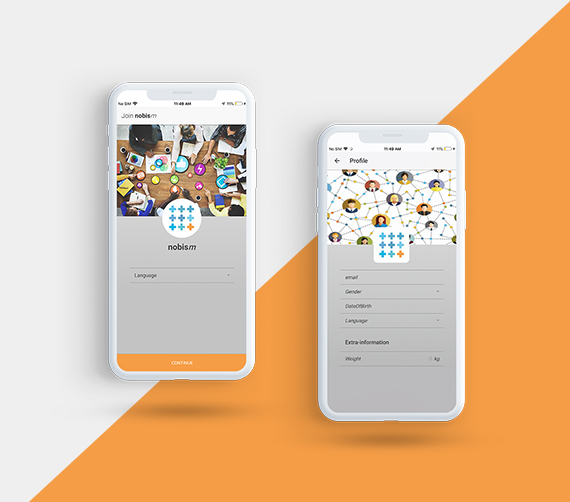
Nobism
Nobism is an arrangement by sufferers of Cluster headache getting active to work on their solutions as a community…
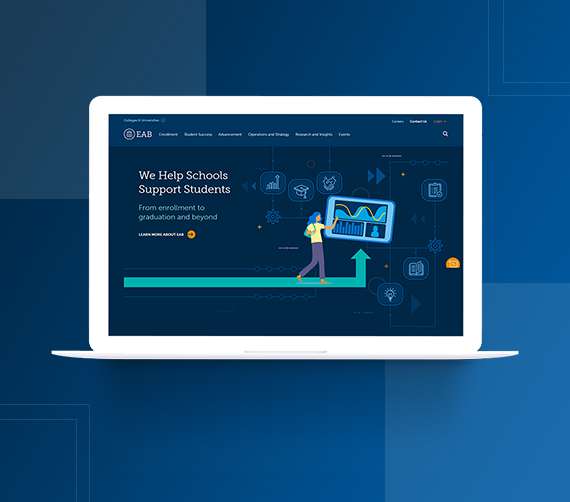
EAB
EAB is a US-based client and its main concern was to get features’ development and add an expert’s portfolio…
Frequently Asked Questions
What Enterprise Teams Ask Before Starting an AI Mobile App Project
AI mobile app development is the practice of designing and building mobile applications where machine learning, natural language processing, or computer vision capabilities are core to the product architecture, not added as features after the app is built. The difference is structural. In standard mobile development, the engineering team designs the app and then asks how to add intelligence. In AI mobile app development, the model requirements, data pipelines, and inference architecture are defined first, and the mobile application is built around them.
On-device AI means the machine learning model runs directly on the user’s phone using the device’s neural processing unit, rather than sending data to a cloud server and waiting for a response. This matters for three reasons. First, latency drops from hundreds of milliseconds to under 200ms, which users feel immediately. Second, sensitive user data never leaves the device, which is critical for healthcare, finance, and HR applications. Third, the app continues to function in areas without reliable internet, which is essential for field operations and logistics use cases.
A production AI mobile app with a single core intelligence feature typically takes 16 to 24 weeks from discovery to launch. Apps with multiple AI capabilities, complex enterprise integrations, or on-device model optimization requirements run 24 to 36 weeks. The additional time compared to standard mobile development is invested in data pipeline setup, model training, accuracy validation, and MLOps infrastructure. This upfront investment is what enables the app to keep improving after launch.
The data requirements depend on the specific AI capabilities you want to build. Personalization engines need at least 6 to 12 months of behavioral event data. Predictive models need historical outcome data with clear signal variables. NLP and computer vision features can often use pre-trained foundation models that require only a small amount of domain-specific fine-tuning data. Our discovery process includes a full data audit so we can tell you exactly what you have, what gaps exist, and how to bridge them before we begin engineering.
Model degradation over time is called drift, and it happens because user behavior evolves while the model stays static. We prevent it by building MLOps infrastructure into every engagement. This includes automated drift detection that monitors prediction accuracy against ground truth, triggered retraining pipelines that update the model when accuracy drops below a defined threshold, and A/B testing infrastructure that validates new model versions before they go to all users. The first automated retraining cycle typically runs within 90 days of launch.
Yes, in most cases. We start with a technical audit of your existing app architecture to identify integration points for AI features. For apps built on modern frameworks, we can add AI capabilities through an inference service layer that connects to your existing application without requiring a full rebuild. The main constraint is data access. If your current app does not collect the behavioral signals needed to power the AI feature, we may need to add lightweight event tracking before a meaningful model can be trained.
Investment depends on the number of AI capabilities, the complexity of your data infrastructure, and the mobile platforms required. We structure engagements as fixed-price milestone projects with a defined statement of work. We recommend a discovery call so we can assess your specific requirements and provide a realistic budget range within 48 hours. What we can say with certainty is that the cost of retrofitting AI into a mobile app that was not designed for it is consistently 2 to 3 times higher than building with intelligence as a core design constraint from the start.
