


As we move through 2025, the “digital divide” isn’t just a trendy phrase anymore—it’s something that genuinely affects how NGOs grow, operate, and stay relevant. For small and mid-sized nonprofits, going digital used to feel like a nice-to-have. Now, it’s becoming non-negotiable.
The good news? Digital transformation doesn’t mean spending like a global organisation. It’s about starting with clarity, choosing what truly matters, and taking steady, sustainable steps. When you combine the right tools with real stories, real needs, and real priorities, the impact is huge.
This guide breaks things down simply: what actually works, what really matters, and what’s coming next for NGOs that want to truly transform—not just “go digital.”
Why Digital Transformation Now? Real-World Relevance & Impact
Digital transformation isn’t just about using new apps—it’s about rethinking how NGOs work, connect, and create impact. Digitally mature NGOs are already seeing the difference: they’re 4x more likely to meet their mission goals and twice as efficient compared to those sticking to traditional methods. And with India seeing a 37% rise in tech-driven NGO projects in 2024, the question is no longer “Should we go digital?” but “How quickly can we get there?”
Going digital brings real, practical wins:
- Wider reach: Websites, apps, and social media help NGOs break location barriers and tap into global donors.
- More trust: Real-time dashboards and transparent reporting make donors confident about where their money goes.
- Better efficiency: Tools like cloud storage and automated tracking let teams save time and focus on actual fieldwork.
And this isn’t just theory. NGOs working with foundations like Koita have used simple digital tools – apps, dashboards, automation—to lift school attendance, reduce dropouts, and deliver healthcare to millions, all while cutting overheads within just three years.
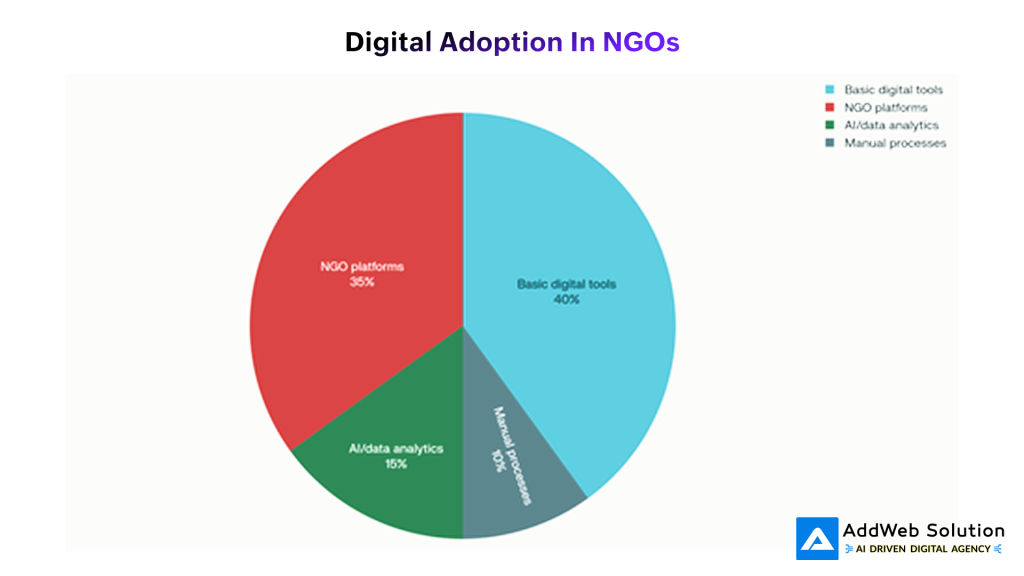
Real Example
The Magic Bus NGO uses digital dashboards to track over 10,000 employees and 375,000 children, achieving an 85% punctuality rate and reducing student delays by 30%. Meanwhile, Akanksha Foundation’s mobile app simplified education support for 500 teachers – impacting 50,000 students across Maharashtra, India.
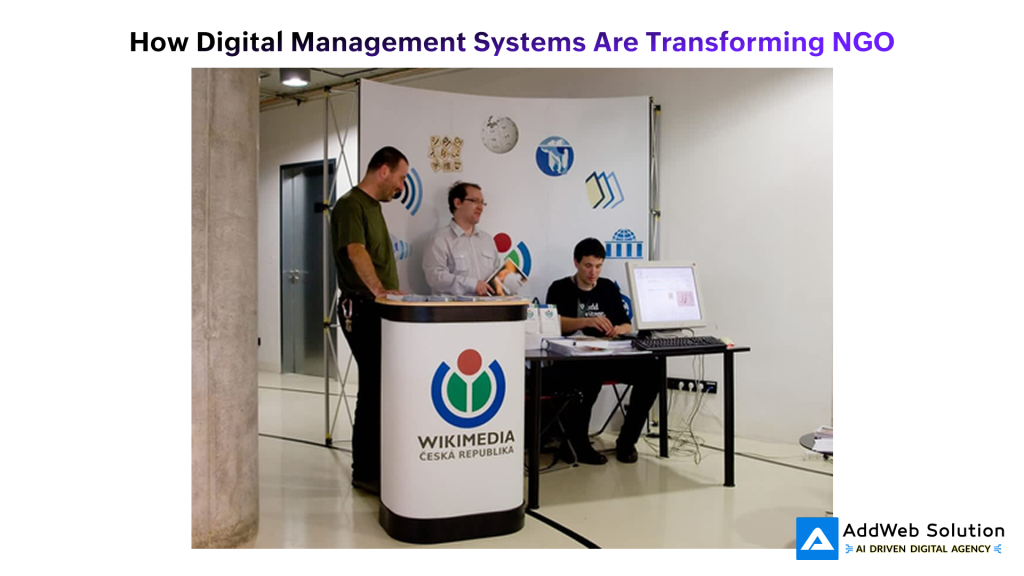
Essential Digital Tools for NGOs: Comparison at a Glance
Choosing the right digital tools begins with knowing what genuinely serves your mission—and not everything needs to be high-budget or complex. The table below spotlights five must-have platforms for NGOs, balancing power, affordability, and fit for different organization sizes.
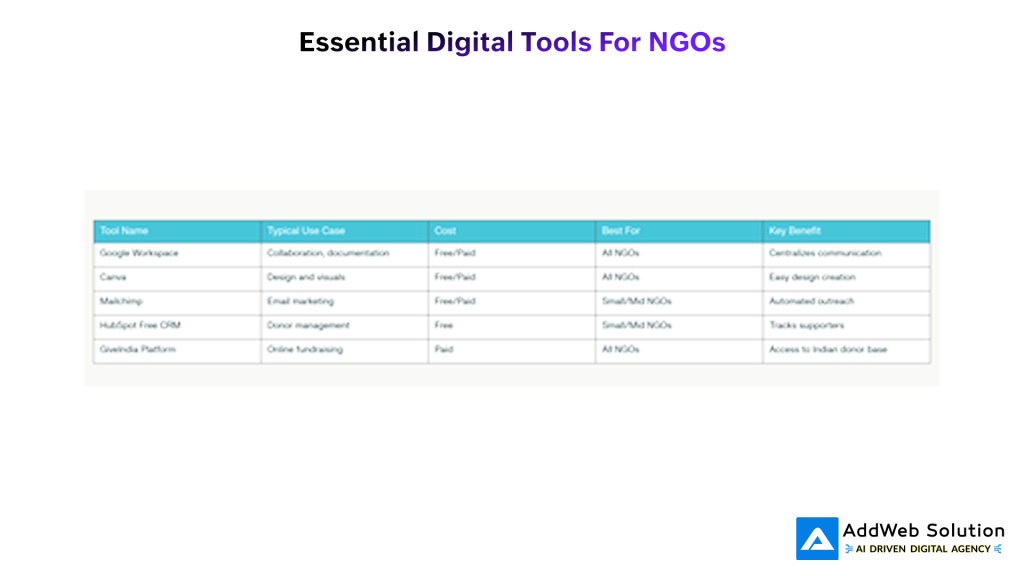
Tracking Progress: Growth & Barriers in NGO Digital Adoption (2021–2025)
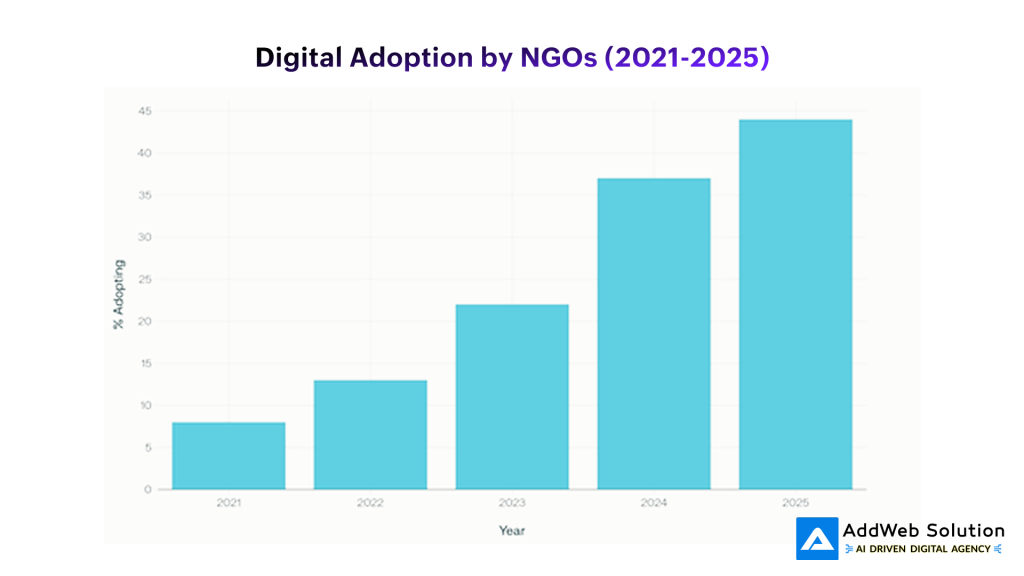
The story of NGO digital adoption is one of rapid ascent—tempered by barriers unique to the sector. From just 8% adoption in 2021 to a projected 44% by 2025—the trajectory is steep, but not without hurdles:
NGOs face some real hurdles when it comes to going digital:
- Funding is tight: Donors often prioritise programmes over tech, leaving NGOs—especially smaller ones—struggling to afford or maintain new tools.
- Low digital skills: Many teams don’t have the training needed to use digital platforms effectively, leading to underuse or failed rollouts.
- Resistance to change: Moving from paper to digital isn’t just a process shift—it’s a mindset shift. Over 58% of NGOs say internal resistance is their biggest roadblock.
- Poor infrastructure: In rural areas, even the best tech can fall flat without stable internet or electricity.
Yet, the NGOs that push through these challenges don’t just cope—they grow. With tools like real-time dashboards and cloud reporting, organisations such as Magic Bus and Concern India Foundation are now updating stakeholders faster, managing resources smarter, and scaling across regions with ease.


Your 5-Phase Digital Transformation Roadmap
Going digital doesn’t happen overnight, nor should it. The most successful NGO digital transformations follow a structured, thoughtful roadmap. Here are the five phases that work:
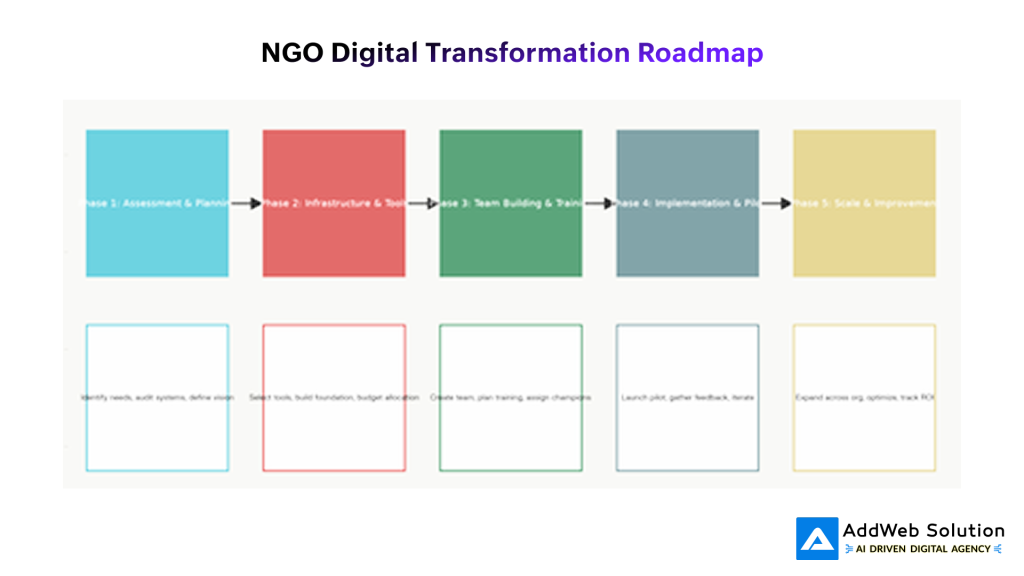
Phase 1: Assessment & Planning (Weeks 1–4)
Before buying any tool, understand where you are.
- Review current systems and where time is being wasted
- Talk to staff, volunteers, donors, and beneficiaries
- Identify top problems digital can solve
- Set a 2-year vision and clear goal
- Capture baseline metrics
Big mistake to avoid: Jumping straight to tools—you’ll waste money.
Phase 2: Choosing the Right Tools (Weeks 5–12)
Once you know what you need, build your digital foundation.
- Create a simple tech roadmap
- Research, demo, and compare tools
- Check vendor credibility and nonprofit discounts
- Set up cloud storage, basic security, and backups
- Build a realistic budget and look for grants/donor support
Pro tip: Many NGO tools are discounted—don’t pay full price.
Phase 3: Training & Team Building (Weeks 13–20)
Tech works only when people do.
- Form a small “digital champions” team
- Train staff through workshops, videos, and peer learning
- Explain the why behind the change
- Make simple guides (local languages if needed)
- Set up a basic help desk
Success tip: Let frontline staff lead training—they understand real workflows.
Phase 4: Pilot First (Weeks 21–36)
Don’t roll out everything at once. Test with one team.
- Pick early adopters
- Set a 6–12 week pilot plan
- Migrate essential data and test workflows
- Offer daily support and collect feedback
- Measure time saved, accuracy, and engagement
Why pilot? You’ll find issues demos never show—better with 10 people than 100.
Phase 5: Scale & Improve (Ongoing)
Once the pilot works, expand slowly and refine.
- Roll out department by department
- Keep training ongoing
- Track adoption and results in a dashboard
- Review quarterly and update your roadmap
- Add new tools only when ready
- Build a culture that celebrates experimentation
Mindset: Digital isn’t a one-time project—it’s continuous evolution.
Data Security & Compliance: Protecting What Matters
NGO leaders rarely say it out loud, but one thing that truly keeps them awake during digital transformation is data security. Going digital means storing sensitive information—beneficiary details, donor records, health data, even locations of vulnerable groups. A breach isn’t just embarrassing; it can put real people at risk.
According to NetHope’s 2025 Cybersecurity Report, nonprofits were the second-most targeted sector in 2024, with attacks rising 241% in just one year. Why? Because NGOs are seen as “easy targets” with small tech teams and tight budgets.
The basics every NGO should have
You don’t need to be a cybersecurity expert—just cover the essentials:
1. Strong passwords & 2FA
- Use long, unique passwords
- Turn on 2-factor authentication
- Use a password manager
- Change admin passwords regularly
2. Backups that actually work
- Back up important data daily
- Keep multiple copies (cloud, local, offline)
- Test your backups—many fail when needed
3. Access control
- Give people access only to what they need
- Remove access immediately when someone leaves
- Audit permissions regularly
4. Device safety
- Keep software updated
- Use antivirus
- Lock devices that leave the office
- Be careful with personal devices
5. Staff training
Most attacks happen because someone clicks a bad link.
- Train staff to spot phishing
- Encourage a “check before you click” culture
For bigger NGOs or sensitive work
If you work at scale or manage sensitive data, add:
- A clear data privacy policy
- Security checks for vendors/tools
- Encryption of sensitive data
- Annual security audits
- A simple incident response plan
There are free resources too: NetHope’s Digital Nonprofit Center, SANS webinars, and many consultants who offer pro-bono reviews for NGOs.
Contact our team for a tailored solution that scales your NGO or enterprise platform.

Pooja Upadhyay
Director Of People Operations & Client Relations
Conclusion
Digital transformation isn’t a “nice to have” for NGOs anymore—it’s how small and mid-sized organizations stay relevant, trusted, and able to grow. The NGOs that treat digital as an ongoing journey, not a one-time project, are already seeing the benefits: stronger impact, smoother operations, and more confidence from donors.
With a simple roadmap—assessing needs, picking the right tools, training teams, piloting, and improving as you go—NGOs can move beyond scattered digital efforts and build a solid foundation that supports every program. Even small steps in better tools, cleaner data, and basic security can lead to faster decisions, clearer reporting, and easier scaling across communities.
And at the end of the day, going digital isn’t about becoming a “tech organization.” It’s about using technology thoughtfully so you can serve people better. For NGOs willing to start small and keep learning, 2025 is the year to turn digital maturity into real, measurable impact.
