


Open-source software has evolved from a startup experiment to an enterprise essential. With 96% of organizations and nearly all Fortune 500 companies using it, the real challenge is turning adoption into value.
For many, Drupal is the answer — powering governments, universities, healthcare, and media with control, security, scalability, and speed that proprietary systems can’t match.
Understanding the Open-Source Business Case in Enterprise
Open-source isn’t just a tech choice—it’s a smarter business move. Companies using open-source see a 51% positive ROI on digital transformation, compared to 41% with proprietary tools. That gap shows how open-source drives control, flexibility, and innovation where it matters most.
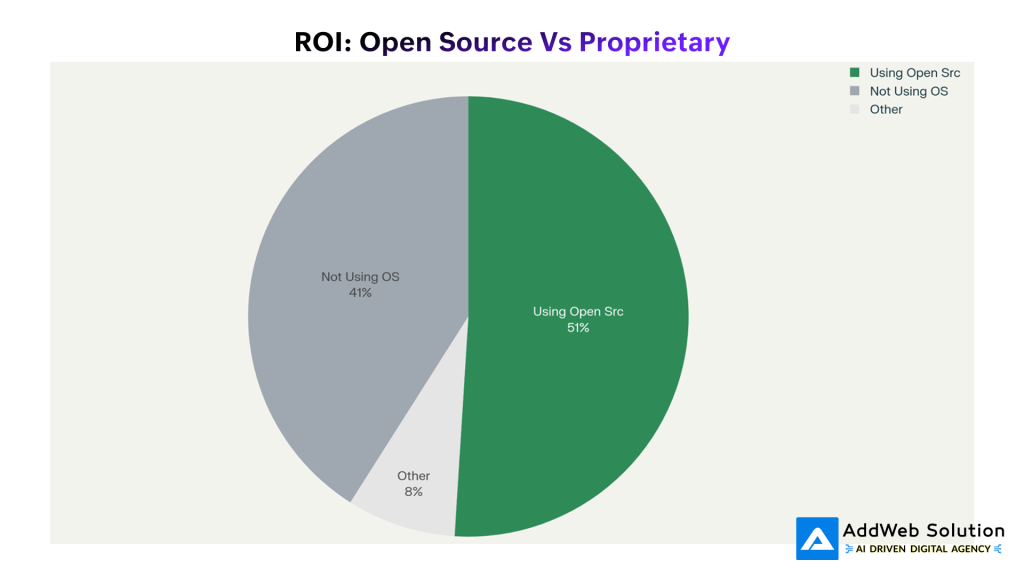
Positive ROI Achievement: Open Source Adoption Advantage
Digital transformation is booming—spending will jump from $1.3T in 2024 to $3.9T by 2027. With 89% of companies going digital-first, the real challenge isn’t adoption—it’s finding platforms that can adapt fast without vendor lock-ins.
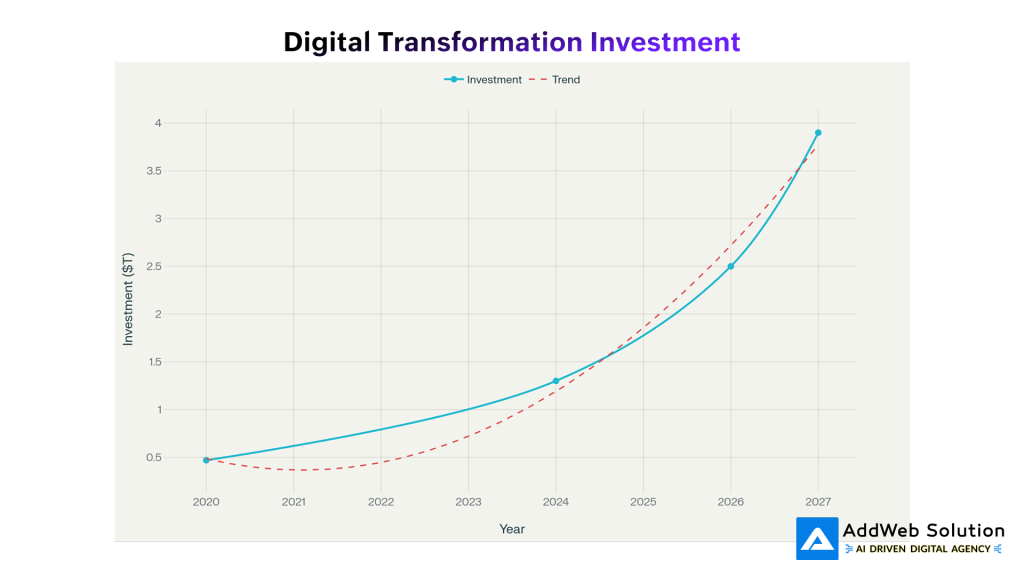
Global Digital Transformation Investment Trajectory (2020-2027)
Open-source takes a completely different route from traditional proprietary models. Instead of closed-door product control, it thrives on community-driven development, organic sales growth, and trust among developers. Thousands of contributors help shape open-source tools—bringing constant updates, stronger security, and smarter innovations.
For business leaders, the value is clear: open-source offers freedom from vendor lock-in (32.86%), better interoperability (27.62%), and reliable, community-backed stability (24.29%). These aren’t just nice-to-haves—they’re what make open-source the backbone of modern, future-ready digital systems.
Why Drupal Emerges as the Enterprise Open-Source Choice
When it comes to turning strategy into real business results, Drupal stands apart. While WordPress powers 43.6% of all websites, Drupal runs 12.8% of the world’s top 10,000 sites—where security and complexity really matter. Even more impressive, 56% of global government websites use Drupal across 150+ countries.
That trust isn’t by chance. Drupal consistently delivers on tough demands multi-language content management, enterprise-grade security, complex permissions, and long-term stability—all without the limits of proprietary licenses.
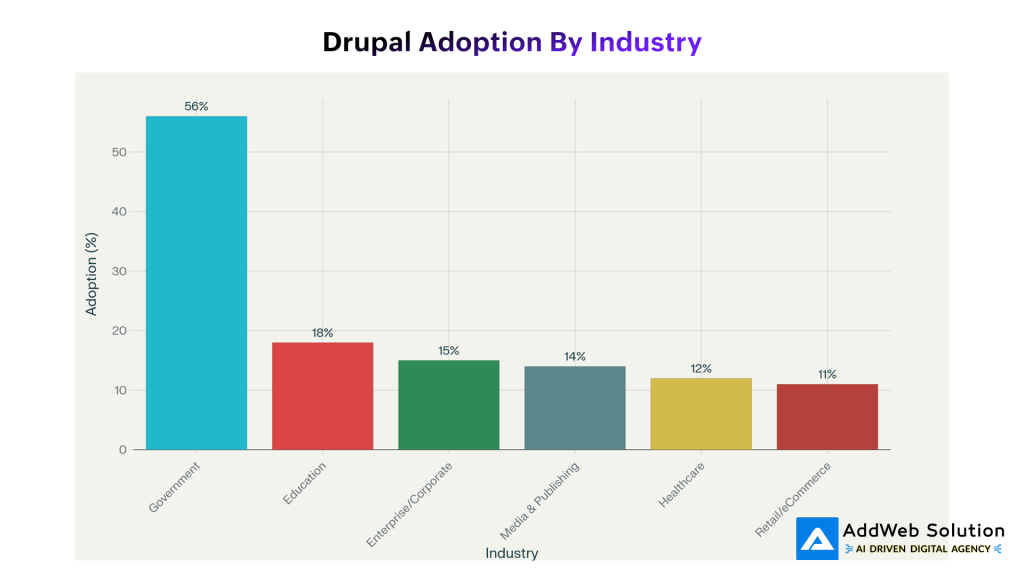
Drupal Adoption Rates by Industry Sector (2024-2025)
Drupal’s adoption tells a clear story about where digital transformation hits hardest. Governments lead with 56%, followed by education (18%), enterprise (15%), media (14%), healthcare (12%), and retail (11%) – all sectors that demand secure, scalable, and user-friendly digital platforms.
Take the University of West London as an example. Faced with an outdated site and falling engagement, they rebuilt on Drupal. The impact? 81% fewer drop-offs, 139% more international inquiries, and 50% more new users. Drupal didn’t limit their digital strategy – it powered it.


The Security Paradox: How Open Source Delivers Enterprise-Grade Protection
One of the most persistent myths about open-source software is that transparency equals vulnerability. In reality, 70% of IT leaders believe open-source is more secure than proprietary software. This perception is grounded in architectural reality. Drupal maintains a dedicated global security team that releases urgent patches within hours of discovering critical vulnerabilities, backed by a community of over 1 million developers constantly monitoring code.

Comparison of open source versus closed source software development models highlighting cost, control, and accessibility differences
Unlike proprietary CMSs that rely on internal teams to find and fix issues, Drupal’s open, community-driven security model means vulnerabilities are spotted, reviewed, and patched much faster.
Enterprises using Drupal benefit from layered protection – role-based access (RBAC), strong encryption, SSO via SAML/OAuth, and compliance with HIPAA, GDPR, and FedRAMP. For instance, a U.S. government agency cut unauthorized access by 72% after adopting Drupal’s RBAC system.
In healthcare, two-factor authentication and advanced encryption have boosted patient trust and increased portal adoption by 25%. With Drupal, organizations don’t have to choose between security and functionality – they get both.
The Economics of Scale: Cost Savings and Total Cost of Ownership
When choosing a CMS, many enterprises focus only on licensing costs—but that’s just part of the story. 71% of enterprise users say open-source platforms like Drupal save them money, with 60–80% lower total costs over three years. The real savings come not just from free licensing, but from scalable, efficient architecture that grows without inflating budgets.
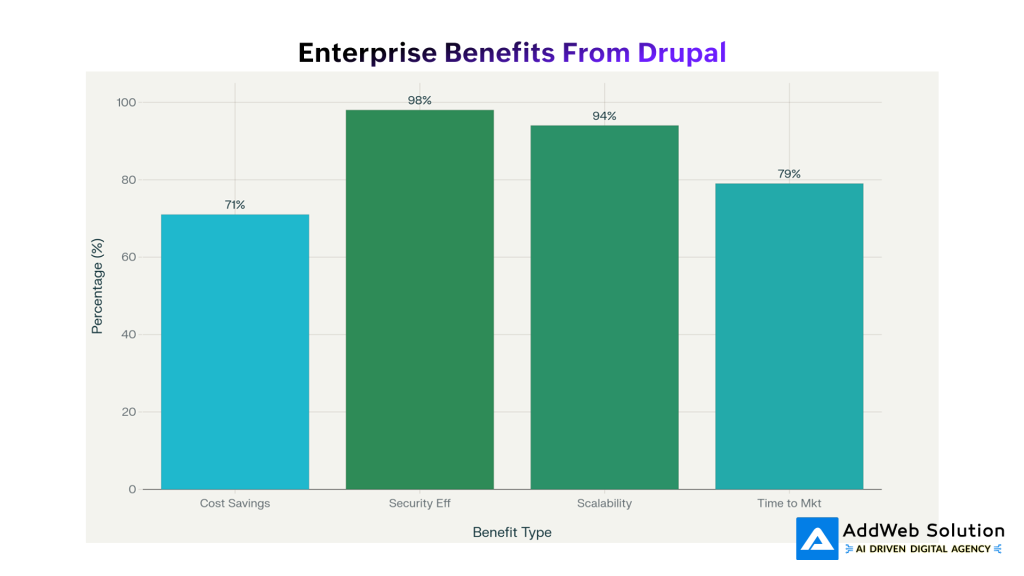
Key Enterprise Benefits Reported by Drupal Users
Take a publishing company using Drupal on AWS—their cloud costs were skyrocketing faster than content growth. By containerizing with ECS Fargate, tuning databases, and adding a CDN, they cut AWS costs by 53% in just three months—without changing their CMS or workflows.
This isn’t rare. Drupal’s modular, API-first design works perfectly with cloud optimization, freeing teams from vendor lock-ins. No surprise then that 68% of enterprises moved to new CMS platforms in 2024, with Drupal leading migrations—and 99% reporting clear improvements after switching.
Scalability Without Compromise: From Thousands to Millions of Users
Enterprise digital transformation isn’t just about solving today’s problems—it’s about building infrastructure that grows with business ambition. This is where Drupal’s architectural approach delivers concrete advantages over both proprietary platforms and lightweight CMS alternatives.
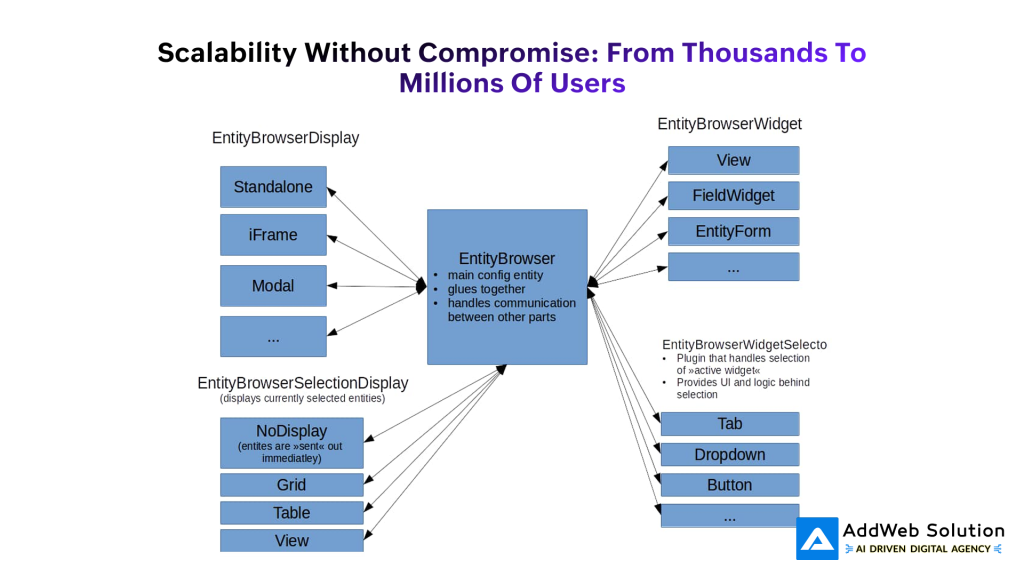
Drupal Entity Browser architecture diagram showing component interactions for entity selection and display
Scalability isn’t an add-on for Drupal—it’s built into its core. With advanced caching, database clustering, and an API-first design, Drupal easily supports massive, high-traffic websites. Giants like Tesla, Pfizer, MIT, and Harvard all run on Drupal at enterprise scale.
One U.S. retailer scaled from 50,000 to 1.5 million visitors a month while keeping 99.99% uptime and full PCI compliance. Likewise, Australia’s GovCMS, built on Drupal, powers 400+ government sites with zero security compromises – proving that open-source can deliver both scale and security without breaking a sweat.
Competitive Advantage Through Community and Ecosystem
One of Drupal’s biggest hidden strengths is its global ecosystem. With over a million developers and thousands of ready-to-use modules, businesses tap into a massive library of innovations solving enterprise challenges quickly and cost-effectively without reinventing the wheel.

Key principles of open-source software development, including accessibility, modifiability, distribution, and community-driven collaboration
Drupal’s ecosystem gives enterprises a competitive edge. Instead of building features like payments, authentication, or multilingual support from scratch, they can plug in proven, industry-specific modules tested across thousands of sites.
Because innovation comes from the community – not a vendor roadmap – Drupal evolves with real enterprise needs. When AI became essential, the community launched a full AI initiative to integrate smart site-building tools. In Drupal’s world, businesses don’t wait for innovation – they help drive it.
The Data That Matters: Real Numbers from Real Implementations
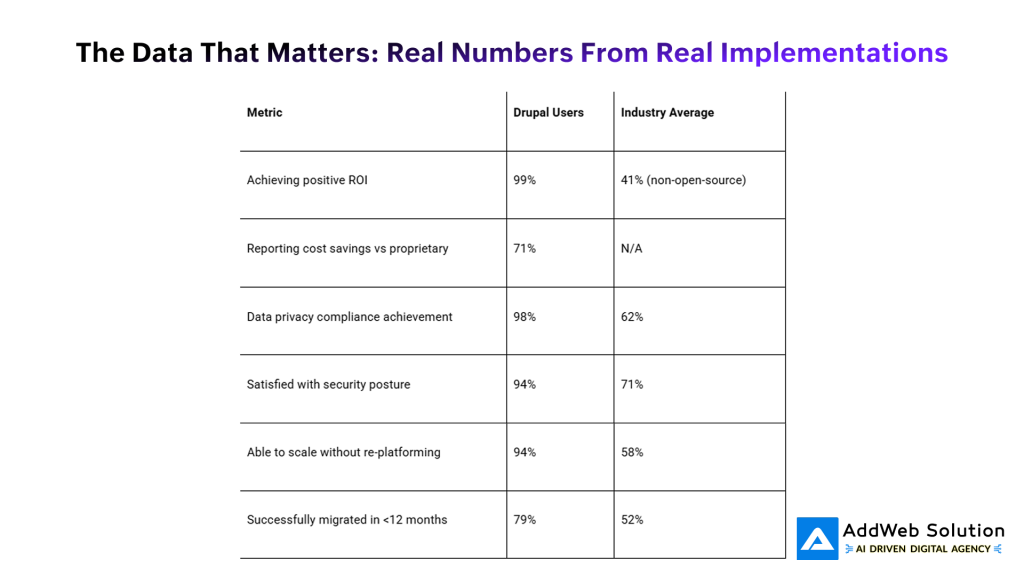
These results aren’t promises – they’re real outcomes. 79% of Drupal migrations hit their timelines, and 99% see better performance after launch.
The biggest win? Speed. Enterprises say Drupal’s flexibility helps them get to market faster, which in today’s world – where a few months’ delay can mean lost opportunities – is a true competitive edge.
Interesting Facts & Quick Stats
Did You Know?
- Over 1.7 million websites run on Drupal, including Tesla, NBC, Pfizer, Harvard, MIT, and 150+ governments worldwide.
- 56% of government websites use Drupal, making it the top choice for public sector digital services.
- Companies using open-source AI tools see 51% positive ROI, versus 41% for non–open-source users.
- The digital transformation market is soaring from $1.3T (2024) to $3.9T by 2027, with Drupal at the center of this shift.
Quick Insights:
- 60–80% lower TCO over 3 years vs. proprietary CMS.
- 72% fewer unauthorized access attempts after adopting Drupal’s RBAC.
- 53% AWS cost savings from infrastructure optimization.
- 96% of organizations are maintaining or increasing open-source adoption.
Ready to future-proof your enterprise with Drupal? Book a free 30-minute strategy call today and start your open-source transformation!

Pooja Upadhyay
Director Of People Operations & Client Relations
Bringing It All Together: The Strategic Imperative
For today’s enterprises, the choice is clear – open-source wins. Platforms like Drupal deliver faster results, lower costs, and greater flexibility than proprietary systems.
At AddWeb Solution, we’ve seen it in action—governments, enterprises, and healthcare leaders all using Drupal to modernize, scale, and secure their digital platforms.
The future belongs to organizations that choose control over lock-in and innovation over dependency. With Drupal, your strategy drives the platform – not the other way around.
Source URLs
- https://www.weforum.org/stories/2022/08/open-source-companies-competitive-advantage-free-product-code/
- https://newsroom.ibm.com/2024-12-19-IBM-Study-More-Companies-Turning-to-Open-Source-AI-Tools-to-Unlock-ROI
- https://www.developer-tech.com/news/enterprise-open-source-adoption-soars-despite-challenges/
- https://www.mordorintelligence.com/industry-reports/cms-market
- https://www.oreilly.com/openbook/opensources/book/brian.html
- https://octoverse.github.com/2022/
- https://whatfix.com/blog/maximize-digital-transformation-roi/
