


Every great tech team hits that moment of realization – the best ideas don’t come from orders at the top, but from people who feel part of something bigger than their job titles. That’s where contribution culture comes in – and it’s transforming how modern teams, especially in the Drupal ecosystem, grow and thrive.
If your team’s energy feels flat or top talent keeps moving on, the fix might not be higher pay or perks. It could be the lack of a culture that fuels ownership, learning, and belonging.
This article dives into why contribution culture matters in 2025, how Drupal’s open-source model proves its power, and how you can bring this mindset into your own organization.
What is Contribution Culture and Why Does It Matter?
Contribution culture isn’t just about writing code or submitting pull requests – it’s about building a mindset where everyone feels empowered to share ideas, knowledge, and effort, and where those contributions are truly valued.
You can hire great talent, but what turns a good team into a great one is a space where people believe their input matters. Where sharing knowledge lifts everyone instead of creating competition.
The impact is real – a 2023 Iskamto study found that organizational culture drives 26.6% of overall performance. That’s a quarter of your success shaped by how your team collaborates and learns together.
When you nurture a contribution culture:
- Knowledge flows freely, not hidden in silos
- Ideas emerge from every level
- People feel valued and take ownership
- Retention soars
Companies like Google, Microsoft, and Netflix have mastered this. Google even dedicates 10% of its workforce to open-source contributions – a clear signal that contribution isn’t just nice to have; it’s the future.
The Business Case: Numbers Don’t Lie
Here’s where it gets real: contribution culture isn’t just a nice idea, it’s a smart business move that boosts results.
When employees are truly engaged through contribution:
- Productivity goes up by 14%
- Sales increase by 18%
- Profit margins grow by 23%
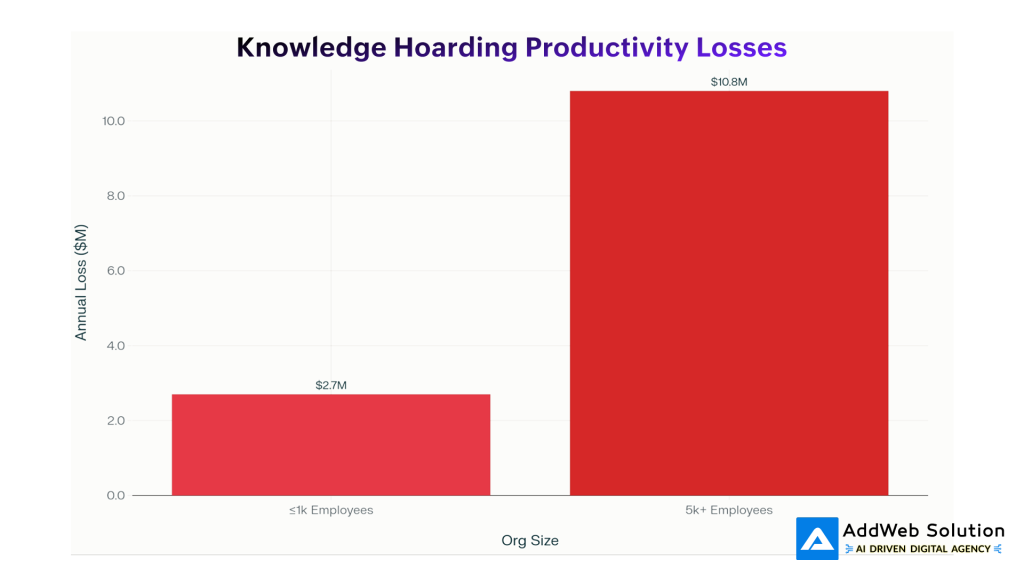
Hidden Cost of Knowledge Hoarding on Business Productivity
On the flip side, when teams hoard knowledge to protect their roles, companies lose big. Businesses with around 1,000 employees lose $2.7 million a year to poor knowledge sharing. For larger ones (5,000+ employees), that jumps to $10.8 million.
The result?
- Wasted time searching for info
- Duplicated work
- Slower onboarding
- Missed innovation opportunities
One mid-sized tech team turned this around by launching a simple contribution program where senior engineers mentored juniors and shared expertise. The outcome:
- 28% faster onboarding
- 35% better team collaboration
- 18% quicker project delivery
How Drupal’s Open Source Community Gets It Right
Drupal isn’t just a CMS; it’s proof of how contribution culture thrives at scale.
With 1.39 million members and 124,000 active contributors, Drupal’s strength lies in how it’s built and sustained.
In one year alone, over 7,000 individuals and 1,100 companies contributed — thanks to systems that make it easy and rewarding to join in:
- Clear entry paths through documentation and mentoring
- Recognition for every type of contribution, big or small
- Community events like DrupalCons that spark collaboration
- A modular setup that lets anyone build without touching the core
Drupal shows that when contribution is encouraged, innovation follows.
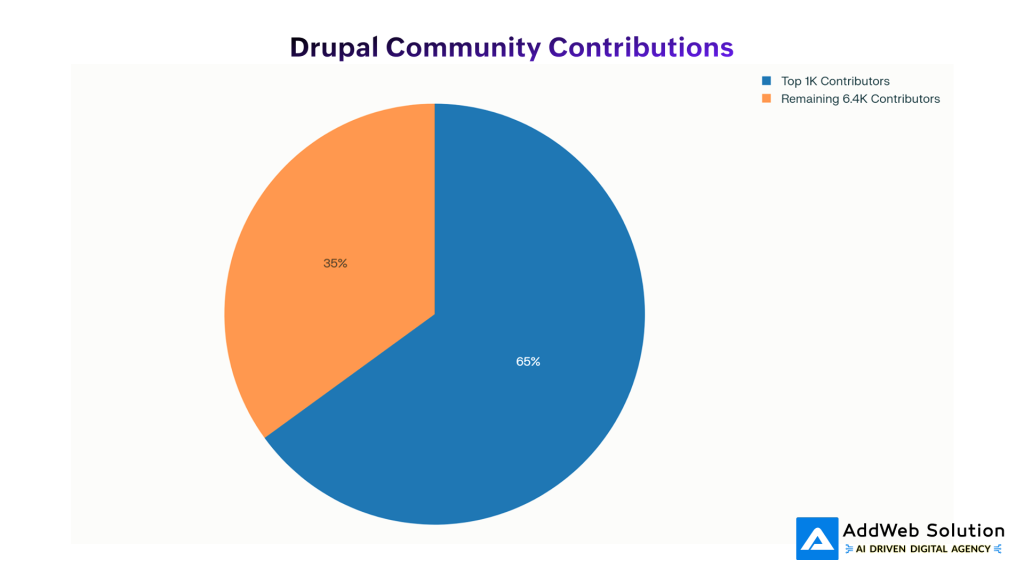
Drupal Community Contribution Distribution
The data reveals an interesting pattern:
The data tells a clear story: the top 1,000 contributors make 65% of all Drupal contributions, while another 6,400+ contributors handle the remaining 35%—showing a healthy mix of seasoned and new talent that keeps the community growing.
Unlike top-heavy organizations that depend on a few voices, Drupal thrives because contribution is shared across many.
DrupalCon Vienna 2025 and Beyond
At DrupalCon Vienna 2025, the spotlight was on all kinds of contributions — from code and design to mentoring, testing, and translations. With the upcoming Drupal Starshot (a simplified version for non-technical users), even more contributors will join in, bringing fresh skills and strengthening the culture further.
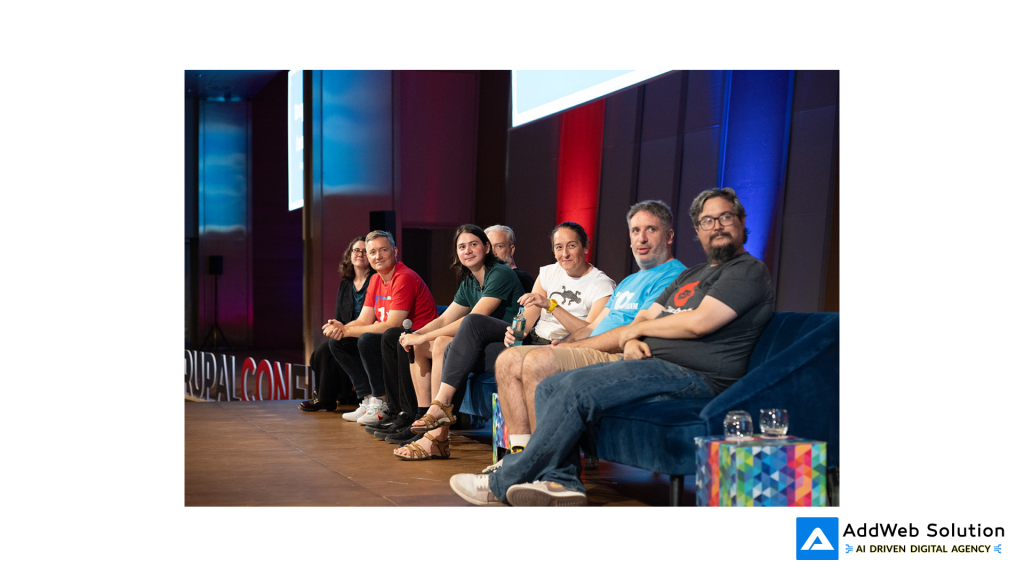
Panel discussion at a DrupalCon event showcasing community collaboration and contribution among Drupal experts


The Cost of Ignoring Contribution Culture
Let’s flip the script. What happens when you don’t build contribution culture?
Primary Reasons Developers Leave Their Current Organizations
Developer Turnover Accelerates
Top causes include:
- 40% cite limited career growth → no contribution means no visible skill progress
- 35% lack learning opportunities → contribution drives growth
- 28% point to poor culture or micromanagement → autonomy matters
- 24% mention pay → contribution culture can help offset this
With an average 13.2% annual turnover (and 21.7% for embedded engineers), the loss of knowledge hurts. It takes 1–2 months to onboard new developers, but lost context can take far longer.
When experienced devs leave, so does critical know-how. Teams end up reverse-engineering code and rebuilding processes — no wonder 81% of employees say they’re frustrated when they can’t access needed info.
One tech firm, “TechCorp,” skipped building a contribution culture. Within 18 months:
- 3 senior devs quit, taking key knowledge
- New hires needed 4–5 months to ramp up
- A product redesign was delayed
- Engagement dropped
The result: over $2.1 million lost in productivity, rework, and rehiring.
Building Contribution Culture: Practical Strategies
Good news – creating a contribution-driven team is completely doable. Here’s how to start:
- Create Psychological Safety
People share ideas when they feel safe. Celebrate experiments, learn from mistakes, and value every idea, even unfinished ones. - Build Visibility
Make contributions seen and appreciated. Highlight them in meetings, newsletters, or “Contributor of the Month” posts. Recognize all forms, including code, documentation, mentoring, and more. - Show Clear Paths
Guide people on how to contribute. Offer contribution guides, define roles, and set up mentoring for newcomers. - Invest in Knowledge Systems
Use platforms like Drupal, GitHub, and internal wikis to store decisions, notes, and recordings so no knowledge is lost. - Link to Career Growth
Tie contributions to promotions and reviews. Give developers 10 to 15 percent of their time for mentoring and knowledge sharing. - Encourage Cross-Team Work
Run hackathons, form communities of practice, and rotate engineers to spread ideas and skills. - Lead by Example
Leaders should mentor, document, and share openly. When senior members contribute, everyone follows.
Interesting Fact Box
Three stats that should make every tech leader sit up:
- 73% of U.S. workers believe workplace culture affects their ability to perform at high levels. This isn’t abstract—it’s their lived experience.
- Disengaged employees cost the U.S. economy $483–$605 billion annually in lost productivity. That’s individual behavior multiplied across millions.
- 90% of employers say a sense of community is key to success. Yet fewer than 50% actively build structures to foster it.
“Organizational culture contributed 26.6% to organizational performance, with the remaining 73.4% influenced by other factors. Cultivating a vibrant and positive culture isn’t just nice to have; it’s a must-have for boosting performance.”
— Iskamto (2023), Study on Organizational Culture and Performance
Need help building a thriving culture of contributions in your team? Contact us to get started with Drupal-inspired practices and tailored coaching.

Pooja Upadhyay
Director Of People Operations & Client Relations
Conclusion
The tech industry’s retention problem isn’t just about pay — it’s about purpose. Developers, especially top talent, want to build, learn, and contribute to something bigger than their sprint.
Contribution culture creates that sense of meaning at scale. It’s how Drupal thrives with 1.39 million members, how Google dedicates 10% of its workforce to open-source, and how companies cut developer turnover from 13% to under 8%.
The real question isn’t whether you can afford to build a contribution culture — it’s whether you can afford not to.
At AddWeb Solution, we help tech teams do just that. From code and mentoring to knowledge sharing, we guide organizations using Drupal, Laravel, and other open-source platforms to build inclusive, scalable contribution cultures where every team member feels part of something meaningful.
