


The mobile commerce landscape has evolved dramatically, with 66% of all e-commerce sales projected to come from mobile devices by 2025. While this statistic might make you think your Shopify store needs a dedicated mobile app, the reality is more nuanced. Most Shopify stores can achieve exceptional mobile performance without the complexity and expense of a native mobile application.
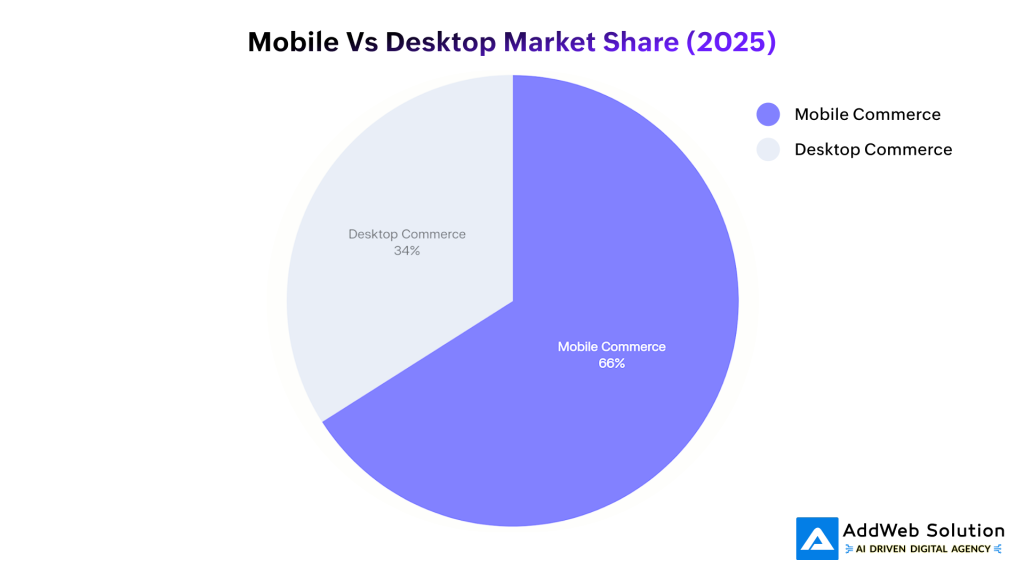
Mobile commerce is projected to dominate 66% of total e-commerce by 2025
The Mobile App Misconception
The Numbers Don’t Lie About Mobile Usage
Mobile devices now account for 59.7% of global website traffic, and users spend approximately 90% of their mobile time in apps. These statistics often lead business owners to assume they need their own mobile app to compete. However, this logic overlooks a crucial distinction: users primarily spend time in established apps like social media, messaging, and entertainment platforms—not individual brand apps.
Key Mobile Commerce Statistics:
- Mobile conversion rates average 1.8% compared to desktop’s 3.9%
- 75% of mobile traffic comes to Shopify stores, but conversion rates remain lower
- Average mobile order value is $43 less than desktop orders
- Mobile cart abandonment reaches 85.65% compared to 68% on desktop
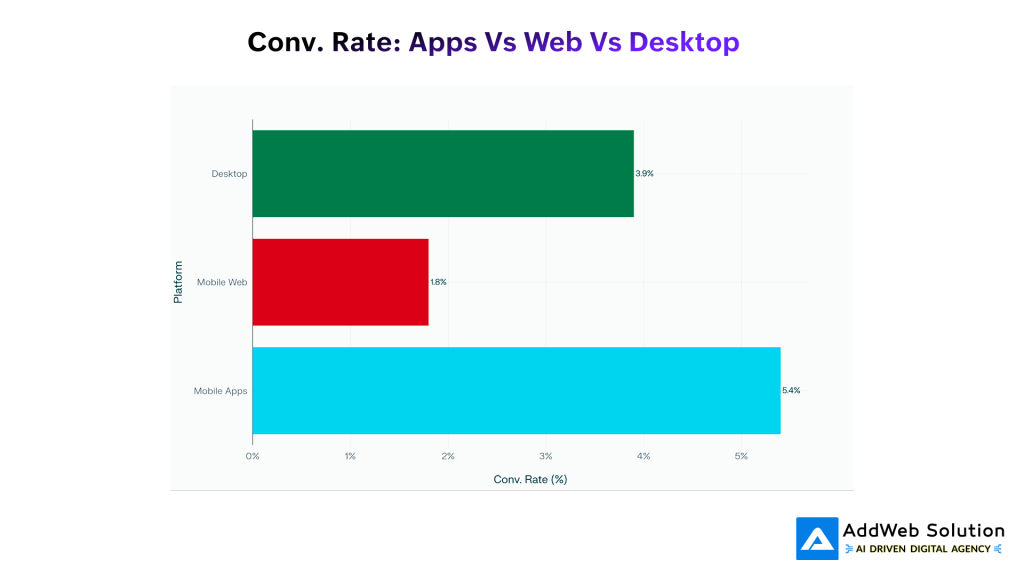
Mobile apps achieve 3x higher conversion rates than mobile websites


The Download Barrier Reality
71% of custom business apps fail within their first year, primarily because customers won’t download them. The average smartphone user has 80+ apps installed, and convincing them to add another requires significant value proposition. For most retail businesses, occasional purchases don’t justify the mental real estate on a customer’s device.
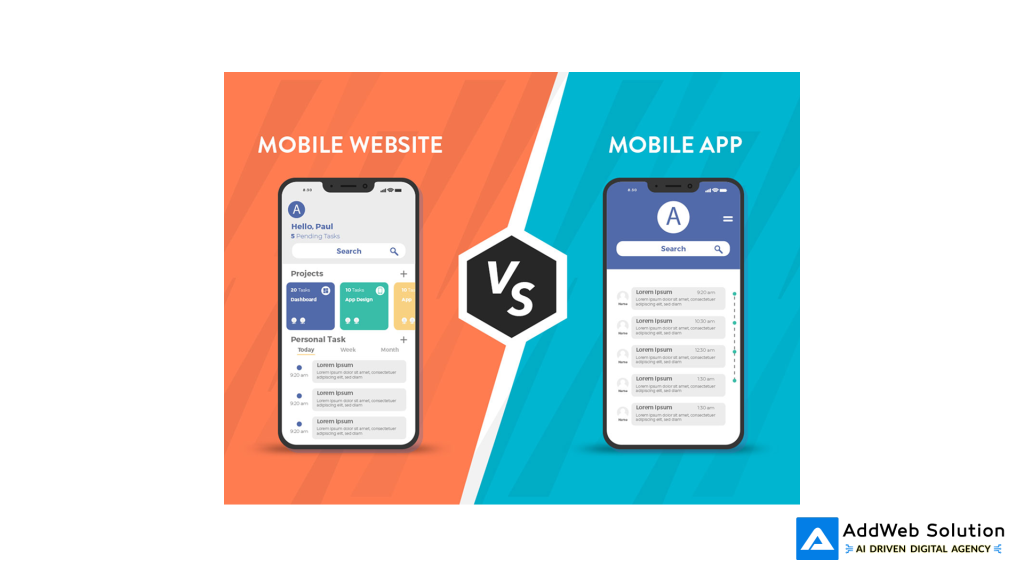
Comparison of mobile website and mobile app interfaces on smartphones, highlighting user experience differences
Why Mobile Optimization Beats Mobile Apps
Performance Without the Overhead
Modern mobile optimization techniques can deliver app-like experiences without requiring downloads or installations. Progressive Web Apps (PWAs) offer the best of both worlds—combining web accessibility with app-like functionality.
Mobile Optimization Benefits:
- Instant access through any web browser
- Search engine visibility for organic discovery
- Cross-platform compatibility without separate development
- Lower bounce rates with optimized user experience
- Faster time-to-market compared to app development
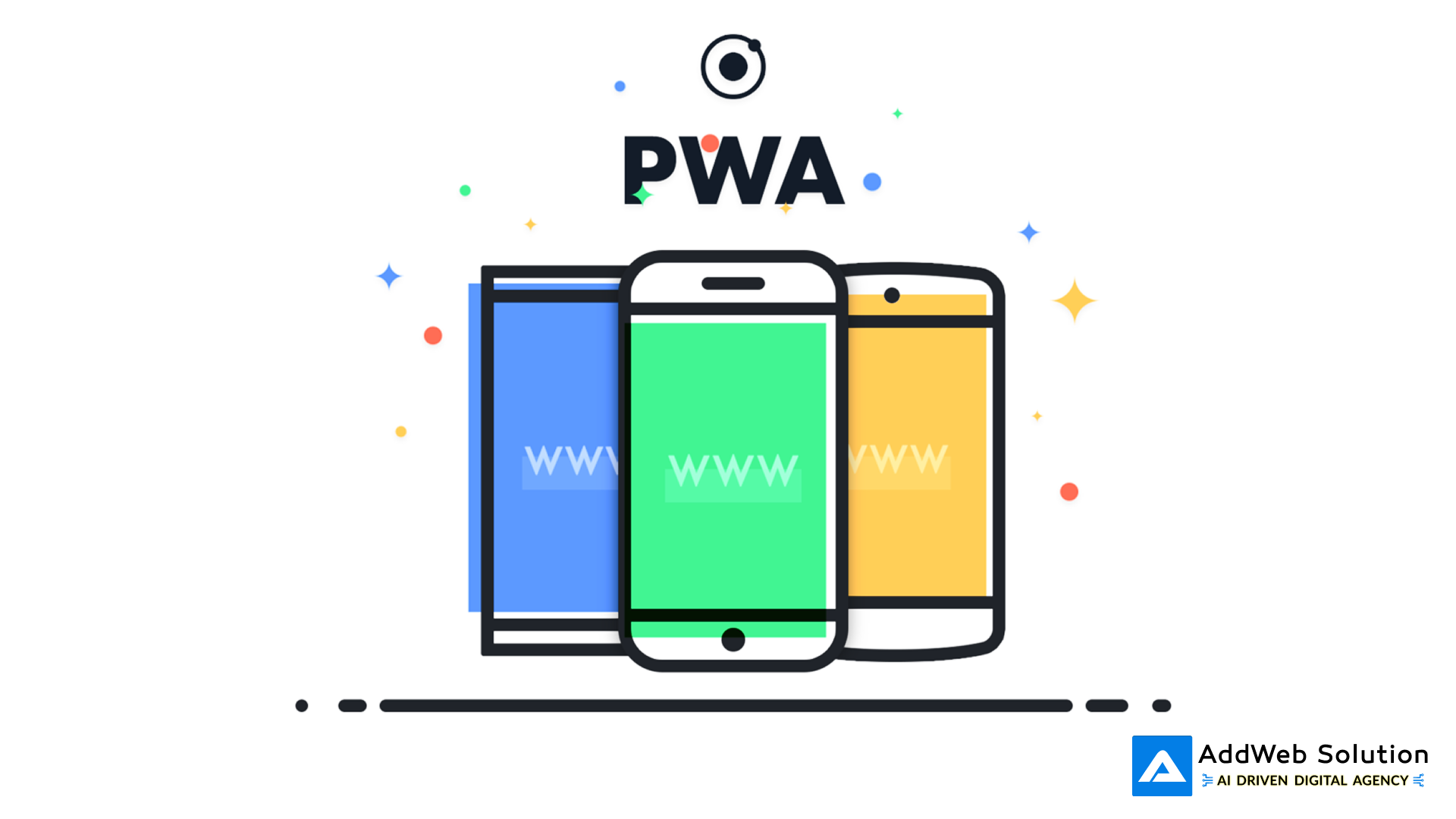
Illustration of progressive web apps (PWAs) on mobile devices symbolizing web access and modern mobile technology
Cost-Effectiveness That Makes Sense
The financial implications of mobile app development versus optimization are staggering:
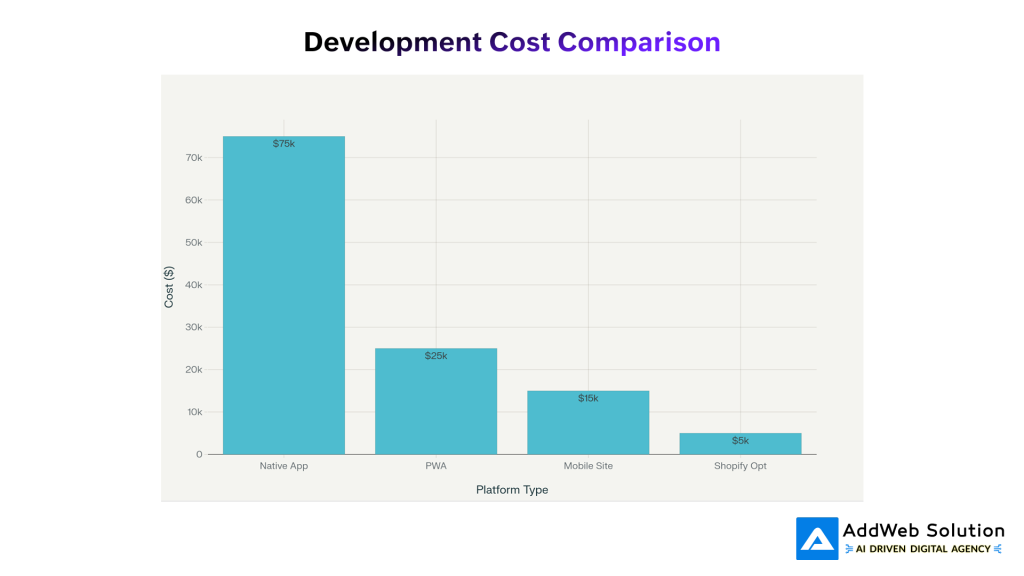
Mobile optimization costs significantly less than native app development
Development Cost Breakdown:
- Native Mobile App: $75,000+ initial cost, $15,000 annual maintenance
- Progressive Web App: $25,000 initial cost, $2,500 annual maintenance
- Mobile Website Optimization: $15,000 initial cost, $3,000 annual maintenance
- Shopify Theme Optimization: $5,000 initial cost, $1,000 annual maintenance
For most Shopify stores, mobile optimization delivers 80% of app benefits at 20% of the cost.
The PWA Alternative: Best of Both Worlds
What Progressive Web Apps Offer
Progressive Web Apps bridge the gap between mobile websites and native apps, providing enhanced functionality without requiring app store approval or user downloads.
PWA Advantages:
- Push notifications for customer engagement
- Offline functionality for uninterrupted browsing
- Add to home screen capability for easy access
- App-like interface with smooth animations
- Automatic updates without user intervention

Illustration of a mobile device showcasing Progressive Web Apps (PWA) with icons highlighting key features like interactivity, integration, and user satisfaction
Real Performance Improvements
Companies implementing PWAs see remarkable results:
- Conversion rates increase by 30-50% over traditional mobile sites
- Loading speeds improve by 2-3x compared to mobile websites
- User engagement rises by 137% with app-like features
AddWeb Solution has helped numerous Shopify stores implement PWA solutions, delivering these performance improvements while maintaining cost efficiency and development speed.
When Mobile Apps Actually Make Sense
The Frequency Test
Mobile apps work best for businesses with repeat customers who engage frequently—at least once every three months. Consider these scenarios:
Apps Make Sense For:
- Daily use services (food delivery, fitness tracking)
- Subscription-based businesses with regular interaction
- Loyalty programs requiring frequent engagement
- Complex booking systems with recurring appointments
Apps Don’t Make Sense For:
- Seasonal or occasional purchases
- One-time service providers
- Simple product catalogs
- Businesses without repeat customers
Shopify Mobile Optimization Success Stories
Real Results from Mobile-First Approach
Merchology Case Study:
- 40% increase in mobile conversion rates
- 340% revenue growth year-over-year from mobile users
- Achieved through mobile-first redesign and optimization rather than app development
The AddWeb Solution Approach
AddWeb Solution specializes in mobile optimization strategies that deliver app-like performance through web technologies. Our approach focuses on:
Technical Optimization:
- Advanced caching strategies for faster loading
- Responsive design implementation
- Touch-friendly interface design
- Streamlined checkout processes
Performance Metrics We Target:
- Page load speeds under 3 seconds
- Mobile conversion rates above 2.5%
- Cart abandonment below 70%
- User engagement metrics comparable to apps

Mobile commerce revenue is projected to reach $3.4 trillion by 2027
The Future is Mobile-First, Not App-First
Emerging Trends Supporting Web Solutions
The mobile commerce landscape is evolving toward web-based solutions rather than app proliferation:
- Web-based checkout improvements reducing mobile friction
- Browser capabilities expanding to match app functionality
- 5G networks enabling faster web performance
- AI-powered personalization through web platforms
Investment Priorities That Actually Matter
Instead of spending $75,000+ on a mobile app, successful Shopify stores invest in:
High-Impact Mobile Improvements:
- Page speed optimization – Directly impacts conversion rates
- Checkout process streamlining – Reduces cart abandonment
- Mobile-first design implementation – Improves user experience
- SEO optimization – Increases organic mobile traffic
- Conversion rate optimization – Maximizes existing traffic value
| Investment Area | Cost Range | Impact Level | ROI Timeline |
| Mobile App Development | $50,000-$150,000 | High Risk | 12-24 months |
| PWA Implementation | $15,000-$50,000 | Medium Risk | 3-6 months |
| Mobile Optimization | $5,000-$25,000 | Low Risk | 1-3 months |
| Shopify Theme Enhancement | $2,000-$10,000 | Low Risk | 1-2 months |
Making the Right Decision for Your Store
Evaluation Framework
Before considering a mobile app, honestly assess these factors:
Customer Behavior Analysis:
- Do customers return monthly or more frequently?
- Is your product/service part of their daily routine?
- Would push notifications provide genuine value?
- Do you have sufficient customer data for personalization?
Business Requirements:
- Can your mobile goals be achieved through optimization?
- Do you have budget for ongoing app maintenance?
- Is your team equipped for multi-platform management?
- Would development time delay other critical initiatives?
The AddWeb Solution Recommendation
For 95% of Shopify stores, mobile optimization and PWA implementation deliver superior ROI compared to native app development. We recommend focusing resources on:
- Responsive theme optimization for immediate improvements
- Progressive Web App features for enhanced functionality
- Conversion rate optimization for better performance
- SEO improvements for increased organic traffic
Only consider native app development if your business model specifically requires frequent customer interaction and you have the resources for long-term maintenance.
Learn how to optimize Shopify without investing in a mobile app

Pooja Upadhyay
Director Of People Operations & Client Relations
Conclusion: Smart Mobile Strategy Over App Strategy
The path to mobile success doesn’t require a dedicated app—it requires a dedicated approach to mobile optimization. By focusing on web-based solutions, Shopify stores can achieve exceptional mobile performance while maintaining flexibility, reducing costs, and accelerating time-to-market.
Key Takeaways:
- Mobile optimization delivers 80% of app benefits at 20% of the cost
- PWAs provide app-like functionality without download barriers
- 95% of Shopify stores benefit more from optimization than app development
- Focus on mobile-first design and conversion optimization for maximum impact
The mobile commerce revolution isn’t about having an app—it’s about delivering exceptional mobile experiences through whatever medium best serves your customers and business goals.
The path to mobile success doesn’t require a dedicated app—it requires a dedicated approach to mobile optimization. By focusing on web-based solutions, Shopify stores can achieve exceptional mobile performance while maintaining flexibility, reducing costs, and accelerating time-to-market.
Key Takeaways:
- Mobile optimization delivers 80% of app benefits at 20% of the cost
- PWAs provide app-like functionality without download barriers
- 95% of Shopify stores benefit more from optimization than app development
- Focus on mobile-first design and conversion optimization for maximum impact
The mobile commerce revolution isn’t about having an app—it’s about delivering exceptional mobile experiences through whatever medium best serves your customers and business goals.
Sources:
