


The internet has progressed from being static brochures to smart, dynamic experiences that are tailor-made for every visitor. We’re seeing a paradigm shift in the way websites will interact with users, and WordPress is at the forefront of this revolution.
Those days are long gone when each and every visitor witnessed the same content. Now users want websites to know their likes, location, and behavior patterns. They desire relevant product suggestions, personalized hello, and content aligned with their interests. This is no longer a nice-to-have capability—it’s now a must-have for business prosperity.

AI integration with WordPress represents the way of the future of smarter, more personalized sites in 2025 and beyond
The Numbers Don’t Lie: Personalization Works
The statistics say it all regarding how personalization has become essential to website success. Studies confirm that companies applying personalization strategies achieve outstanding outcomes across all metrics.
89% of marketers have experienced positive ROI from personalization initiatives. This is not a shocking figure when you realize that personalized experiences directly influence user interactions and conversion rates. Personalization leaders bring 40% more revenue than average performers.
From the consumer point of view, the need for personalized experiences is just too much:
- 80% of consumers like to purchase from brands that tailor their experience
- 76% of consumers get frustrated when websites are not personalized
- 94% of businesses notice higher conversion rates after personalization
- 59% of consumers like shopping and navigating on personalized websites
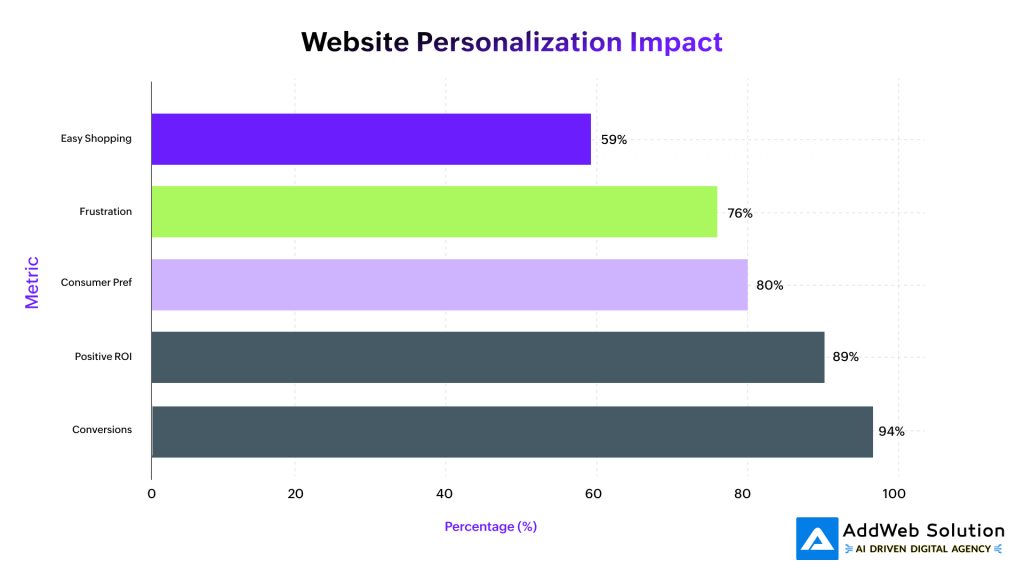
Website Personalization Impact: Key Statistics That Matter in 2025
These figures tell a categorical fact: personalization is more than just a marketing fad. It’s a categorical change in how effective websites function.


WordPress Pioneers the Revolution of Website Intelligence
WordPress runs 43.4% of all websites on the internet, and therefore is the most prevalent content management system globally. Its market share has grown steadily from 27.3% in 2017 to where it stands now, proving remarkable staying power in a competitive market.
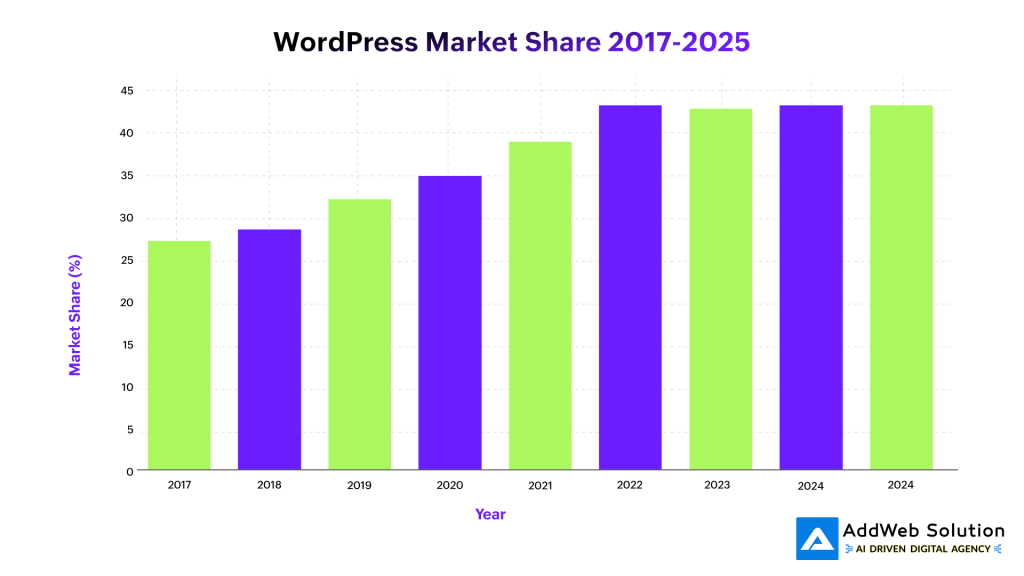
WordPress Market Share Growth: Gradual Rise to Almost Half the Internet
This leadership is not coincidental. WordPress began life as a blogging platform and has since matured into a state-of-the-art content management system with an open attitude toward embracing the latest technologies. The platform’s adaptability and large plugin ecosystem make it the ideal platform for making personalization solutions.
What makes WordPress unique for personalization:
- Open architecture that accommodates custom development
- Large plugin library with more than 70,000 choices
- Constantly active developer community making innovations
- SEO-friendly design that integrates well with personalization
- Scaling from small blogs to business websites
AI Transforms WordPress in 2025
Artificial intelligence has emerged as the compelling force behind WordPress’s transformation into an intelligent platform. The application of AI tools and functions has transformed the way websites produce, manage, and present personalized content.
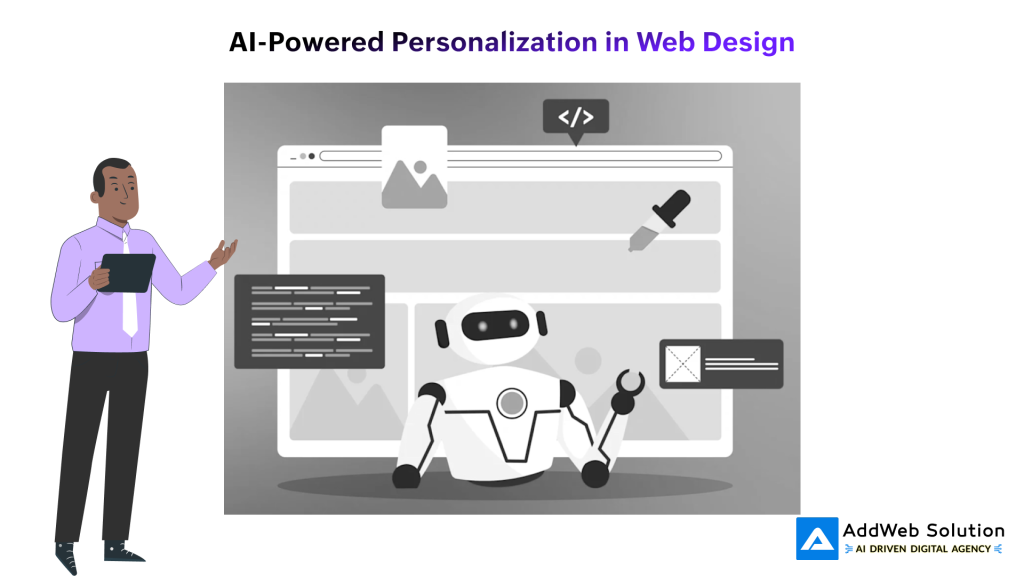
Exemplification of AI based personalization improving web design through intelligent automation and customization
WordPress AI adoption is going through the roof. The top 40 AI-powered WordPress plugins amassed more than 315 million visits within a single year, averaging 26+ million monthly visits. This huge traffic makes evident the increasing need for smart website capabilities.
Large-scale AI achievements in WordPress
Revolution in Content Creation
WordPress also includes AI-enabled content creation that can generate blog posts, product descriptions, and copywriting in minutes. Divi AI and Elementor AI are just a couple of the tools that have directly plugged into popular page builders, enabling text, image, and even code generation using natural language commands.
Intelligent Design Assistance
AI evaluates your content, audience, and branding to recommend best-performing layouts, color schemes, and typography options. This removes guesswork when making design choices and also enables enhanced user interaction.
Automated Optimization
AI constantly tracks user behavior and automatically optimizes content placement, calls-to-action, and page components to enhance conversion rates. This real-time optimization occurs without human intervention.
WordPress AI Building Blocks Initiative
WordPress has launched “AI Building Blocks”—an all-encompassing system that enables effortless integration with several AI services such as ChatGPT and Claude. Such a move includes:
- PHP AI Client SDK for interfacing with multiple AI providers
- Abilities API for listing WordPress abilities
- MCP Adapter for communication between AI and website
- AI Experiments Plugin for experimentation with new AI abilities
Dynamic Content: The Heart of Personalization
Dynamic content is the heart of bespoke web experiences. While static websites display the same data to all guests, dynamic content responds to user behavior, whereabouts, preference, and other contextual information.

Sample of dynamic data incorporation in WordPress block editor displaying a vehicle listing with up-to-the-minute details
Examples of dynamic content in the real world are:
- Personalized hellos based on visitor names and location information
- Product suggestions based on browsing history
- Weather-driven content that adapts messaging according to regional conditions
- Time-sensitive promotions that instill urgency without human intervention
- Behavioral triggers that display distinct content based on user activity
How Dynamic Content Delivers Results
Dynamic content is not simply being smart—it delivers quantifiable business results:
Conversion Rate Enhancements
Sites with personalized calls-to-action have 202% higher conversion rates than generic versions. Personalized product suggestions can boost conversion rates by 288%.
Improved User Experience
75% of customers expect personalization to simplify navigation. When users access relevant content in a timely manner, they’re more likely to convert and engage.
Revenue Growth
Businesses that adopt simple website personalization enjoy a 14% average sales growth. More advanced personalization techniques can grow revenue by 6-19%.
Best WordPress Personalization Tools for 2025
WordPress provides many tools and plugins for adopting personalization. The following is an exhaustive comparison of the best offerings:
Every plugin catered to various needs and skill levels. If-So is perfect for beginners to experiment with dynamic content, but Logic Hop provides sophisticated CRM integration for intricate workflows.
Major features to watch out for:
- Ease of use for non-technical users
- Behavior tracking to find patterns in visitors
- Ability to integrate with existing marketing software
- Performance tuning to ensure site speed
- Analytics and reporting to track success
Popular Personalization Techniques
Location-Based Targeting
Display varying content depending on visitor geography. A restaurant chain may show local menu options and store opening hours depending on the user’s city.
Behavioral Triggers
Show particular content when users undertake particular actions, such as browsing a page or trying to leave the website.
User Role Personalization
Show varying experiences for logged-in members, subscribers, or first-time visitors.
Device-Specific Content
Tailor content layout and messaging for mobile and desktop users.
Time-Based Personalization
Display varying offers or content based on time of day, season, or special occasions.
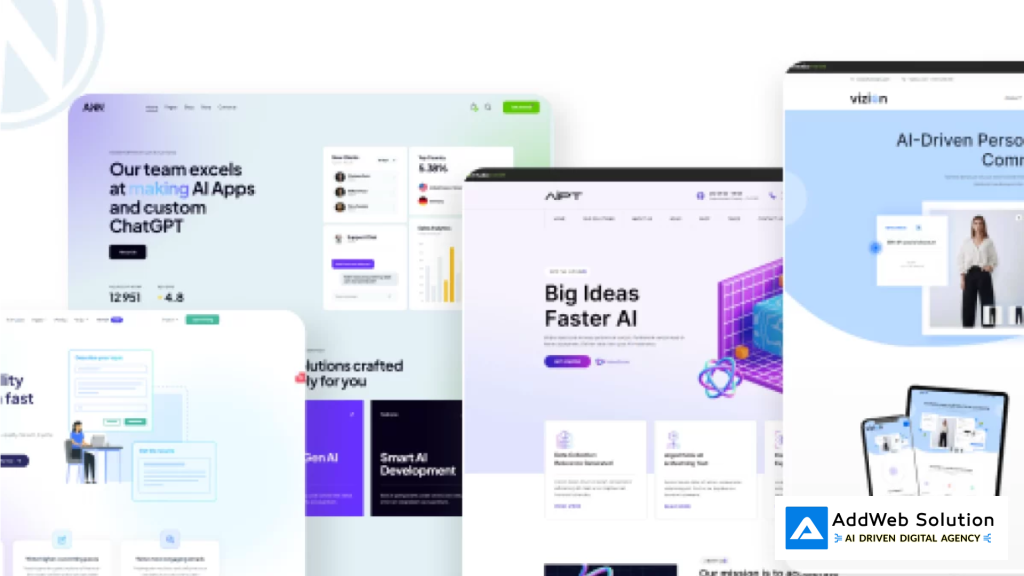
Examples of AI-powered website themes and dashboards highlighting personalization and smart features for upcoming WordPress development
The Technology Behind Smart Websites
Today’s personalization is based on advanced technology stacks that analyze user data in real-time and provide personalized experiences in a split second.
Data Collection and Processing
Personalization engines gather data from various sources:
- First-party data from user activity on your site
- Behavioral analytics of page views, clicks, and time spent
- Contextual data such as device, browser, and location
- CRM integration with customer history and preferences
Machine Learning Algorithms
AI examines user behavior patterns to know what content will be most relevant. Algorithms become more accurate over time at delivering personalized experiences.
Personalization occurs in real-time. When a user visits a page, the system goes through their profile and provides customized content within milliseconds.
Privacy and Personalization Balance
Personalization is successful when user privacy meets customization functionality. 78% of brands now regard first-party data as their most important personalization asset, compared to 37% in 2022.
Best practices are:
Transparency on data collection with explicit privacy policies
Cookieless tracking solutions for GDPR compliance
User consent management enabling visitors to manage data use
Focus on first-party data minimizing third-party cookie reliance
Industry Success Stories
E-commerce Revolution
Online stores employing personalization experience 10-15% boosts in conversion rates. Amazon’s recommendation system, based on browsing and purchase history, generates huge revenue uplift.
Content Publishing
News media and blogs employ dynamic content to display relevant articles based on reading history. This is done to enhance page views per session and lower bounce rates.
Service Businesses
Businesses operating locally employ location-based personalization in order to display relevant services, hours of operation, and contact details based on the visitor geography.
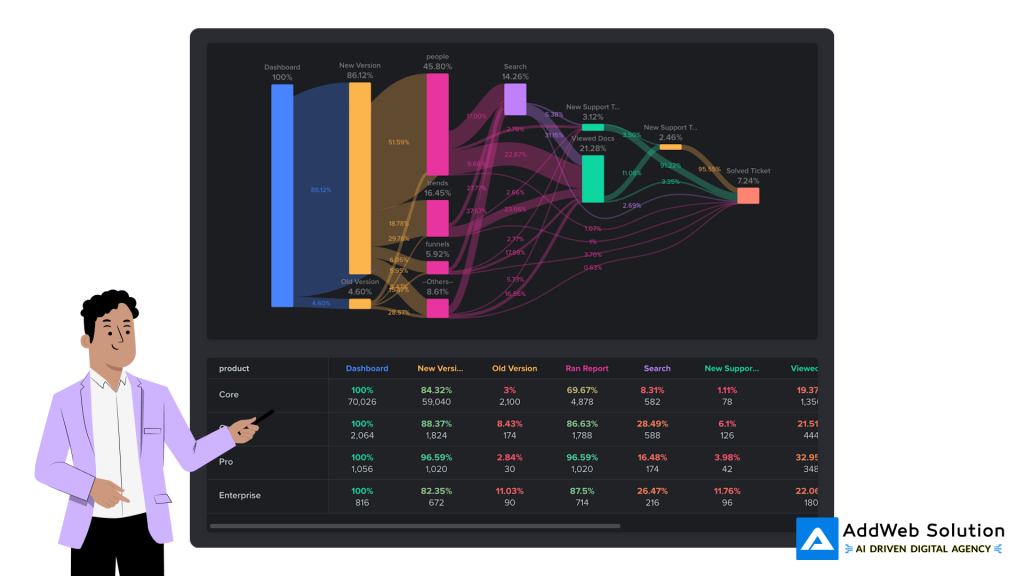
User journey analytics dashboard illustrating traffic flow and product performance at various stages
- Implementation Strategies by Business Type
- Small Business Strategy
Begin with simple personalization with software such as OptinMonster or If-So:
- Greet repeat visitors by name
- Display location-based contact details
- Provide relevant service offerings by referral source
- E-commerce Optimization
Apply detailed personalization with add-ons such as Logic Hop:
- Product suggestions by browsing history
- Abandoned cart recovery and customized messages
- Dynamic prices for different customer segments
- Content-Heavy Sites
Apply Advanced Custom Fields along with dynamic content plugins:
- Related article suggestions
- Customized content categories
- Reading lists based on users
- Measuring Personalization Success
- Key Performance Indicators (KPIs)
Monitor these metrics to gauge personalization performance:
- Conversion Rate – Top priority for most personalization initiatives
- Average Order Value – Key for e-commerce websites
- Time on Site – Displays content relevance
- Bounce Rate – Indicates whether personalization is cutting short immediate visits
- Customer Lifetime Value – Tracks long-term effect measurement
Analytics and Optimization
- Employ software such as Google Analytics 4 and dedicated personalization platforms to track outcomes. A/B testing various personalization strategies identifies the most productive methods.
ROI Calculation
- Most companies realize positive ROI in less than 5 weeks of applying personalization. The success depends on beginning with definite objectives and measuring on an ongoing basis.
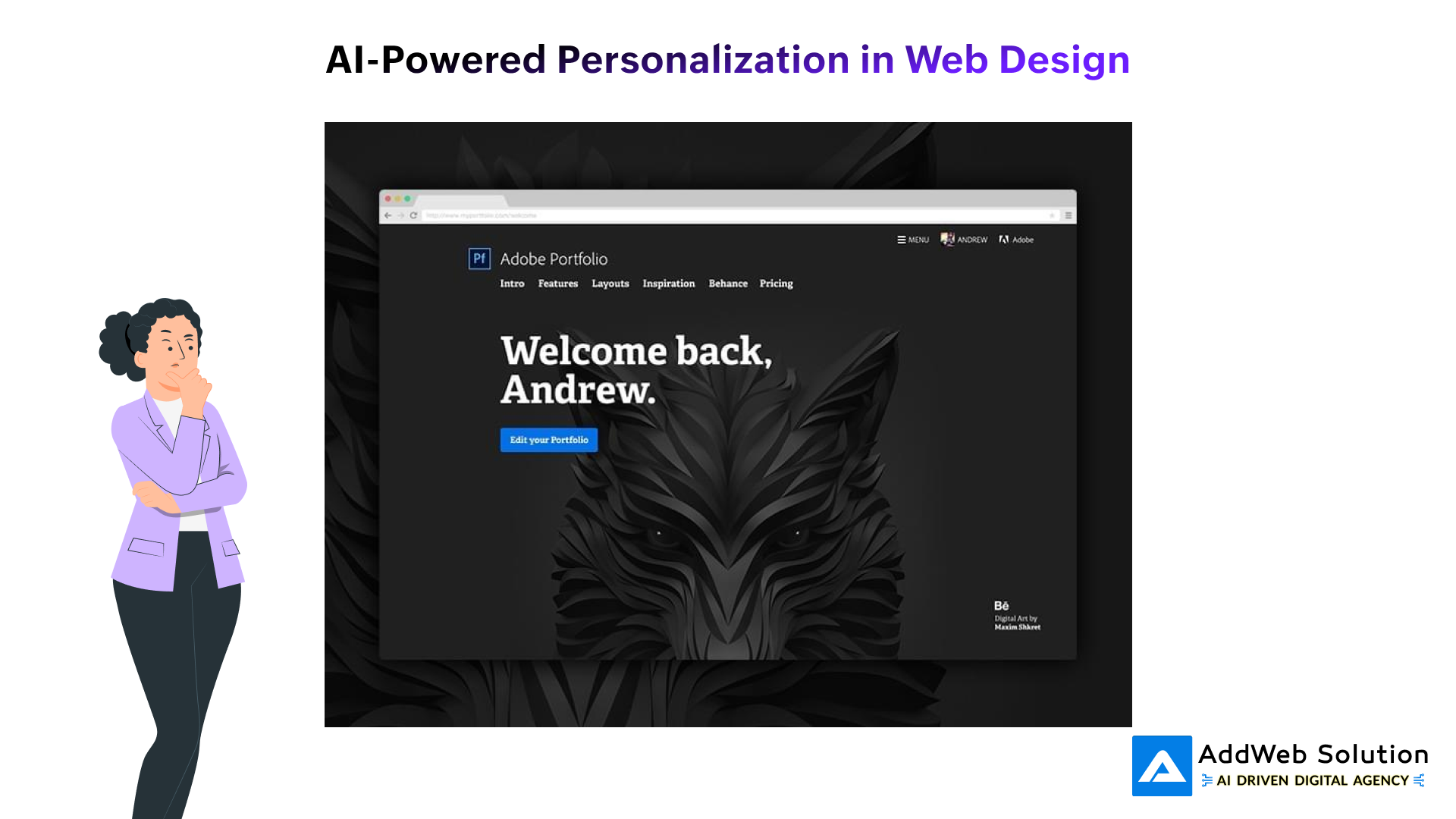
Adobe Portfolio website displaying personalized greeting and user-focused interface design
Future Trends Shaping Personalized Websites
Hyper-Personalization
Moving from rudimentary segmentation to personalization at the individual level based on real-time data and AI-driven predictions. This entails personalizing all aspects of the user experience, ranging from navigation to content organization.
Voice and Conversational Interfaces
Voice search optimization will become increasingly important as more people engage with websites using voice-based commands. WordPress websites must optimize for natural language input and voice-controlled functionality.
Predictive Personalization
Artificial intelligence will be able to predict what users need before they even think to ask, presenting relevant material based on forecasted behavior trends instead of only on historical information.
Cross-Channel Consistency
Personalization will be applied beyond websites to email, social media, and offline channels, bridging experiences across all touchpoints.
Getting Started with WordPress Personalization
Step 1: Define Your Goals
Determine what you wish to accomplish through personalization:
Maximize conversions
Enhance user engagement
Lower bounce rates
Increase customer satisfaction
Step 2: Choose Your Tools
Pick plugins depending on your technical ability and needs. Begin with easy solutions such as If-So before progressing to sophisticated platforms.
Step 3: Implement Gradually
Start with basic personalization such as location-based greetings or recognition of repeated visitors. Add complexity over time as you figure out what works.
Step 4: Test and Optimize
Employ A/B testing to contrast personal v. generic content. Quantify outcomes and adjust your strategy according to data.
Step 5: Scale Success
Once you have isolated effective personalization methods, scale them throughout your site and combine with other channels of marketing.
Turn website personalization into smarter growth with WordPress

Pooja Upadhyay
Director Of People Operations & Client Relations
The Bottom Line: Why Personalization Matters Now
Personalized sites aren’t a fad they’re the future of online experiences. WordPress’s growth as an AI-driven platform is well-positioned to provide the smart, responsive sites users increasingly demand.
The numbers don’t lie: companies that personalize experience get higher engagement, improved conversions, and more revenue. With WordPress driving almost half of all websites, the ongoing innovation in AI and personalization capabilities within the platform makes it the go-to platform for building intelligent, user-focused web experiences.
The question isn’t if to personalize it’s how fast you can start. With intuitive WordPress plugins and robust AI tools at your fingertips, building personalized sites has never been easier.
Scale small, track results, and grow what works. Your visitors expect personalized experiences, and WordPress provides everything necessary to deliver them well in 2025 and beyond.
- https://kinsta.com/wordpress-market-share/
- https://wordpress.com/blog/2025/04/17/wordpress-market-share/
- https://wordpress.com/blog/2025/08/04/whats-new-with-our-ai-website-builder-improved-features-more-possibilities/
- https://make.wordpress.org/ai/2025/07/17/ai-building-blocks/
- https://www.youtube.com/watch?v=zwtnG2cs0i8
