


You know what’s funny? Everyone talks about Shopify Plus like it’s either the holy grail of ecommerce or an overpriced money pit. The truth? It’s somewhere in between, and the decision isn’t as black and white as most people think.
I’ve been diving deep into the real numbers behind Shopify Plus, and let me tell you – there’s a lot more going on under the hood than just that $2,300 monthly price tag. With ecommerce hitting nearly $7 trillion globally by 2025, choosing the right platform isn’t just about features anymore. It’s about understanding the complete financial picture.
Here’s something that might surprise you: recent studies show Shopify Plus actually delivers 33% better Total Cost of Ownership compared to its competitors. But here’s the kicker – that doesn’t mean it’s right for everyone.
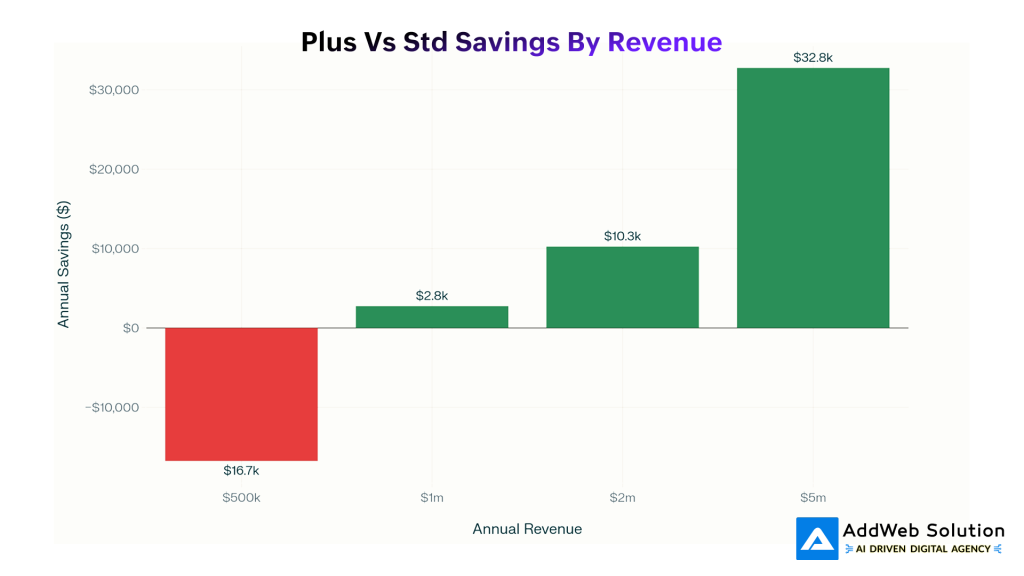
Shopify Plus Cost-Benefit Analysis by Revenue Level
Let’s Talk Real Money: What Shopify Plus Actually Costs
Beyond That Monthly Fee Everyone Freaks Out About
Okay, so everyone sees that $2,300/month number and either runs away screaming or jumps in without thinking. But here’s what’s really happening with Shopify Plus pricing – it’s not your typical subscription model.
First off, if you’re doing less than $800K monthly in sales, you pay that flat $2,300 (or $2,500 if you go month-to-month). But once you hit that $800K mark? You’re paying 0.25% of your monthly revenue instead. Sounds scary, right?
Actually, it’s pretty clever. A company doing $2 million monthly pays $5,000. Someone crushing it with $10 million monthly? They’re paying $25,000. The beauty is that Shopify only makes more money when you do – which means they’re actually invested in your success.
The Transaction Fee Game-Changer
This is where things get really interesting. Remember those annoying transaction fees that eat into your profits? Shopify Plus basically cuts them in half compared to regular plans.
Here’s the math that nobody talks about: if you’re processing $1 million annually, upgrading to Plus saves you about $2,760 just on transaction fees. Hit $2 million? You’re saving over $10,000. At $5 million, you’re pocketing an extra $32,760 every year.
But wait – there’s a catch. These savings only apply if you use Shopify Payments. Go with a third-party gateway and Shopify slaps you with extra fees ranging from 0.15% to 0.20%. For a $5 million business, that’s basically throwing away $7,500-$10,000 annually.
The Full Cost Picture (Spoiler: It’s Complicated)
Most people obsess over platform fees, but that’s just the tip of the iceberg. When analyzing Total Cost of Ownership, industry research shows significant advantages in implementation costs and timelines compared to alternatives like Salesforce Commerce Cloud.
Let me break down what a typical $2 million business actually spends over three years:
- Platform fees: 35% of total costs
- Transaction processing: 60% (the biggest chunk!)
- Setup and migration: 7%
- Apps and integrations: 14%
- Development and customization: 17%
- Support and training: 5%
The implementation costs? About 60-65% lower than alternatives, with 3 months to get up and running instead of 6-12 months with other enterprise platforms.
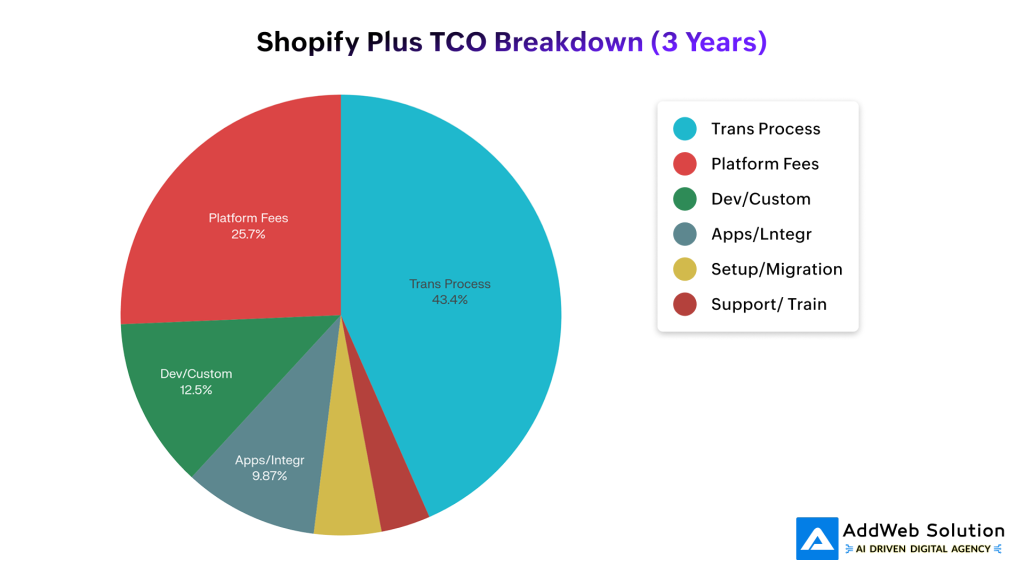
Shopify Plus 3-Year Total Cost of Ownership Breakdown ($2M Annual Revenue Business)


Real Stories: How Businesses Actually Fare
Aje’s Conversion Rate Explosion
Let’s talk about Aje, this Australian luxury fashion retailer that was struggling with their old platform. Within weeks of switching to Shopify Plus, their conversion rates shot up by 135%. That’s not a typo – one hundred and thirty-five percent.
What made the difference? They could finally handle international markets properly, manage multiple currencies without headaches, and their site didn’t crash during fashion week traffic spikes. The revenue increase alone paid for their platform upgrade several times over.
Tropeaka’s Million-Dollar Sale Event
Here’s another one that blew my mind. Tropeaka, a natural supplement company, started on regular Shopify but upgraded to Plus as they grew. Smart move, because during a three-day sale campaign, they generated over $1 million in revenue without a single checkout hiccup or downtime.
Try pulling that off on a standard plan during Black Friday. Good luck with that.
100% Pure’s Growth Journey
100% Pure had been struggling with their previous platform, losing significant revenue monthly due to performance issues. After migrating to Shopify Plus, they saw 40% year-over-year growth while managing inventory across multiple retail locations and ecommerce stores globally.
The kicker? Their site speed improved dramatically, and operational efficiency went through the roof.
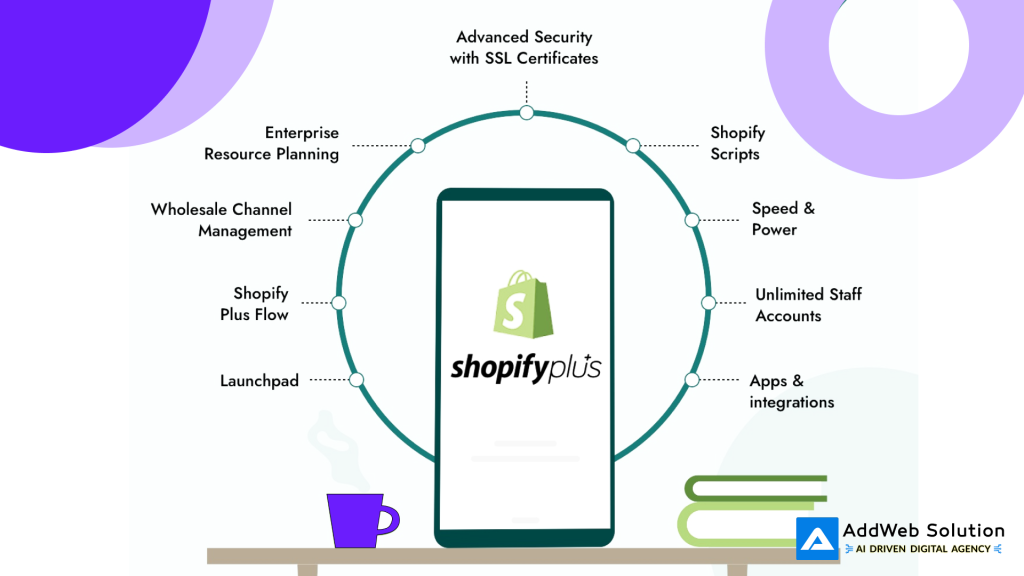
Key features and benefits of Shopify Plus are displayed in an infographic highlighting security, scalability, and advanced enterprise functionalities.
When Should You Actually Upgrade?
It’s Not Just About Revenue (Though That Matters)
Everyone says “upgrade at $1 million annual revenue” because that’s where the transaction fee math works out. But honestly? That’s oversimplified.
Growth velocity matters way more than absolute numbers. If you’re scaling from $1 million to $3 million in 12-18 months, you need Plus’s infrastructure before you hit those mathematical break-even points. Why? Because operational hiccups during rapid growth can cost you way more than platform fees.
The Real Upgrade Signals
Here’s what actually indicates you need Plus:
- Your checkout process needs customization (standard plans are limited)
- You’re expanding internationally (multiple currencies, tax compliance, localized experiences)
- You need B2B wholesale capabilities
- Your team exceeds 15 people (standard plans cap staff accounts)
- You’re dealing with traffic spikes that slow down your site
The Shopify Flow automation alone can save operations teams hundreds of hours monthly. That dedicated Merchant Success Manager? Pure gold when you’re scaling fast and need strategic guidance instead of just technical support.

Shopify Analytics dashboard showing net sales, sessions by device, and sales metrics for an e-commerce store.
When It’s Time to Leave Shopify Plus
Platform Limitations Hit Hard Sometimes
Look, Plus isn’t perfect. Some businesses outgrow it, especially those with massive product catalogs requiring extensive customization. If you need deep ERP integrations or complex B2B pricing logic that goes beyond what Plus offers, you might need something more flexible.
The Scale Paradox
Ironically, some mega-enterprises find Plus expensive at extreme scales. If you’re processing $50+ million annually, custom-built solutions or platforms with better high-volume pricing might make more financial sense. Transaction fees that benefit mid-market companies can become burdensome when you’re processing thousands of daily transactions.
Geographic and Compliance Headaches
Certain international markets or regulatory environments need capabilities beyond Plus’s current scope. Complex tax jurisdictions, specific compliance requirements, or local market integrations might force you toward regional alternatives.
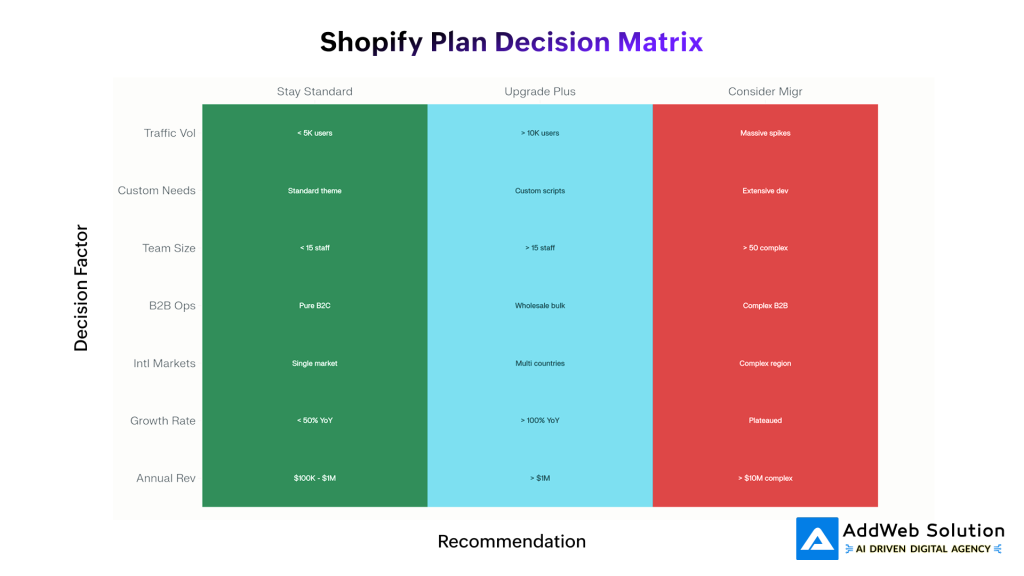
Shopify Plus Decision Framework: Upgrade, Stay, or Migrate
The Migration Reality Check
What It Actually Costs and Takes
Typical Shopify Plus migrations run between $15,000-$150,000, with most mid-market businesses spending $30,000-$75,000. The timeline? About 3-4 months compared to 6-12 months for alternatives.
The process breaks down like this:
- Discovery and planning: 4-6 weeks
- Data migration and cleanup: 2-3 weeks
- Design and theme setup: 4-8 weeks
- Testing and integration: 2-3 weeks
- Launch preparation: 1-2 weeks
Each phase needs specific resources and stakeholder involvement. Plan accordingly.
ROI Framework That Actually Works
Don’t just look at direct savings from reduced transaction fees. Factor in improved conversion rates from faster checkout, operational efficiency gains from automation, and revenue impact from better performance during peak periods.
Most businesses see ROI within 6-12 months when they consider the full picture – not just fee comparisons.

Breakdown of Total Cost of Ownership (TCO) formula showing detailed cost components across initial, support, maintenance, operational, and retirement costs to evaluate overall expenses.
Discover when Shopify Plus makes sense

Pooja Upadhyay
Director Of People Operations & Client Relations
Making the Strategic Call
Your Decision Matrix
The optimal choice depends on multiple factors working together:
- Annual revenue over $1M: Check
- Growth rate above 100% YoY: Check
- International expansion plans: Check
- B2B operations needed: Check
- Team larger than 15 people: Check
Hit most of these? Plus, it probably makes sense. Simple operations, predictable growth, single market focus, small team? An advanced plan might be your sweet spot while you monitor growth indicators.
Evaluating Alternatives
When Plus limitations become obvious, compare systematically:
- BigCommerce Enterprise: Different pricing structure, fewer built-in features
- Adobe Commerce: Extensive capabilities, higher implementation costs
- Custom Solutions: Maximum flexibility, significant technical investment required
Each has distinct TCO profiles and operational trade-offs you need to weigh against your specific requirements.
Future-Proofing Your Investment
Technology Evolution Considerations
The e-commerce landscape keeps evolving rapidly. Headless commerce, AI-powered personalization, omnichannel integration – these are becoming standard requirements. Plus’s API-first architecture and extensive app ecosystem position it well for emerging tech adoption.
But evaluate whether Plus’s development roadmap aligns with your long-term technical needs and industry-specific requirements.
Market Position Matters
Shopify’s public company status (NYSE: SHOP) and substantial R&D investment provide stability that many competitors can’t match. Their growth among enterprise customers shows market validation and continued development resources.
This influences long-term platform viability and integration ecosystem development – factors that significantly impact TCO over multi-year periods.
The Bottom Line
The economics of Shopify Plus go way beyond simple pricing comparisons. Revenue acceleration, operational efficiency, and strategic positioning – these all factor into the decision.
Businesses generating over $1 million annually with complex operations, international expansion plans, or rapid growth trajectories typically find Plus financially compelling. But the upgrade decision requires comprehensive TCO analysis, operational requirements assessment, team capabilities evaluation, and long-term strategic planning.
At AddWeb Solution, we guide enterprises through these complex platform decisions, ensuring technology investments align with business objectives and growth trajectories. Whether you’re upgrading to Plus, optimizing existing implementations, or evaluating alternatives, strategic platform selection remains fundamental to e-commerce success.
The hidden economics reveal a platform optimized for growth-oriented businesses willing to invest in infrastructure that scales with success. For enterprises meeting the right criteria, Plus doesn’t just reduce costs – it accelerates revenue growth and operational efficiency that justifies premium pricing through measurable business impact.
Source URLs:
- https://www.shopify.com/plus/pricing
- https://www.shopify.com/in/compare/tco
- https://www.shopify.com/in/case-studies
- https://www.shopify.com/in/case-studies/paul-and-joe
- https://www.shopify.com/in/enterprise/blog/total-cost-of-ownership
- https://www.shopify.com/news/shopify-q2-2025-financial-results
- https://scandicommerce.no/blogs/shopify-optimization-performance/shopify-plus-vs-standard-when-to-upgrade-your-store-2025-guide
