


This blog was originally published on August 21, 2025, and has been fully updated on Jun 26, 2026. All statistics, trends, technology references, and best practices have been revised to reflect the current landscape of custom software development.
The web is going through a seismic change in 2026, and if you use Webflow, you’re in the driver’s seat of this change. The no-code revolution isn’t on its way-doing is happening, and it’s changing the way we approach web design, development, and digital experiences. Let’s take a look at the state of websites today and what that means for your path with Webflow.



The Mobile-First Reality: Your Users Aren’t Waiting
Wake-up call time: 64% of all web traffic is currently coming from mobile devices, and that number is growing rapidly. If your site isn’t mobile-first, you’re basically disregarding two-thirds of your possible audience.

The numbers speak for themselves. Mobile-optimized websites stand at a 67% chance of ranking on Google’s front page, as opposed to non-optimized websites with bounce rates reaching up to 72%.
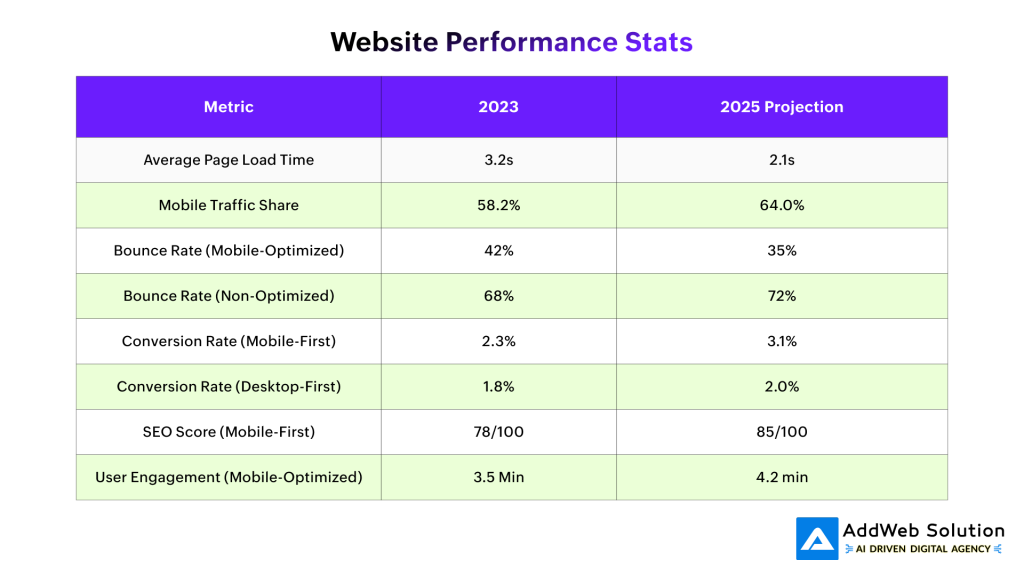
The Mobile Performance Revolution
Mobile-first design is no longer solely about how things look on small screens. It’s about designing experiences that are fast, intuitive, and conversion-oriented. Here are what’s behind the success in 2026:
- Page load times under 2.1 seconds are becoming the new standard
- Touch-friendly interfaces with buttons sized for thumbs, not cursors
- Progressive enhancement that works flawlessly across all devices
- Voice-optimized content as 31% of sites now integrate voice UI elements

Webflow’s Market Position: Small Share, Big Impact
Let’s talk about the elephant in the room. Webflow controls a mere 1.2% of the CMS market, which may be small by comparison to WordPress’s dominant 61.3% market share. But why does that number mean more than you think?

Webflow’s 2024 revenue of $212.5M is a whopping 66% year-on-year growth, demonstrating that market share is not the only metric-market momentum is what kills. The product has expanded from $14.4M in 2018 to more than $200M in 2024, a path that does much to indicate its value proposition.

Why Webflow Punches Above Its Weight
Even with a smaller market share, Webflow sites receive more traffic on average than Shopify, Wix, Squarespace, and even WordPress-built sites. It’s not an accident-it’s due to:
Better Performance: Webflow’s efficient code generation and AWS hosting provide incredibly fast loading speeds
Design Superiority: The visual development process draws brands that value aesthetics and user experience
Business Appeal: Dell, Upwork, Michael Kors, and Rakuten have all made the switch to Webflow for a reason
The AI Revolution: Your Design Assistant is Here
Artificial Intelligence isn’t revolutionizing web design-it’s transforming it. In 2026, 78% of websites utilize AI-driven personalization, and that figure is expected to reach 92% by the end of the year.

How AI is Transforming Webflow Workflows
For Webflow users, AI integration means:
- Automated layout suggestions based on content and industry
- Real-time content optimization for different user segments
- Predictive user experience that adapts to visitor behavior
- Smart form creation that reduces abandonment rates
The key isn’t to fear AI replacement-it’s to embrace AI enhancement. As one industry expert notes, “AI can now help with automation, targeting, and creativity in PPC, but it can’t take your site to the finish line. You still need human strategy”.
Discover 2026’s game-changing Webflow trends

Pooja Upadhyay
Director Of People Operations & Client Relations
Design Trends That Actually Matter in 2026
Let’s cut through the hype and concentrate on trends that will affect your bottom line, not your Instagram feed.

The Big Five Trends Driving Results
1. Mobile-First Design (98% adoption projected)
This is no longer up for debate. Google’s mobile-first indexing means your mobile experience is your SEO approach.
2. AI-Powered Personalization (92% adoption projected)
Dynamic content that responds to user behavior is becoming table stakes for competitive websites.
3. Micro-Animations (90% adoption projected)
Subtle motion design that informs and helps users without overwhelming the experience.
4. Dark Mode Integration (85% adoption projected)
User-controlled themes that reduce eye strain and appear modern-especially crucial for SaaS and tech platforms.
5. Bold Typography (85% adoption projected)
Custom fonts and expressive type hierarchies that establish brand personality and improve readability.

The Authenticity Movement
There’s a counter-trend worth noting: anti-design and human imperfection. Users are gravitating toward websites that feel authentic rather than overly polished. This means:
- Intentional imperfections that create personality
- Hand-drawn elements mixed with digital precision
- Asymmetrical layouts that break traditional grid constraints
- Brutalist design elements that prioritize function over form
The No-Code Explosion: Riding the Wave
The no-code phenomenon has grown from a niche product to a $26.9 billion market in 2026.
For Webflow users, this is an opportunity and competition.
Webflow vs. The Competition

The statistics show Webflow’s sweet spot: high design freedom with great SEO, balanced with an approachable learning curve. Although competition might be simpler to get started with, Webflow provides greater long-term value for serious web builds.
Performance Metrics That Matter
Let’s talk numbers that impact your business, not vanity metrics that look good in presentations.
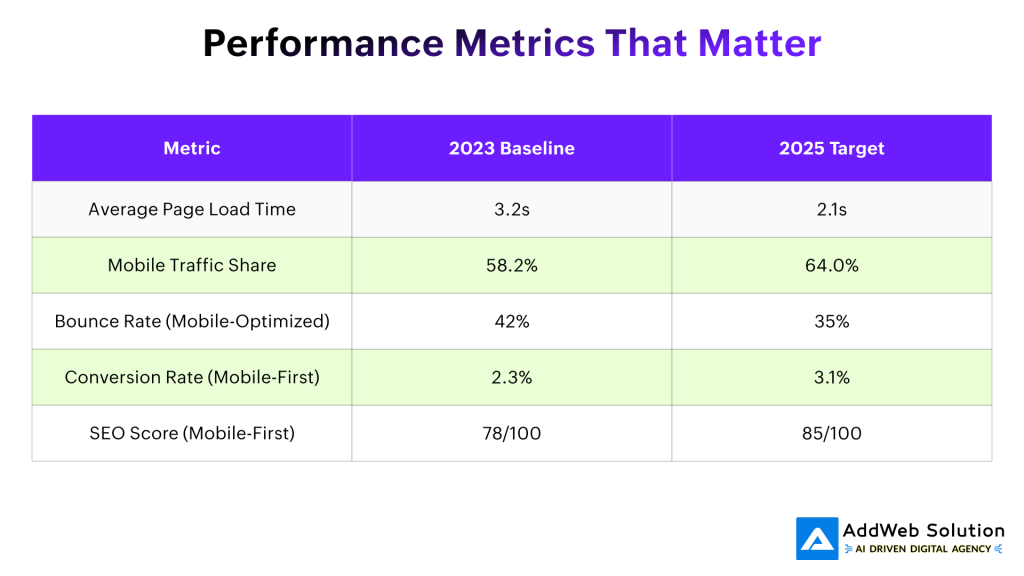
These benchmarks show where the industry is heading. Webflow users who optimize for these metrics now will have significant competitive advantages as these become standard expectations.
E-commerce Evolution: Beyond Simple Stores
E-commerce on Webflow has seen remarkable growth, with active e-commerce websites increasing by 647.81% from 2020 to 2023. By 2024, this reached 12,501 active stores, representing 25.73% year-over-year growth.
What’s Driving E-commerce Success
- Custom checkout experiences that match brand identity
- Flexible payment integration with Stripe, PayPal, and digital wallets
- Inventory management that scales with business growth
- Multi-channel selling that extends beyond the website
The differentiator? Design control. Although Shopify may provide additional e-commerce functionality out-of-the-box, Webflow enables brands to build distinctive shopping experiences that get noticed in competitive markets.
The SEO Advantage: Why Webflow Sites Rank Better
Here’s something most people don’t talk about: Webflow’s technical SEO advantages are significant. The platform generates clean, semantic HTML and includes:
- Automatic XML sitemap generation that updates with content changes
- Built-in schema markup for better search engine understanding
- Optimized code structure that loads faster than plugin-heavy alternatives
- Mobile-responsive by design meeting Google’s core requirements
This technical foundation, combined with Webflow’s content management capabilities, creates a powerful SEO platform that doesn’t require extensive plugin management or technical maintenance.
Looking Ahead: What Webflow Users Should Prioritize
According to trends and market insights, here’s your 2026 action plan:
Immediate Priorities (Next 3 Months)
- Audit your mobile experience – Test load times, touch targets, and conversion flows
- Implement AI-powered personalization – Begin with traffic source-based dynamic content
- Optimize for Core Web Vitals – Provide users with control of the view
- Add dark mode support – Give users control over their viewing experience
Medium-term Goals (6-12 Months)
- Integrate voice search optimization – Organize content for conversational searches
- Experiment with micro-animations – Introduce gentle movements that enrich instead of distract
- Build sustainable design practices – Refine hosting, images, and code for environmental sustainability
- Develop progressive web app features – Close the gap between web and native app experiences
Long-term Vision (12+ Months)
- Explore AR/VR integration – Set up for immersive web experiences as technology evolves
- Build for voice interfaces – Design for screen readers and voice assistants
- Implement advanced AI personalization – Move beyond basic dynamic content to predictive experiences
- Scale internationally – Prepare multi-language, multi-currency experiences
The Human Element: Why Design Still Matters
In the era of AI-powered automation and template overkill, human ingenuity and strategic thinking are more important, not less. Webflow’s visual development paradigm returns control to designers, enabling:
- Tailored solutions that address individual business needs
- Brand distinction through distinctive visual experiences
- Human-centered design prioritizing people’s needs over technical limitations
- Iterative refinement informed by actual user feedback and data
Conclusion: Your Webflow Advantage
The condition of websites in 2026 is described as one where there is swift technology evolution, growing user expectations, and tough competition. But for users of Webflow, this is an opportunity, not a threat.
Your choice of platform positions you at the nexus of design freedom, technical capability, and user experience maximization. Competitors might control larger market shares, but Webflow’s emphasis on quality over quantity builds durable competitive differentiators.
The secret to success isn’t to follow every fad-it’s to know which ones serve your users’ purposes and your company’s objectives. Mobile-first design isn’t a choice, AI-driven personalization is becoming crucial, and performance optimization has a direct effect on your bottom line.
As we navigate through 2026, keep in mind that amazing websites aren’t constructed by tools themselves-they’re built by humans who grasp technology and human behavior. Webflow provides you with the canvas; your creativity, strategy, and user attention make the masterpiece.
The future of web design is visual, intuitive, and human-centric. With Webflow as your foundation, you’re not only staying ahead of the curve-you’re set to lead.
Source URLs:
https://www.thealien.design/insights/webflow-usage-statistics-2025
https://looka.com/blog/website-design-trends/
https://storeleads.app/reports/webflow
https://webflow.com/resources/report/2025-state-of-the-website
https://mycodelesswebsite.com/webflow-statistics/
https://www.theedigital.com/blog/web-design-trends
https://sacra.com/c/webflow/
https://www.amraandelma.com/mobile-first-indexing-statistics/
Unlock the future of website design today
Pooja Upadhyay
Director Of People Operations & Client Relations
