


The verdict is in from nearly 300 senior developers and CTOs worldwide: Flutter doesn’t just promise faster development—it delivers it. Over 56% of teams report building apps more than 50% faster with Flutter compared to native development. That’s not a minor optimization; that’s a game-changer. For companies racing to ship products in 2025, Flutter’s combination of speed, performance, and developer experience has become a non-negotiable competitive advantage.
The Speed Advantage That Numbers Don’t Lie About
Let’s start with hard data. According to the independent Flutter CTO Report 2024—based on responses from 281 senior developers, CTOs, and tech leads across 70 countries—56.4% of developers reported Flutter development is more than 50% faster than native iOS/Android development. Another 24.8% reported 20-50% speed improvements. When you combine these figures, over 81% of experienced developers cited at least 20% faster development velocity.
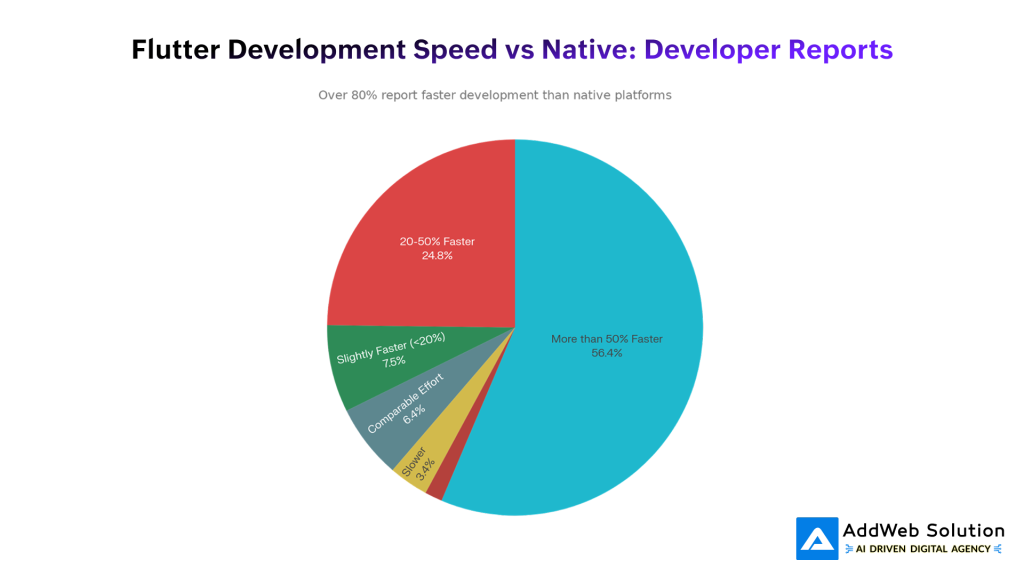
Developer Survey: Flutter Development Speed vs. Native (Flutter CTO Report 2024)
What does this mean in practical terms? A team that would typically need 12 months to build separate iOS and Android apps natively can now ship the same functionality in 8-10 months using a single Flutter codebase. That’s not hyperbole—it’s the consensus of developers actively shipping production apps.
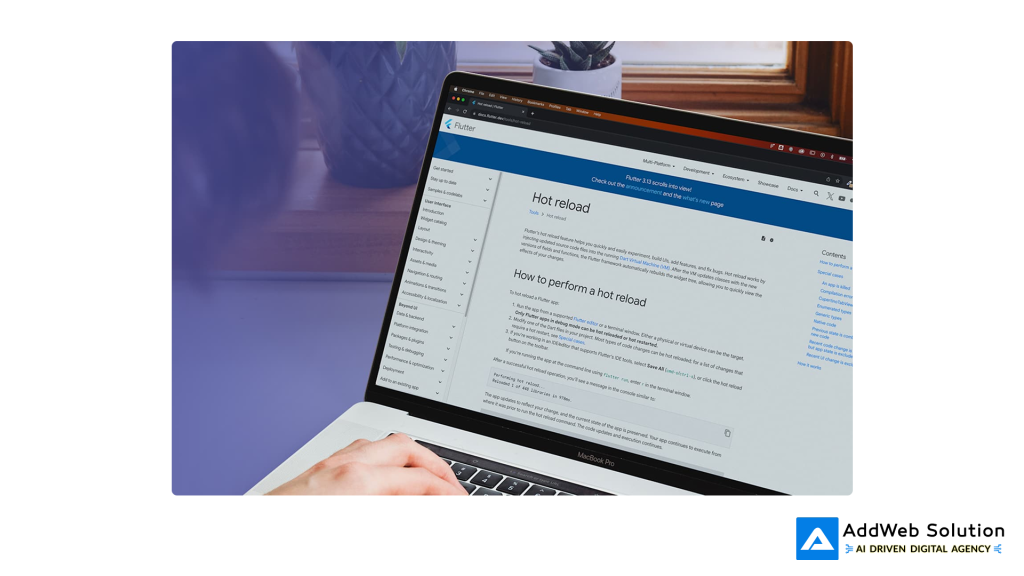
Flutter Hot Reload Feature: Benefits, Expert Insights
The speed doesn’t come from magic, though. It comes from three converging factors: a single codebase that compiles to native machine code, a developer experience optimized for rapid iteration, and a widget system that lets builders move fast without sacrificing performance. Flutter achieves 96% of native Android performance and 91% of native iOS performance while reducing development overhead.


Why Hot Reload Changes Everything
Here’s where the real magic happens. Flutter’s Hot Reload feature allows developers to inject code changes directly into a running app without losing application state. Change a color, update business logic, fix a bug—and see the result in under a second. Your user input stays. Your navigation state persists. Your progress through multi-step flows remains intact.
Compare this to traditional native development where every change triggers a full rebuild, restart, and loss of app state. You’ve exited your form, navigated back to the login screen, and have to re-enter credentials just to test a UI tweak.
The impact on developer productivity is profound. Developers report spending less time waiting for builds and more time experimenting with solutions. One study found that developers can complete a year-long backlog within 8-10 months using Flutter—leaving plenty of room for new features and iterations.
Teams using Hot Reload effectively report:
- Faster UI development cycles with instant visual feedback
- Quicker bug fixes by testing solutions in milliseconds instead of minutes
- Better collaboration between developers and designers who can see changes in real-time
- Reduced debugging time by preserving app state while testing different scenarios
Real-World Impact: Enterprise Case Studies
The speed advantage isn’t theoretical. Major corporations across finance, automotive, and retail have validated it with real-world results.
BMW reduced release cycles by 33% while maintaining quality standards for in-car infotainment systems. A single Flutter codebase replaced parallel native teams, eliminating redundant workflows.
Google Ads rebuilt their mobile app with Flutter and saw a 33% increase in customer satisfaction scores. The smoother animations, faster rendering, and responsive interface directly improved user perception and engagement metrics.
Nubank, Brazil’s largest digital bank with over 50 million customers, unified its front-end development team on Flutter. The framework allowed them to ship new financial features simultaneously on iOS and Android—impossible to maintain at scale with separate native codebases.
Alibaba’s Xianyu marketplace serves over 50 million users built entirely on Flutter. Managing that scale while iterating quickly across two platforms isn’t a realistic scenario with native development.

Cross Platform App Development: Frameworks and Advantages
These aren’t edge cases. They’re the new standard. 13% of Flutter apps now serve audiences larger than 1 million users.
Developer Experience: The Hidden Multiplier
Speed metrics are important, but they’re only half the story. Developer experience is the other half—and it compounds the velocity advantage.
The Flutter CTO Report found that 66.2% of developers ranked developer experience as a decisive factor in choosing Flutter. That’s right below code reusability (89.7%) and ahead of cost concerns

Enterprise Adoption Drivers: Why Companies Choose Flutter (Flutter CTO Report 2024)
What explains this? Several things:
1. Unified Workflow Across Platforms
Write once, deploy everywhere. No context switching between Swift, Kotlin, and Android-specific libraries. One Dart codebase. One testing approach. One set of patterns and conventions. Your mental model stays intact.
2. Tooling That Scales with Complexity
Flutter DevTools provides frame-by-frame performance analysis, memory profiling, and integrated debugging—without requiring separate tools for iOS and Android. As your app grows, the tools grow with it.
3. Lower Barrier to Entry
Developers transitioning from native Android are increasingly willing to adopt Flutter (up from 42.3% to 51.9% in recent years). iOS developers are following the same trend (24.2% to 35.5%). The framework syntax is approachable, the learning curve is gentler, and productivity arrives faster.
4. Measurable Satisfaction
95.7% of senior developers would choose Flutter again, and the Net Promoter Score of 73 indicates that a large majority (75.8%) actively recommend it to peers. That’s enterprise-grade confidence in a tool.
Key Metrics & Industry Context
⚡ Development Speed
- 56.4% of developers report >50% faster development vs. native
- Over 80% report at least 20% improvements
- Teams can complete year-long backlogs in 8-10 months
💰 Business Impact
- 64.8% cite lower development costs as a key reason for adoption
- 57.7% prioritize quicker time-to-market
- 50.5% report high performance without performance sacrifices
👨💻 Developer Adoption
- 2 million active Flutter developers globally
- 500,000+ Flutter apps published across app stores
- 42% of developers globally use Flutter (Statista 2024)
📊 Enterprise Confidence
- 95.7% of senior developers would choose Flutter again
- 85% consider Flutter suitable for large-scale projects
- Companies like BMW, Nubank, Alibaba, Google, and Toyota ship production apps
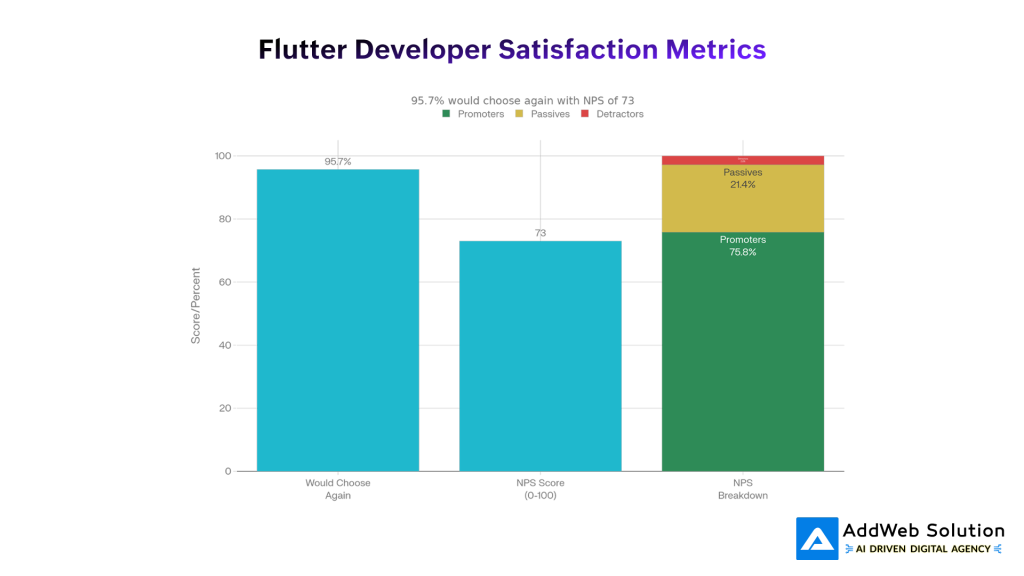
Developer Satisfaction: Flutter’s High Recommendation Rate & Net Promoter Score
Start today with a tailored plan, starter folder structure, and tooling setup to unlock scalable, enterprise-grade Flutter apps.

Pooja Upadhyay
Director Of People Operations & Client Relations
The Bottom Line
Developer velocity matters because it directly translates to business outcomes. Faster shipping means quicker feedback from users, faster pivots when markets shift, faster feature delivery when competitors move. Flutter doesn’t just make developers faster—it compounds that speed advantage by improving the entire development experience.
For AddWeb Solution’s clients, this means one thing: choosing Flutter isn’t a technical decision; it’s a strategic one. When development teams need to move at startup velocity with enterprise-grade code quality, Flutter delivers.
The data from nearly 300 senior developers, the validation from billion-dollar companies, and the growing ecosystem of tools and talent all point to the same conclusion: Flutter isn’t winning where speed is everything—it’s winning where speed is just one part of a larger advantage in quality, maintainability, and developer satisfaction.
If you’re evaluating frameworks for your next product or looking to accelerate your existing mobile roadmap, the question isn’t whether Flutter can keep up. It’s whether you can afford to choose anything else.
