


Knowing your audience is never simply a matter of age—it’s the ability to design experiences that resonate with essentially different digital natives, adapters, and pragmatists. As Millennials make up 35% of the population, and Gen Z and Gen X each represent 25%, designers must navigate the challenge of designing interfaces that resonate with distinctly different generational mindsets.
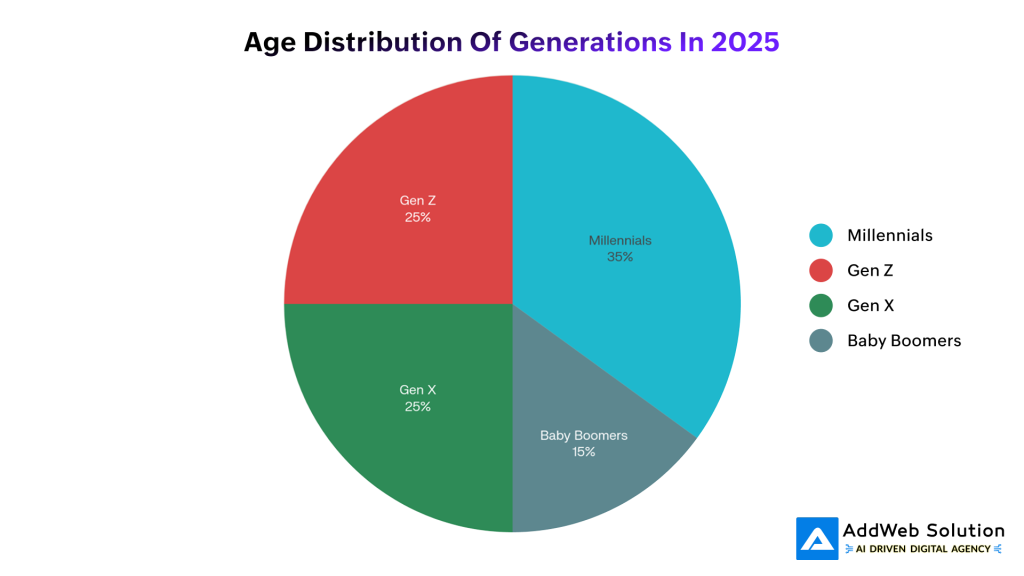
Population Distribution by Generation in 2025
The potential is great: 79% of Gen Z and 78% of Millennials view the selection of font as essential for engagement, with just 45% of Gen X agreeing. It’s not about looks—it’s about grasping how three generations take in information, engage with technology, and make buying decisions in various ways.
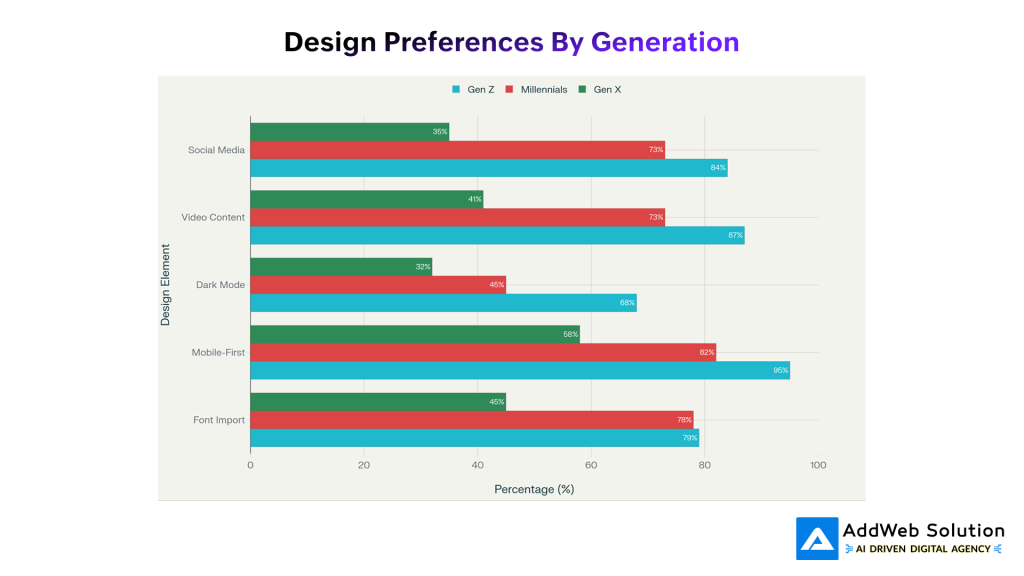
Design Element Preferences Across Generations
The Generational Landscape: Who Are We Designing For?
Generation Z (Ages 13-28): The Digital Natives
Growing up in an era where smartphones already existed everywhere, Gen Z is the first generation that’s truly mobile-native. They’ve never lived in a time without fast internet, social media, or immediate information at hand.
Key Characteristics:
- 95% like mobile-first design strategies
- Process information 8 seconds faster than any other generation
- 84% are influenced by social media when deciding
- Prefer authenticity over polish—too polished can come across as insincere
Millennials (Ages 29-44): The Digital Adapters
Millennials lived through the digital revolution, evolving from dial-up to smartphones throughout their youth. This experience informed their expectation of seamless, intuitive experiences.
Key Characteristics:
- 82% want mobile-first but value consistency across multiple devices
- Prioritize rich content and narrative storytelling over speed of consumption
- 73% shaped by social media, yet favor deeper research
- Value functionality and user experience over glitzy presentation


Generation X (Ages 45-60): The Digital Pragmatists
Frequently referred to as “The Forgotten Generation,” Gen X straddles analog and digital realms. They accept technology when it provides obvious utility but still retain a preference for traditional, tried methods.
Key Characteristics:
- 58% at ease with mobile but frequently prefer desktop experiences
- Prefer clear navigation and plain information
- 35% affected by social media—prefer standard advertising and word of mouth
- Value professional, utilitarian design over fashionable looks
Visual Design: Speaking Each Generation’s Language

Color Psychology Across Generations
Color tastes expose profound psychological distinctions across generations based on their cultural background and digital affluence.
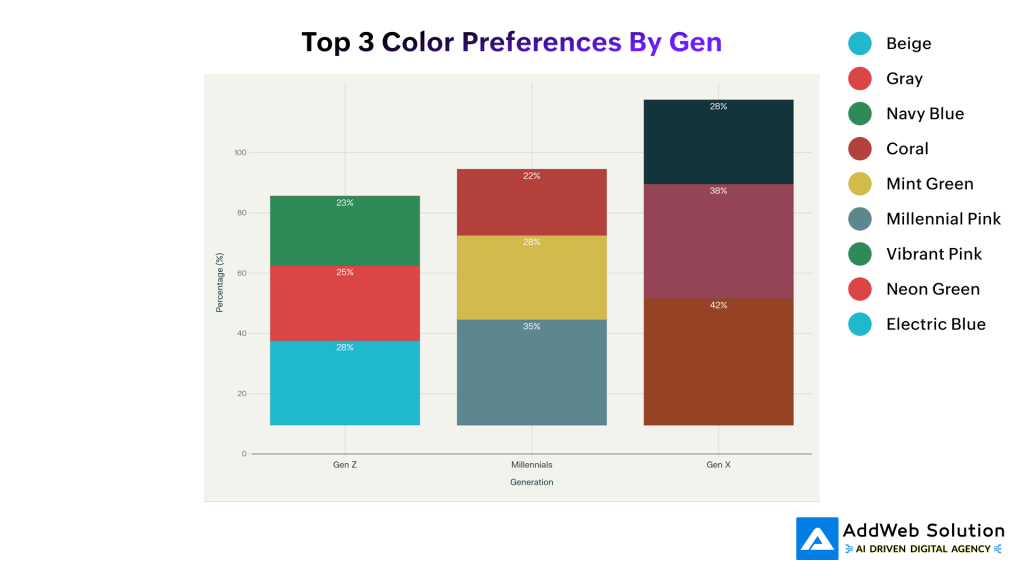
Color Preferences by Generation
Gen Z: Bold and Electric
- Electric Blue (28%), Neon Green (25%), Vibrant Pink (23%)
- Drawn to high-contrast, saturated colors that pop on social media
- Gen Z Yellow emerged as their signature color—bright, optimistic, and Instagram-ready
- Favor gradients and dynamic color combinations over static palettes
Millennials: Clean and Modern
- Millennial Pink (35%), Mint Green (28%), Coral (22%)
- Prefer sophisticated pastels and muted brights
- Millennial Pink became so iconic that brands like Glossier trademarked their specific shade
- Appreciate balanced palettes that convey both professionalism and personality
Gen X: Professional and Trustworthy
- Navy Blue (42%), Gray (38%), Beige (28%)
- Gravitate toward classic, conservative colors that signal reliability
- Prefer muted tones with strategic accent colors
- Value timeless color choices over trendy palettes
Typography That Resonates
Font choices carry significant weight in generational appeal, with younger generations viewing typography as a form of self-expression.
Gen Z Typography:
- Bold, experimental fonts that break conventional rules
- 79% consider font choice crucial for social media engagement
- Appreciate variable fonts and dynamic typography that responds to interaction
- Comfortable with unconventional layouts and brutalist design elements
Millennial Typography:
- Clean, modern sans-serif fonts that prioritize readability
- 78% value distinctive font choices for brand differentiation
- Prefer medium weight fonts with good hierarchy
- Respond well to custom typography that supports brand storytelling
Gen X Typography:
- Traditional, highly readable fonts that don’t distract from content
- 45% consider font choice important—functionality trumps style
- Prefer standard serif or sans-serif fonts with clear hierarchy
- Value consistency over creativity in typographic choices
User Experience Design Strategies
Navigation and Information Architecture
How users expect to find information reveals fundamental differences in digital behavior patterns.
Gen Z: Visual and Intuitive
- Icon-heavy navigation with minimal text labels
- Prefer vertical scrolling and single-thumb navigation on mobile
- Micro-interactions and animations guide user flow
- Comfortable with non-linear browsing patterns
Millennial Navigation Priorities:
- Minimal clicks to reach desired content
- Search functionality prominently featured
- Clear breadcrumbs and progress indicators
- Responsive design that works consistently across devices
Gen X: Clear and Hierarchical
- Traditional menu structures with logical categories
- Visible navigation elements—no hidden hamburger menus
- Multiple contact options including phone numbers
- Consistent placement of navigation elements across pages
Content Strategy by Generation
Gen Z Content Preferences:
- Video-first approach: 87% prefer video content
- Snackable content optimized for 8-second attention spans
- User-generated content over professional photography
- Memes, GIFs, and cultural references that demonstrate brand awareness
Millennial Content Strategy:
- Story-driven content that builds emotional connections
- Detailed product information and comparison tools
- 73% prefer video content but also value comprehensive written content
- Social proof through reviews and testimonials
Gen X Content Approach:
- Direct, informational content without unnecessary embellishment
- 41% engage with video content—prefer when it adds clear value
- Comprehensive product details and specifications
- Traditional trust signals like certifications and awards
Technology Interaction Patterns
Device and Platform Preferences
Understanding how each generation interacts with technology informs design decisions from layout to functionality.
Mobile-First Imperative for Gen Z:
- 95% prefer mobile-first design
- Average 7+ hours daily on mobile devices
- Vertical video consumption as default expectation
- App-like web experiences with smooth transitions
Millennials: Multi-Device Consistency
- 82% prefer mobile-first but use multiple devices throughout the day
- Expect seamless experience across desktop, tablet, and mobile
- Research on desktop, purchase on mobile behavior patterns
- Cross-platform synchronization highly valued
Gen X: Desktop-Centric with Mobile Growth
- 58% comfortable with mobile but desktop remains preferred for complex tasks
- Email remains primary communication channel for business
- Phone contact options essential for trust-building
- Gradual mobile adoption driven by necessity rather than preference
Loading Speed Expectations
Performance expectations vary dramatically across generations, impacting everything from hosting to image optimization.
| Generation | Expected Load Time | Bounce Rate Threshold |
| Gen Z | Under 3 seconds | 53% abandon after 3s |
| Millennials | Under 5 seconds | 40% abandon after 5s |
| Gen X | Under 8 seconds | 30% abandon after 8s |
Practical Design Implementation
Gen Z Design Checklist
Mobile-first responsive design with vertical layouts
Bold color palettes with high contrast ratios
Micro-interactions on buttons, forms, and navigation
Video backgrounds or hero content autoplay
Social media integration for sharing and login
Dark mode option available
Instant loading with progressive web app features
Minimal text with visual storytelling priority
Millennial Design Checklist
Clean, minimalist interface with strategic white space
Intuitive navigation with clear user flow
Multi-device optimization with consistent experience
Search functionality prominently placed
Detailed product information with comparison tools
Social proof through reviews and testimonials
Email capture and newsletter signup options
Sustainability messaging and brand values
Gen X Design Checklist
Professional color scheme with classic combinations
Clear navigation hierarchy with text labels
Contact information prominently displayed
Traditional trust indicators (certifications, awards)
Phone-friendly design with click-to-call buttons
Comprehensive content without fluff or jargon
Desktop-optimized layouts that work on mobile
Email and phone support options clearly available
Creating Multi-Generational Design Systems
The most successful designs don’t choose one generation over others—they create flexible systems that adapt to different user needs and preferences.
Universal Design Principles
- Accessibility first: Large enough touch targets, sufficient color contrast, clear typography
- Progressive enhancement: Core functionality works for everyone, enhanced features for capable devices
- Performance optimization: Fast loading across all connection speeds
- Clear information hierarchy: Important content easy to find regardless of navigation style
Adaptive Interface Elements
Navigation Systems:
- Primary navigation: Clear, text-based menus for Gen X
- Secondary navigation: Icon-based quick access for Gen Z
- Search functionality: Prominent placement for Millennials
- Breadcrumbs: Always visible for context and wayfinding
Content Presentation:
- Expandable sections: Allow Gen X to access detailed information
- Video thumbnails: Let Gen Z access rich media immediately
- Progressive disclosure: Show summary first, details on demand
- Multiple format options: Text, video, infographic versions of key content
Learn design strategies that appeal to every generation effectively

Pooja Upadhyay
Director Of People Operations & Client Relations
Measuring Success Across Generations
Key Performance Indicators by Generation
Gen Z Metrics:
- Engagement rate on social features
- Video completion rates
- Mobile conversion rates
- Time spent on visual content
Millennial Metrics:
- Multi-device session continuity
- Email signup conversion rates
- Content sharing frequency
- Return visitor percentage
Gen X Metrics:
- Contact form completion rates
- Phone call conversions
- Desktop session duration
- Trust indicator interaction rates
Conclusion
The future of design lies not in choosing sides, but in creating experiences that acknowledge generational differences while maintaining universal usability principles. By understanding what drives each generation’s digital behavior—from Gen Z’s need for authentic visual expression to Gen X’s preference for straightforward functionality—designers can create interfaces that feel native to every user.
Remember: These are guidelines, not rules. Within each generation exists tremendous diversity of needs, preferences, and technological comfort levels. The best designs remain flexible, accessible, and user-tested across all target demographics.
Success comes from designing with empathy, understanding that a 15-year-old Gen Z user and a 55-year-old Gen X professional both deserve digital experiences that respect their time, meet their needs, and reflect their values. The most effective approach combines generational insights with individual user research to create truly inclusive digital experiences.
Source URLs
- https://www.smashingmagazine.com/2024/10/designing-for-gen-z/
- https://www.webflow.com/blog/generational-marketing-colors
- https://www.emarketer.com/learningcenter/guides/generation-z-facts/
- https://www.deloitte.com/global/en/issues/work/genz-millennial-survey.html
- https://www.cta.tech/press-releases/cta-research-exploring-gen-z-views-and-preferences-in-technology
- https://www.nielseniq.com/global/en/insights/report/2025/the-x-factor/
- https://www.frontiersin.org/journals/psychology/articles/10.3389/fpsyg.2024.1501633/full
