


The truth is harsh: 75% of non-profits websites are currently at risk of compliance, with only 25% fully in compliance with regulations. As the world moves ever more online, compliance with your website is no longer merely a matter of evading lawsuits but of serving your people effectively and safeguarding your organization’s future. With ADA website lawsuits now exceeding 2,000 cases in just the first half of 2025, and GDPR fines amounting to €5.88 billion worldwide, non-profits can no longer afford to wait to address compliance.
Why Compliance Matters More Than Ever
The online environment has profoundly changed the way nonprofits function, with websites becoming indispensable contact points for donors, volunteers, and recipients. Yet the online revolution comes with lawful obligations that many organizations undervalue.
The Three Pillars of Nonprofit Website Compliance:
- ADA (Americans with Disabilities Act): Ensures your website is accessible to people with disabilities
- HIPAA (Health Insurance Portability and Accountability Act): Protects health information for healthcare-related nonprofits
- GDPR (General Data Protection Regulation): Safeguards personal data of European visitors
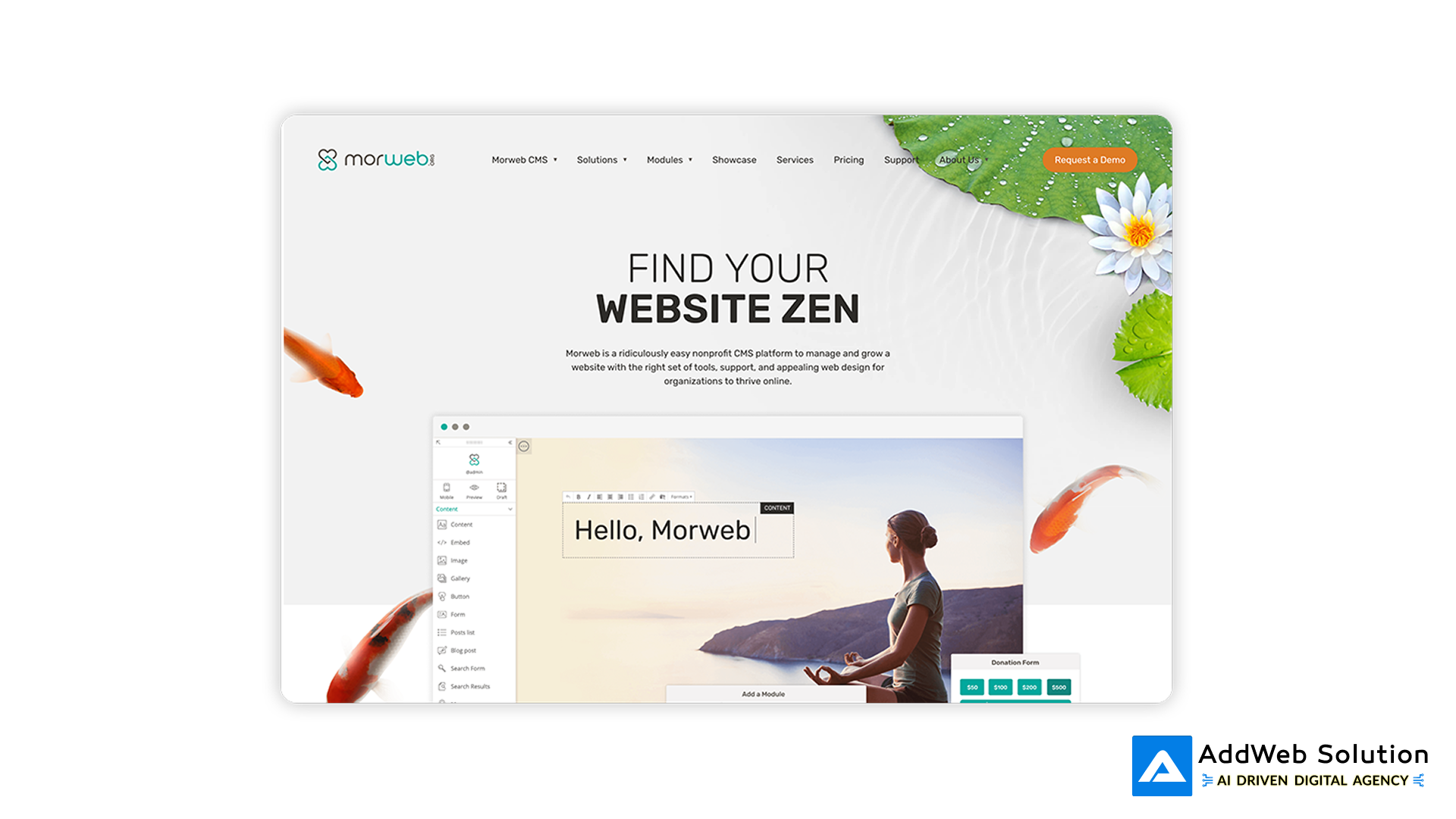
Morweb’s nonprofit CMS platform interface emphasizing easy, user-friendly website design inspired by tranquility and accessibility
The Cost of Non-Compliance
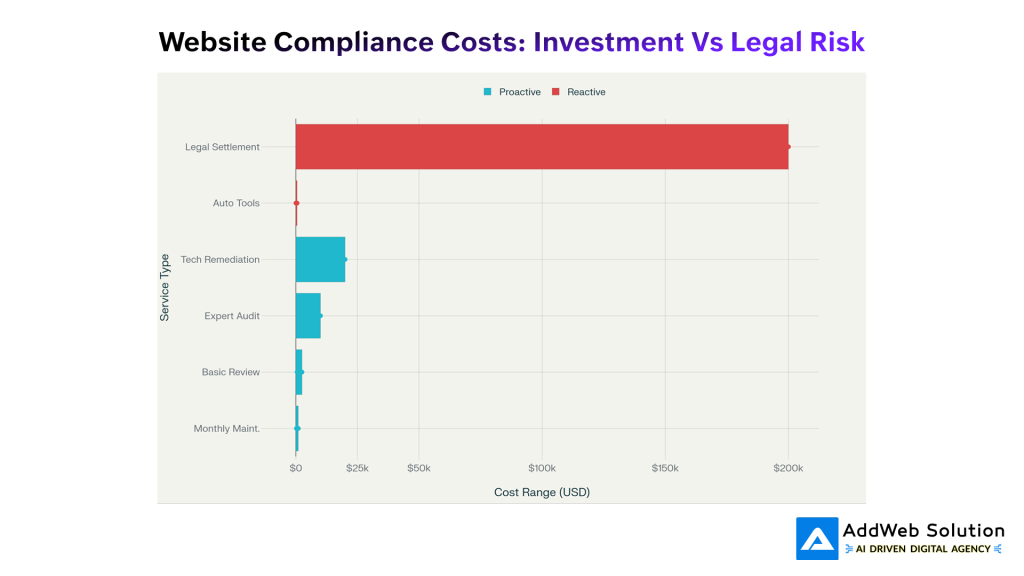
The financial costs are staggering. Legal settlements for ADA violations run $50,000 to $200,000, but proactive compliance measures only cost $500 to $20,000. This is a theoretical 10x cost savings in being proactive over reactive.
Understanding ADA Compliance for Nonprofit Websites
The Americans with Disabilities Act mandates that all nonprofit websites be considered places of public accommodation. More recent legal precedent has solidified that websites are under the jurisdiction of ADA, and the Department of Justice specifically stated in 2022 that “the ADA’s requirements apply to all goods, services, privileges, or activities offered by public accommodations, including those offered on the web”.
What Makes a Website ADA Compliant
Core Requirements:
- WCAG 2.1 AA compliance: The Web Content Accessibility Guidelines serve as the standard
- Screen reader compatibility: Essential for visually impaired users
- Keyboard navigation: Allows navigation without a mouse
- Alt text for images: Describes visual content for screen readers
- Color contrast ratios: Ensures text is readable for color-blind users
- Captioned videos: Makes multimedia content accessible
The Litigation Landscape
ADA website lawsuits have grown dramatically, with several concerning trends:
Geographic Spread: Although New York (31.63%), Florida (24.18%), and California (18.87%) continue to be hotspots, filing is diffusing to historically low-activity states such as Illinois, which experienced a 745% surge in 2025.
Serial Plaintiffs: The most frequent 31 plaintiffs and 16 law firms spearheaded the lion’s share of cases, a sign of systematic filing patterns.
Target Demographics: 73% of lawsuits go after companies with less than $25 million in annual revenue, putting smaller nonprofits most at risk.


Implementation Steps for ADA Compliance
Phase 1: Assessment (1-2 weeks)
- Use automated accessibility scans with tools such as WAVE or axe DevTools
- Manual testing using screen readers
- Document existing gaps in accessibility
Phase 2: Priority Fixes (2-4 weeks)
- Include alt text for all images
- Enhance color contrast ratios
- Proper heading hierarchy
- Keyboard navigation testing
Phase 3: Advanced Implementation (4-8 weeks)
- Use ARIA labels for complex elements
- Design accessible forms with suitable labeling
- Provide video content with captions
- Test assistive technology users in reality
Phase 4: Ongoing Monitoring
- Regular monthly accessibility checks
- Training employees to create accessible content
- Periodic updates based on changes in content
HIPAA Compliance for Healthcare-Related Nonprofits
HIPAA is applicable to nonprofits that work with Protected Health Information (PHI), such as community health centers, mental health agencies, and medical research foundations. The major question is not your nonprofit status, it’s whether you receive, maintain, or send health information.
When HIPAA Applies to Your Nonprofit
Your organization needs HIPAA compliance if you:
- Work as a covered entity (healthcare provider, health plan, or healthcare clearinghouse)
- Act as a business associate working with PHI on behalf of covered entities
- Gather any of the 18 HIPAA identifiers in relation to health care
The 18 HIPAA Identifiers include:
- Names, addresses, and phone numbers
- Email addresses and Social Security numbers
- Medical record numbers and health plan beneficiary numbers
- Biometric identifiers and full-face photos
- Any other distinctive identifying information
HIPAA Penalties: The Financial Reality
HIPAA violations carry severe financial consequences, with penalties structured across four tiers based on intent and corrective action:
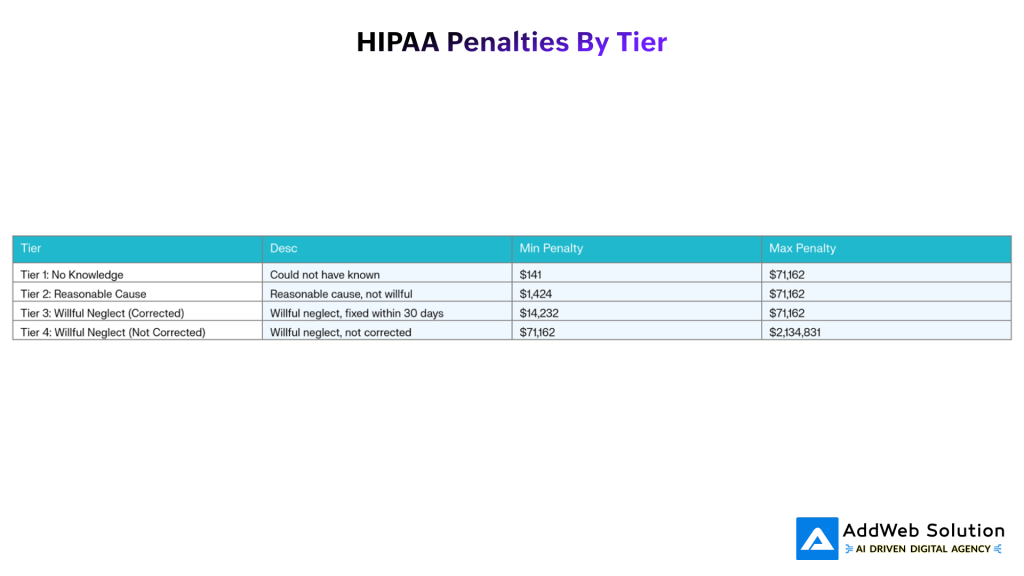
HIPAA violations can result in penalties ranging from $141 to over $2.1 million per violation, depending on the severity and intent
Criminal Penalties can also apply:
- Wrongful disclosure: Up to $50,000 and/or 1 year prison
- False pretenses: Up to $100,000 and/or 5 years prison
- Malicious intent: Up to $250,000 and/or 10 years prison
Website-Specific HIPAA Requirements
Technical Safeguards:
- SSL/TLS encryption: All data transmission must be encrypted
- Access controls: Implement role-based access to PHI
- Audit logs: Track who accesses what information and when
- Automatic logoff: Sessions must timeout after inactivity
Administrative Safeguards:
- Security Officer designation: Assign responsibility for HIPAA compliance
- Staff training: Regular education on PHI handling procedures
- Incident response plan: Procedures for potential breaches
- Business Associate Agreements: Contracts with third-party vendors
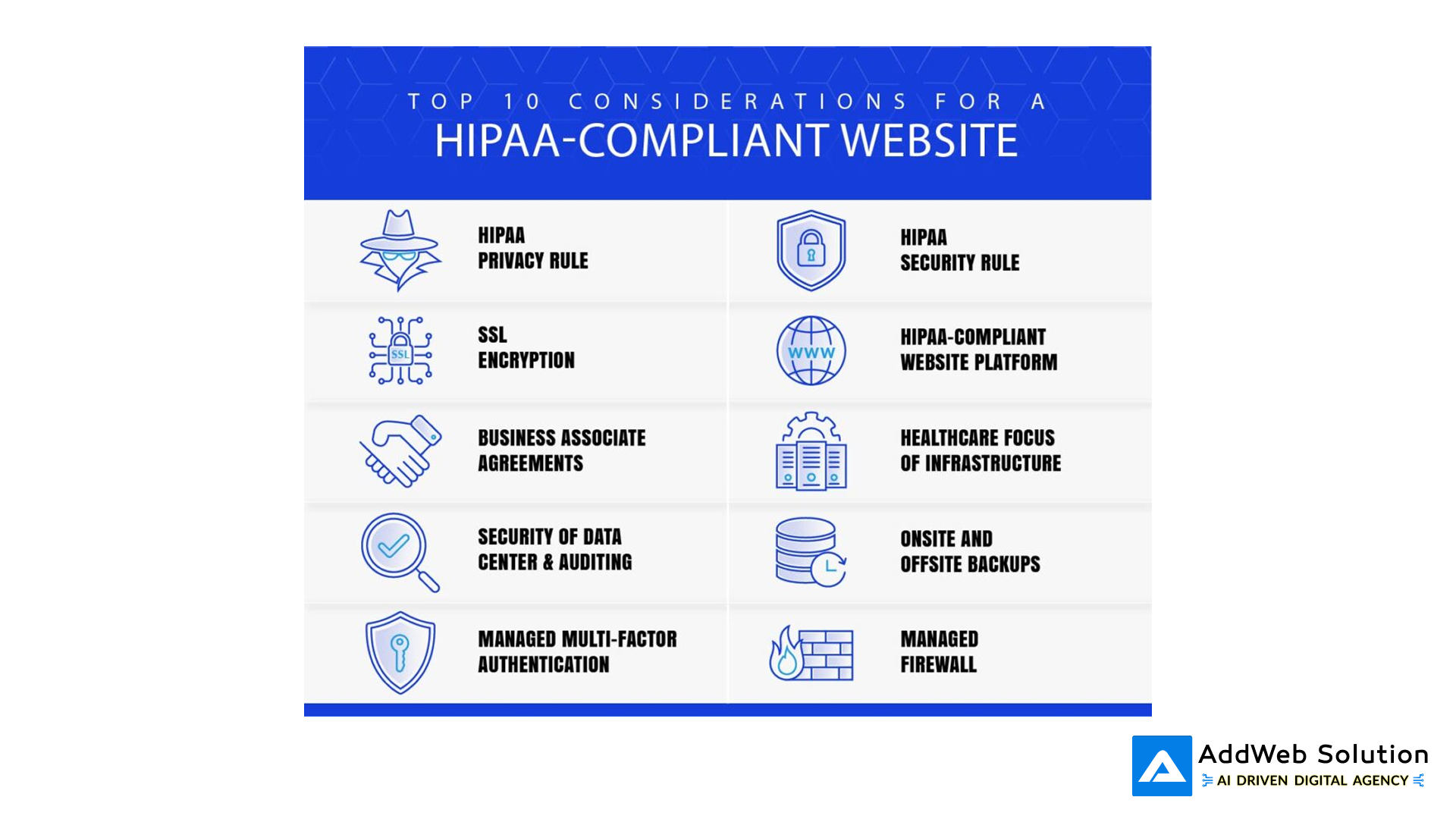
Top 10 considerations for creating a HIPAA-compliant website with key security and privacy measures
GDPR Compliance for Global-Reaching Nonprofits
GDPR affects any nonprofit that processes personal data of EU residents, regardless of your organization’s location. With total fines reaching €5.88 billion since 2018, this isn’t a regulation to ignore.
GDPR Applicability to Nonprofits
Your nonprofit needs GDPR compliance if you:
- Collect donations from EU residents
- Have volunteers or staff in EU countries
- Offer services (even free) to EU individuals
- Monitor behavior of people in the EU
- Process personal data of EU residents through your website
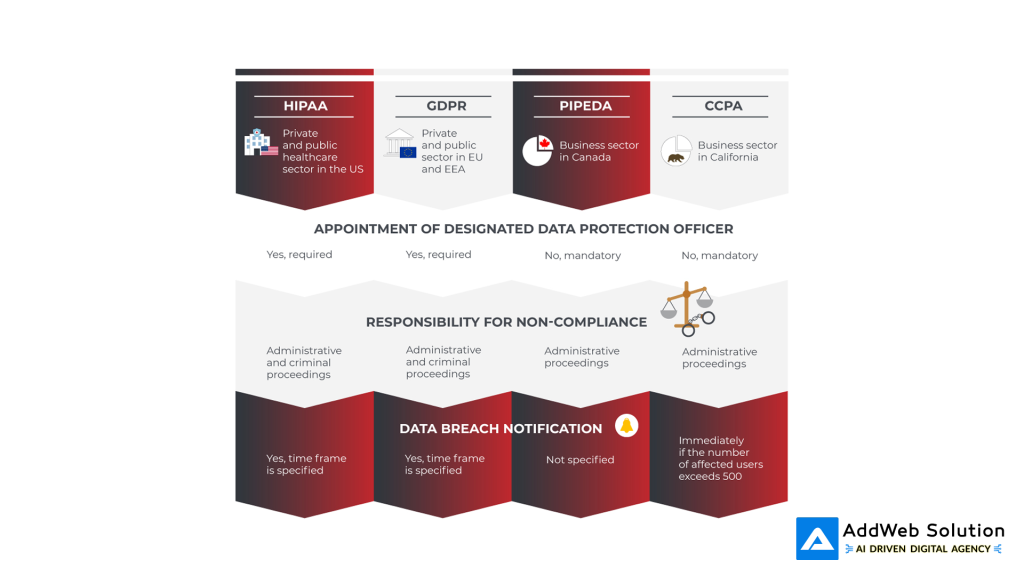
Key GDPR Requirements
Lawful Basis for Processing:
- Consent: Must be freely given, specific, informed, and withdrawable
- Legitimate interests: Must balance your needs against individual rights
- Legal obligation: Required by law
- Vital interests: Necessary to protect someone’s life
Individual Rights:
- Right to access: Individuals can request their data
- Right to rectification: Correction of inaccurate data
- Right to erasure: “Right to be forgotten”
- Right to portability: Transfer data between services
Privacy by Design:
- Data protection must be built into systems from the start
- Minimize data collection to what’s necessary
- Implement appropriate technical and organizational measures
GDPR Fines: Learning from Others’ Mistakes
Major GDPR fines demonstrate the regulation’s teeth:
- Meta (Facebook): €1.2 billion for data transfer violations
- Amazon: €746 million for processing personal data without consent
- Instagram: €405 million for inadequate protection of children’s data
While these mega-fines target large corporations, smaller organizations face proportionate penalties based on revenue and severity.
Building Your Compliance Strategy
Risk Assessment Framework
High Priority (Address Immediately):
- Missing accessibility features on donation forms
- Unencrypted transmission of personal data
- Lack of privacy policy or cookie consent
- No incident response procedures
Medium Priority (Address Within 60 Days):
- Incomplete accessibility coverage across all pages
- Insufficient staff training on data protection
- Missing business associate agreements
- Inadequate data retention policies
Low Priority (Address Within 6 Months):
- Advanced accessibility features
- Enhanced security measures beyond minimum requirements
- Additional staff training and awareness programs
- Comprehensive compliance documentation
The Compliance Technology Stack
Accessibility Tools:
- Automated scanning: WAVE, axe DevTools, Lighthouse
- Screen readers: NVDA (free), JAWS (paid)
- Color contrast: Colour Contrast Analyser
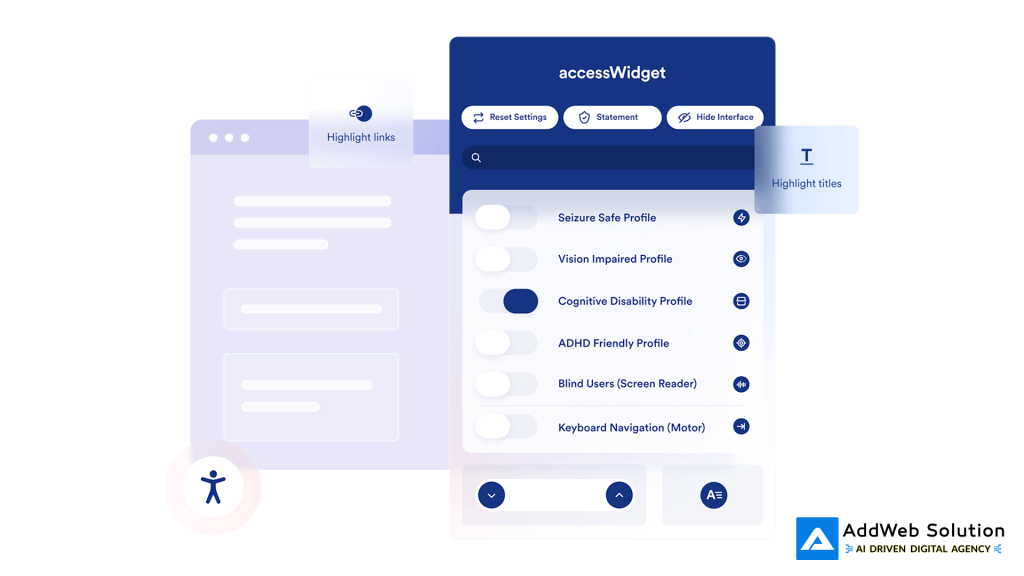
- Accessibility widgets: UserWay, accessiBe (use cautiously as supplements, not solutions)
Privacy and Security:
- Privacy management: OneTrust, Cookiebot, Termly
- SSL certificates: Let’s Encrypt (free), Cloudflare
- Analytics: Google Analytics 4 with enhanced privacy controls
- Form encryption: Built into most modern CRM systems
Documentation and Training:
- Policy templates: Nonprofit law firms, TechSoup resources
- Staff training: HIPAA training providers, accessibility awareness courses
- Compliance tracking: Spreadsheets or dedicated compliance software
Common Compliance Myths Debunked
Myth 1: “Small nonprofits are exempt from these laws”
Reality: Organization size doesn’t determine compliance requirements—data handling and public accommodation status do.
Myth 2: “Accessibility widgets make websites compliant”
Reality: Automated solutions catch only 20-30% of accessibility issues. Manual testing and proper coding remain essential.
Myth 3: “GDPR only applies to European organizations”
Reality: Any organization processing EU residents’ data must comply, regardless of location.
Myth 4: “Once compliant, always compliant”
Reality: Compliance requires ongoing monitoring, especially as websites change and laws evolve.
Ensure your nonprofit website meets ADA, HIPAA, and GDPR standards

Pooja Upadhyay
Director Of People Operations & Client Relations
Practical Implementation Roadmap
Month 1: Foundation
- Conduct comprehensive website audit
- Document current compliance gaps
- Secure leadership buy-in and budget allocation
- Begin staff training programs
Month 2: Core Implementation
- Implement critical accessibility fixes
- Update privacy policy and cookie consent
- Establish data protection procedures
- Set up monitoring systems
Month 3: Advanced Features
- Complete accessibility remediation
- Finalize HIPAA technical safeguards (if applicable)
- Test all systems with real users
- Create incident response procedures
Month 4+: Ongoing Maintenance
- Monthly compliance reviews
- Quarterly staff training updates
- Annual comprehensive audits
- Continuous monitoring and improvement
The Human Impact: Beyond Legal Requirements
While compliance requirements might seem overwhelming, remember why they exist. Sarah, a volunteer coordinator with low vision, shouldn’t struggle to navigate your volunteer portal. Maria, a EU donor, deserves to know how her personal information is protected. David, a client accessing mental health resources, needs assurance that his private information remains confidential.
These regulations aren’t bureaucratic obstacles—they’re guardrails ensuring your digital presence serves everyone in your community effectively and safely.
Measuring Success
Compliance Metrics:
- Accessibility score improvements (aim for 95%+ WCAG AA compliance)
- Zero data breaches or privacy violations
- Reduced user complaints about website usability
- Successful completion of compliance audits
Impact Metrics:
- Increased website engagement from users with disabilities
- Greater donor trust and retention
- Expanded international donor base (GDPR compliance)
- Enhanced reputation and stakeholder confidence
Conclusion
In the end, website compliance for nonprofits isn’t just about checking legal boxes or dodging lawsuits, it’s a natural extension of the mission to serve others as inclusively and responsibly as possible. A compliant site means barriers are removed, everyone can access vital information and resources, and the trust placed in your organization by users, donors, and partners is earned every day.
For nonprofits looking for real-world support, AddWeb Solution specializes in accessibility and privacy compliance, offering everything from audits to WCAG 2.1 and GDPR solutions, making it easier to keep your website open, welcoming, and fully protected in today’s digital landscape.
