


Laravel has developed into the foundation of applications in heavily regulated industries across the world. By the year 2025, it will drive more than 1.5 million websites across the globe. The Laravel Framework holds a market share of 30 to 40%, and more importantly, it has become the framework of preference in the matter of government bodies, fintech companies, and the healthcare industry.
“It doesn’t hurt them, but this isn’t an accident. There’s a design involved, a design of the framework, the mechanisms of security, the design of the ecosystem, which are designed specifically with a focus on applications that share the qualities of being ‘enterprise-grade applications’.”
The Security and Compliance Foundation: Why Regulated Industries Trust Laravel
Security is not an afterthought in Laravel. It is, in essence, built into the fabric of the language. A wide array of OWASP Top 10 threats is addressed by Laravel’s architecture in ways that require little to no work from developers.
Cross-Site Request Forgery protection is automatically applied against all state-altering requests, which means that an attacker will not be able to deceive users into making fraudulent transactions. Output protection from Blade is automatically applied against Cross-Site Scripting attacks, which are completely eradicated. SQL injection is not an issue due to prepared statements used in Laravel’s ORM.
To secure fintech apps working directly with payment information, Laravel’s security system has more to offer. The platform automatically implements HTTPS in production and is fortified by security headers (HSTS, X-Content-Type-Options, X-Frame-Options), which protect against most browser attacks.
The platform utilizes bcrypt for password hashing, allowing control over work factor settings. Additionally, it offers encryption for sensitive information through AES-256-CBC encryption. In fintech firms that deal in critical and valuable transactions, Laravel protects apps automatically through built-in rate limiting and brute force protection in the middleware layer, which guards against authentication leaks.
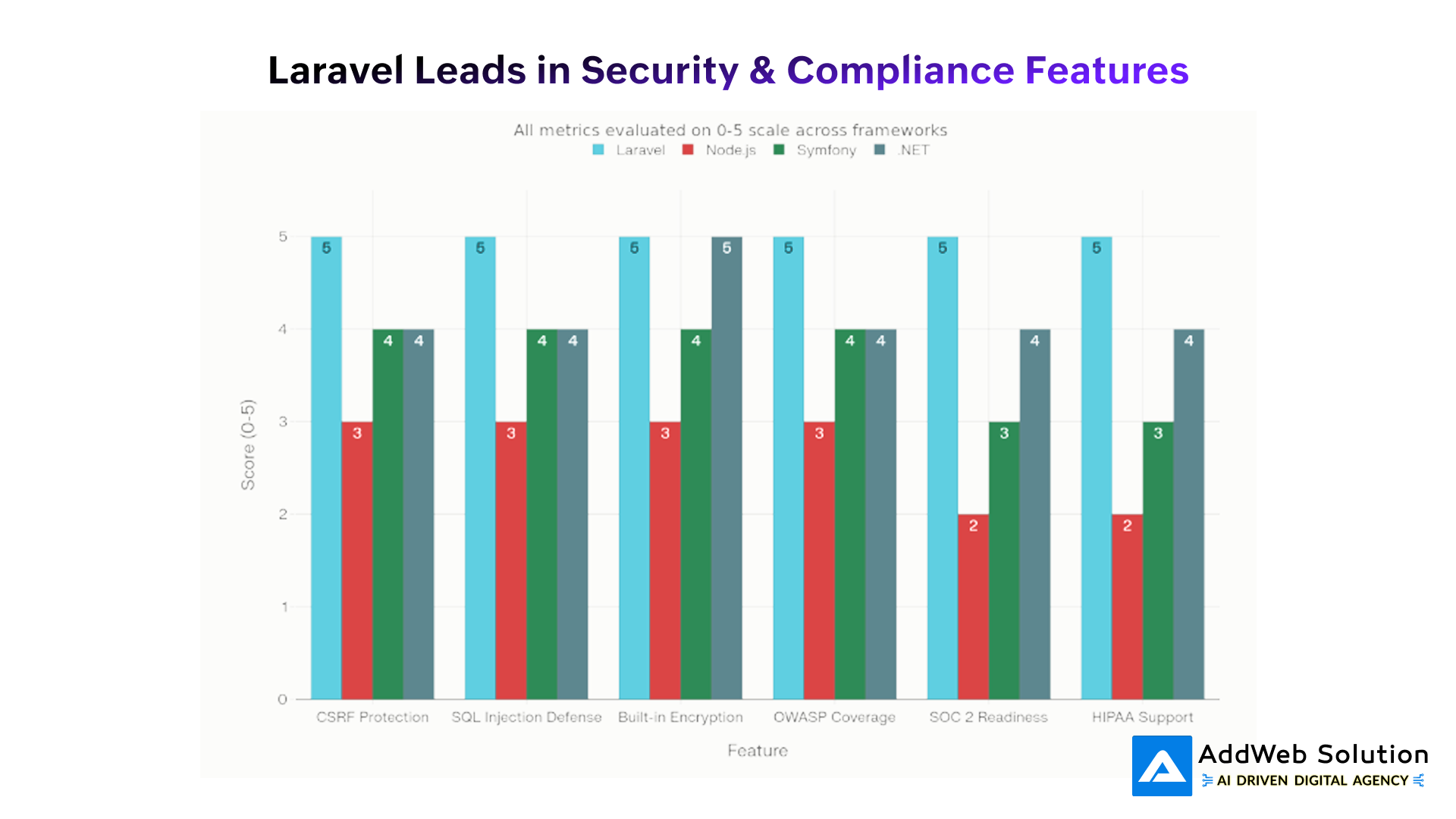
Laravel has exemplary security and compliance capabilities built into it, which are far better than other competing frameworks, and it is the best fit for use in the governance sector and healthcare industry.
However, it is its readiness for compliance that gives it an actual competitive edge. Laravel’s SOC 2 Type 2 compliance, which was acquired by Laravel Cloud as of July 2025, proves an independent assessment of its security procedures. It is easy for Laravel’s architecture to implement the necessary elements for PCI-DSS compliance.
It is the strictest level of compliance for payment card processing. It comprises secure data processing via tokenization (where only non-sensitive data tokens are processed, and payments are processed by card operators).
It also comprises role-based access control (RBAC) for restricting personnel access and generates an audit trail for sensitive processing for every operation. In the same way, GDPR compliance is also ensured at Laravel. It comprises data minimization practices, consent flows for users via event systems, and encryption for its pseudonymization feature.
In the context of a healthcare system, HIPAA compliance is a high priority. Through Laravel, healthcare facilities are able to establish HIPAA-compliant online portals for their patients, as well as electronic health record applications.
Its session management system provides a way for these facilities to control, on a user-by-user basis, which patients’ data is accessed by which personnel, such as hospital administration, nurses, or doctors. Advanced security features, such as defense against SQL injection, CSRF, XSS, and other attacks, ensure the safety of all patients’ sensitive information, and audit trail development is quite easy for these facilities.
Meeting Compliance Requirements Across All Three Sectors
Government Projects: Transparency and Scale
Government systems operate vital public services, ranging from the issuance of permits to welfare distribution and tax collection. Such systems cannot afford to compromise on robustness, transparency, and scaling. Laravel uses the MVC architecture, allowing separation of application logic from UI. Such separation enables developers to handle large government systems with enhanced ease in maintenance as the requirements continue to change. The framework’s emphasis on clean code and performance aligns with the stringent demands of public sector technology projects.
Real-world evidence of that is here. By hiring the best and brightest developers, the Washington State Department of Natural Resources was able to create an integrated public-facing dashboard based on custom PHP, Laravel, and HTML. The data-driven workflow effectively utilized modern JavaScript and Ajax to process database requests in the most efficient manner.
Another critical aspect: scalability, where dedicated servers with customized bandwidth and load optimization supported seamless project volumes without any hindrances. More importantly, the development team fully integrated the new dashboard within Washington State’s IT and Security requirements, meeting all government IT standards.
Fintech: Security Meets Speed
The fintech sector is at a critical juncture. The fintech market is expanding at a rate of 16.2% per year on a global level. The fintech service should provide a transaction process in a secure manner and should interact with the payment processors. The fintech service has to interact in a secure manner and should be compatible with the APIs of the payment processors and the compliance platforms. Most importantly, the payment process has to be compatible with PCI DSS. The significance of the Laravel framework precisely lies in resolving the integration issue.
However, the fintech case is much broader than processing payments. In fact, Laravel Cashier is a simple billing system for subscription-based fintech platforms providing multiple levels of services, dealing with intricate operations like failed payments, subscription changes, and tax calculation in different countries.
In regard to KYC (Know Your Customer) and AML (Anti-Money Laundering) procedures, which are the most essential requirements for each fintech platform providing financial services, the ability for integration with a third-party API in Laravel allows fintech platforms to easily integrate with specific companies like Trulioo or Refinitiv for identity verification, instead of dealing with such high-risk operations on their own platforms.
Concrete Example: A fintech startup built using the Laravel framework was able to comply with PCI DSS standards by incorporating secure transaction processing, supporting multiple payment gateways, and enabling real-time merchant dashboards with a small development team. This allowed for fast development of fintech-related logic while leaving infrastructure-related issues for proven components in the Laravel framework.
Healthcare: Patient Privacy by Design
The regulatory landscape of healthcare is unique in the world. HIPAA for the United States, GDPR in Europe, and emerging regulations throughout the world require highly stringent acts on how patient data must be collected, stored, transmitted, and accessed.
Healthcare providers building patient portals, appointment scheduling systems, and hospital management dashboards with Laravel benefit from Laravel’s out-of-the-box security features that ensure patient information is not accessed by those who should not have access.
The global healthcare IT market is set to reach a value of $821 billion in 2025, and Laravel is perfectly positioned to capture this market with its architectural capabilities. Healthcare organizations build HIPAA-compliant portals that manage sensitive patient information with encryption, access controls, and audit trails.
Unlike generic web frameworks, Laravel’s RBAC lets hospital administrators implement permission hierarchies where doctors access only patient records under their care, nurses access vitals and medications, and billing staff access only financial information.
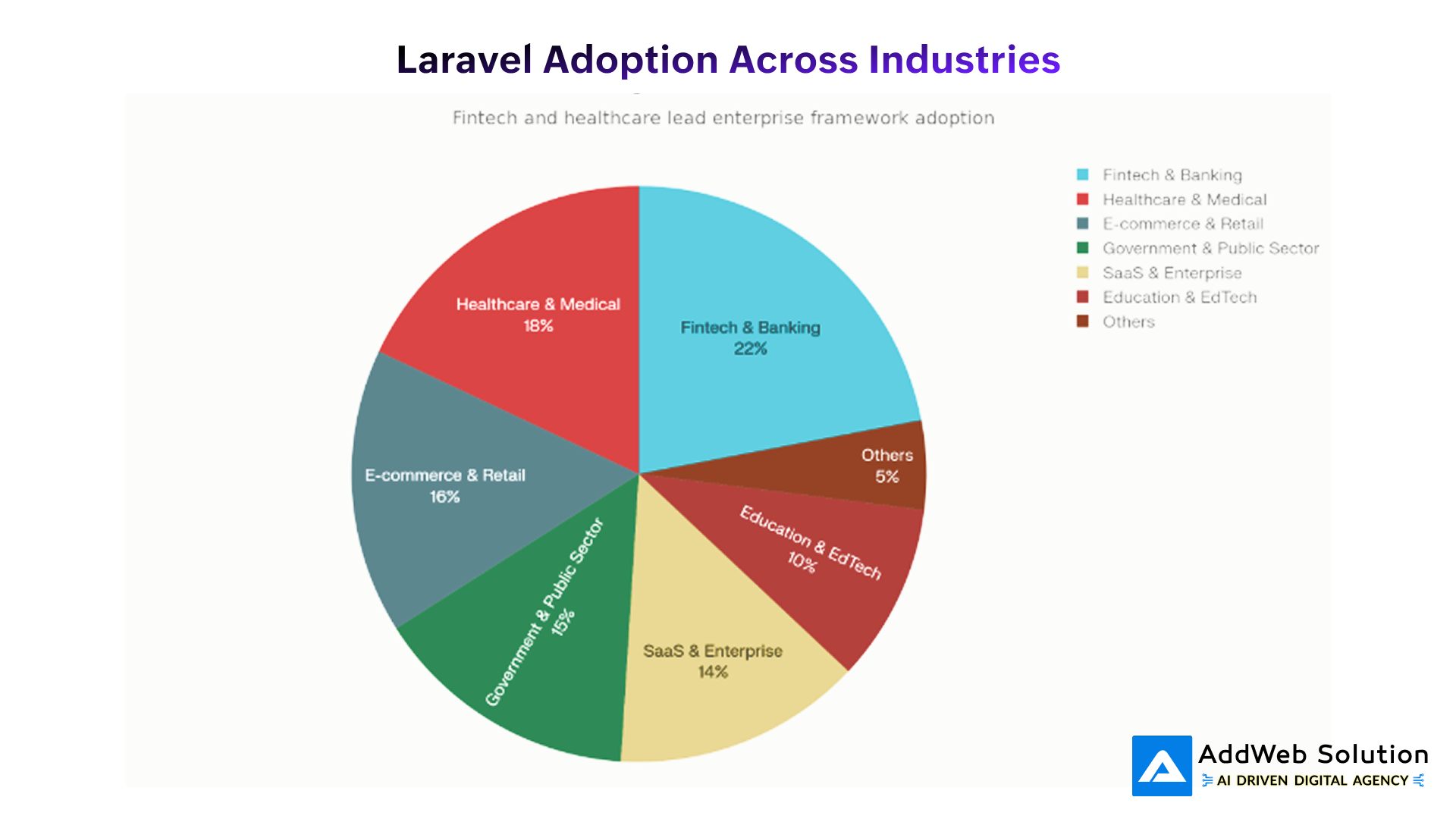
Laravel adoption across major industries shows strong penetration in fintech, healthcare, and government sectors, confirming its role as the default framework for regulated and mission-critical applications.
The migration system in Laravel deserves special mention for healthcare applications—it allows version control of database schema, making it easier to track changes and ensure applications remain compliant with evolving regulations. When HIPAA or GDPR requirements change, developers can migrate the database schema systematically, leaving an audit trail of what changed and when.
The AI-Powered Future: Laravel’s Emerging Competitive Advantage
While security is table stakes, Laravel is increasingly becoming the choice for AI-powered applications in these regulated sectors. The fintech industry increasingly demands intelligent financial services—fraud detection, predictive analytics for lending decisions, and AI-powered customer support. Healthcare providers need AI-driven diagnostic assistance, clinical decision support, and patient engagement systems. Government agencies require AI for permit processing automation, benefit eligibility determination, and citizen service routing.
Laravel’s ecosystem integrates seamlessly with AI and machine learning infrastructure. The HTTP client allows Laravel applications to connect with external AI services or APIs from providers like OpenAI, Google, and AWS.
The Prism package, which emerged as a unified interface for integrating Large Language Models (LLMs), allows Laravel developers to add GPT-powered chatbots without dealing with complex API calls.
This is particularly valuable for fintech customer service (explaining account features or troubleshooting), healthcare patient support (appointment booking assistance, symptom checking), and government citizen portals (FAQ navigation, form guidance).
BotMan simplifies the implementation of conversational agents, enabling chatbots that understand context and manage multiple concurrent users. For predictive analytics—crucial in fintech for credit risk assessment and healthcare for patient outcome prediction—Laravel’s service-oriented architecture makes it straightforward to deploy machine learning models trained in Python (TensorFlow, Scikit-learn) as REST APIs that Laravel applications consume.
The framework’s queue system and asynchronous job processing enable computationally intensive ML tasks to run in the background without blocking API responses.


Development Speed and Cost: Why Enterprises Choose Laravel Over Alternatives
One frequently overlooked advantage of Laravel is time-to-market. Government agencies, healthcare providers, and fintech startups all operate under timeline pressure. Building authentication from scratch takes days—Laravel’s Breeze and Jetstream scaffolding provides production-ready authentication in hours, saving 20-40 developer hours per project. The Blade templating engine reduces frontend coding time by supporting template inheritance, allowing developers to write layouts once and reuse across pages.

Laravel’s rich ecosystem of pre-built packages and scaffolding tools dramatically accelerates development cycles, reducing time-to-market by 25-40% compared to building mission-critical features from scratch.
The framework’s Artisan console automates tedious tasks like database migrations, seeding, and cache management, eliminating human error while speeding routine maintenance by up to 30%. For fintech platforms, Laravel Cashier reduces payment integration time from weeks to days. For healthcare, the combination of Eloquent ORM, authentication scaffolding, and audit logging reduces electronic health record (EHR) system development significantly.
The financial impact is substantial. As an open-source framework, Laravel eliminates licensing costs entirely—a significant saving compared to .NET or enterprise Java platforms. The modular, MVC-structured codebase is easier to maintain, meaning onboarding new developers takes less time and debugging requires fewer billable hours.
For enterprises modernizing legacy healthcare IT systems or fintech backoffice operations, Laravel’s clean architecture and testing infrastructure enable systematic improvements without rewriting everything from scratch.
Development cost reduction becomes strategic at scale. Laravel’s speed of development can reduce total project cost by 30-40% compared to Symfony for similar MVP-scale products. A logistics enterprise recently modernized its tracking system using Laravel, achieving a 35% reduction in development cost and 25% improvement in operational efficiency. These aren’t theoretical savings—they translate directly to faster go-to-market timelines and lower infrastructure costs.
Market Adoption: The Data Behind the Default
The numbers confirm what enterprise teams are discovering empirically. Laravel powers over 1.1% of the entire internet, with 3.2 million websites using the framework.
More tellingly, Laravel has nearly doubled in adoption between 2020 and 2024, while downloads grow 15-20% annually. In developer surveys, 95.4% of respondents reported using Laravel for business applications, suggesting the framework has transitioned from a developer favorite to the default choice for production systems.
Laravel’s strength in regulated industries is evident from industry-specific adoption. Healthcare providers worldwide build patient portals and hospital management systems with Laravel because the framework’s security and compliance features reduce implementation complexity. Real estate platforms rely on Laravel for managing listings and transactions at scale.
Education platforms build learning management systems (LMS) and student portals using Laravel’s modular features. And fintech startups build wallet systems, loan management apps, and payment gateways with Laravel.
The geographic diversity matters for global platforms. North America leads the fintech market with 34.05% share, while Asia-Pacific is the fastest-growing region with 18.7% compound annual growth rate. Fintech platforms built today must support multiple currencies, compliance frameworks, languages, and regulatory regimes simultaneously. Laravel’s architecture, combined with its vast ecosystem of packages for localization and compliance, enables this scaling from day one.
The Ecosystem Advantage: Purpose-Built Tools for Regulated Industries
Beyond the core framework, Laravel’s ecosystem has matured specifically to address challenges in government, fintech, and healthcare. Spatie packages have become industry standards—spatie/laravel-auditing records every change log from models, spatie/laravel-query-builder enables complex filtering and sorting for compliance reporting, and spatie/laravel-permissions simplifies role-based access control. These aren’t niche tools; they directly address compliance and auditing requirements.
For security monitoring, Laravel Telescope provides insights into HTTP requests, jobs, and exceptions, making it invaluable for detecting suspicious activity in government systems. Laravel Horizon monitors queue jobs in real-time, critical for ensuring financial transactions and healthcare operations complete reliably. Laravel Debugbar integrates a developer toolbar for debugging queries and performance issues during development.
The ecosystem also includes AI-specific tools emerging in 2025. Prism (a Laravel package for LLM integration) represents the framework’s evolution toward AI-powered features. Rather than forcing developers to manage complex API calls and model orchestration, Prism provides a fluent, chainable API pattern that Laravel developers recognize immediately.
Challenges and Realistic Trade-offs
No framework is universally optimal. Node.js excels at real-time applications due to its single-threaded event loop and non-blocking architecture—better suited for live chat, collaborative editing, or gaming backends where concurrent connection handling is paramount. However, Laravel with modern optimization techniques (database read-write splitting, Redis caching, horizontal scaling with load balancing) can handle equal or greater load for traditional business applications.
In the case of CPU-intensive tasks, Node.js has a problem since it relies on the event loop to perform CPU-intensive tasks, thus blocking all other requests. Laravel does not have such a problem. In the case of large numerical calculations, Laravel would be more suitable. In the case of full-stack developers who want to apply JavaScript end-to-end, Node.js would be the better solution. However, this would not be the case in the case of government and healthcare applications.
The talent market is indicative of this. Laravel programmers are plentiful, making recruitment less costly and easier to scale. This ease of scalability is in itself an advantage to related regulatory markets—more talent means greater choices, lower rates to outsource, and reduced vendor lock-in.
Empower Your Digital Transformation With Our Laravel Development Services!

Pooja Upadhyay
Director Of People Operations & Client Relations
Conclusion: The Framework That Government Fintech and Healthcare Experts Trust
“Laravel has become the go-to choice within governments, fintech, and healthcare not as a result of marketing but due to its ability to meet real-world needs consistently.
The platform comes with built-in security features to protect against OWASP’s Top 10 threats and ensures it’s impossible to make ‘developer mistakes’ like other platforms. The compatibility features allow governments to create secure and traceable platforms, fintech to be PCI-DSS, GDPR, or AML compliant, and healthcare facilities to have HIPAA secure platforms without architectural overhaul.”
Equally important, Laravel gets your application to market faster. Authentication, payment systems, admin interfaces, and audit trails cut development time from weeks to days.
The ecosystem has grown up in particular to solve for the challenges faced by the regulated industries—ranging from packages offered by Spatie that solve difficult requirements to new AI tools being built that make smart apps possible. The total cost of ownership is provably cheaper by 30-40% relative to other frameworks and has no costs for licensing.
“As the pace of digitization in the public sector speeds up, fintech competitiveness grows, and the healthcare sector becomes more modern,”
Laravel is poised to become the framework “that doesn’t ever put a developer in the position of having to choose between speed, security, innovation, and compliance.”
This is evident in the numbers when it comes to the popularity of Laravel, its penetration in the industry, and its maturity when compared to its competitors—it’s not an “alternate solution,” rather the “status quo.” This has nothing to do with convenience when it comes to mission-critical applications in highly regulated industries. This is a strength.
Key Takeaways
Security & Compliance:
- Integrated CSRF, XSS, and SQL injection protection
- SOC 2 Type 2 certified hosting infrastructure
- HIPAA, GDPR, PCI-DSS compliant-ready architecture
- Extensive Audit Trail and Logging Functionality
Development Efficiency:
- 30 – 40% lower development costs relative to competitive frameworks
- Pre-built authentication reduces the time it takes to complete a project by
- Admin dashboards and API scaffolding enable faster delivery
- Modular Architecture makes Maintenance Life cheaper
Market Position:
- 3.2 Million websites run by Laravel worldwide
- 95.4% of developers use Laravel in their business applications
- Almost doubled the rate of adoption in the period
- Market Leader in Fintech, Healthcare, andGovernment Sectors
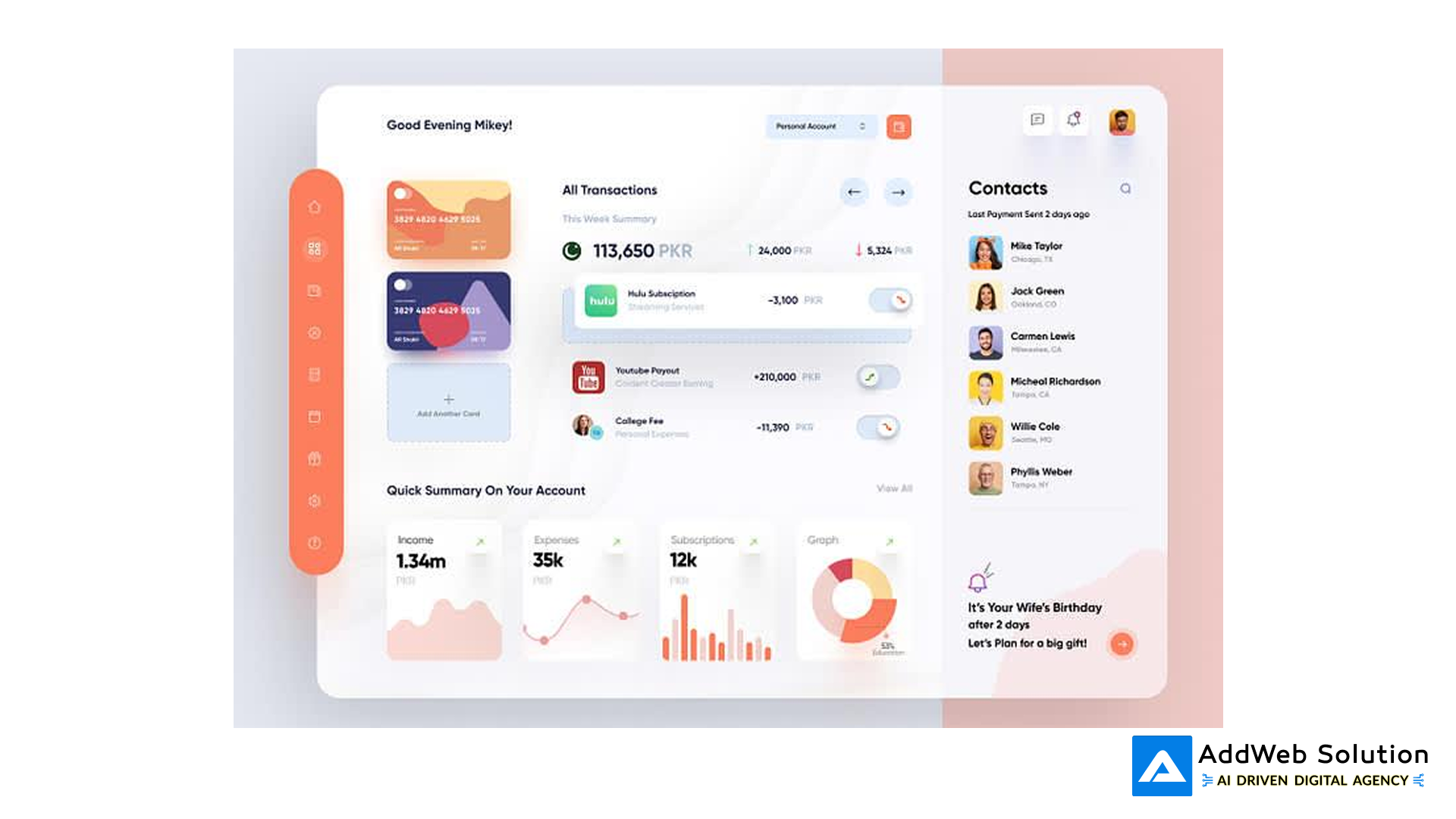
Fintech/Banking Dashboard UI Concept by Mike Taylor for …
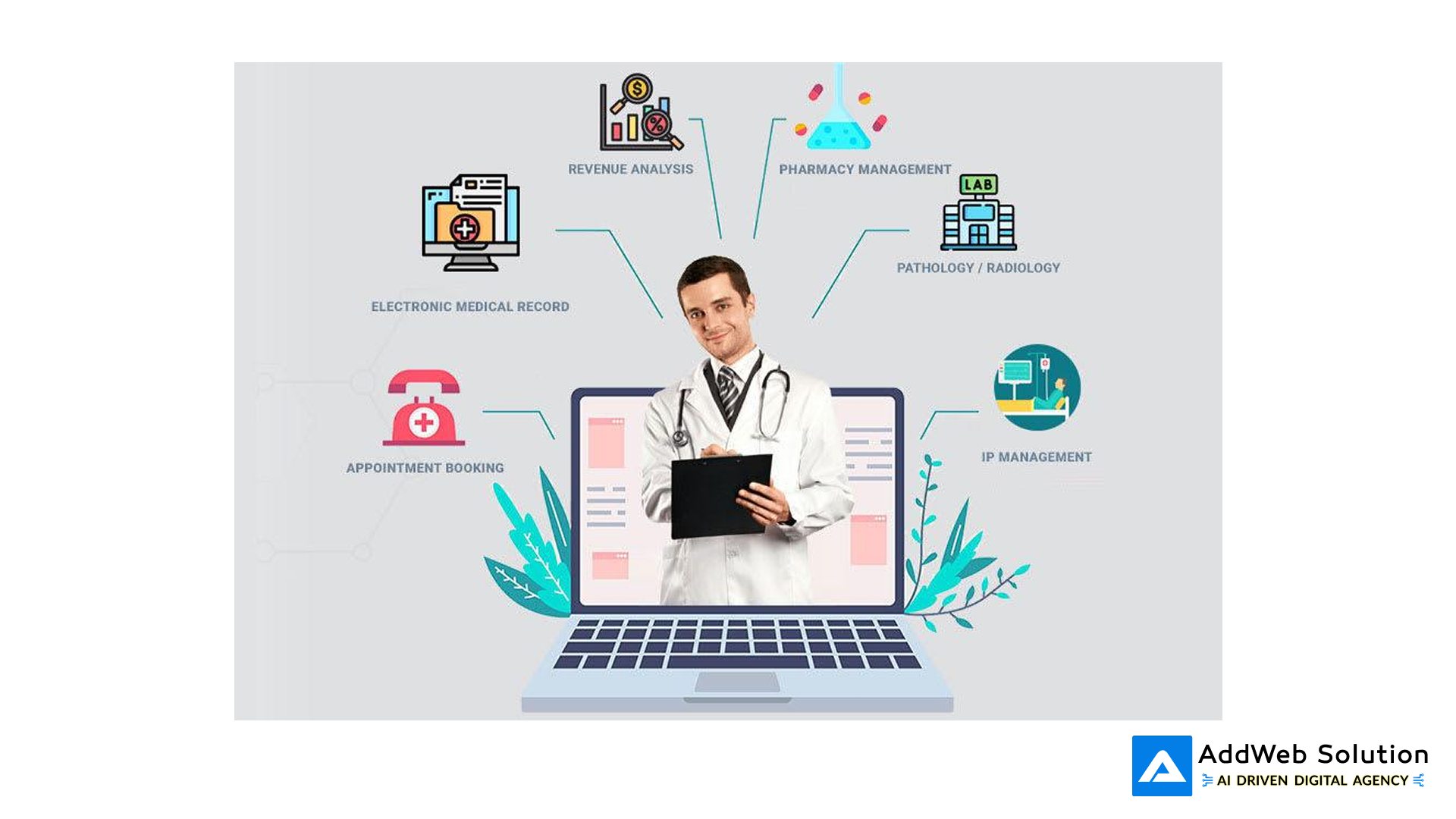
Hospital Management System | Hospital information Management …
⁂
- https://laravel.com
- https://laravel.com/blog/laravel-cloud-achieves-soc-2-type-2-certification-nightwatch-and-forge-next
- https://laravel.com/blog/laravel-cloud-achieves-soc-2-type-1-compliance
- https://laravel.com/blog/laravel-nightwatch-achieves-soc-2-type-1-certification
- https://laravel.com/docs/12.x/billing
- https://laraveldaily.com/packages
- https://www.freecodecamp.org/news/protect-your-laravel-app-against-the-owasp-top-10-security-risks/
- https://cheatsheetseries.owasp.org/cheatsheets/Laravel_Cheat_Sheet.html
