


Voice search is no longer an afterthought for smart speaker platforms – it’s now an integral part of the way people search for products, compare prices, and reorder household necessities.
For Shopify merchants, the result has been a subtle but significant impact on the way people find and engage with online stores.
Introduction: From ‘Hey Siri’ to ‘Add to Cart’
For instance, an individual sitting on the couch saying, “Hey Google, where do I get cruelty-free skincare products with 2-day shipping?” or an individual going to the office saying, “Alexa, please reorder my favorite coffee beans from the same store as the last time?”
These are no longer just possibilities for Amazon or any other large corporations. This is what the future holds for brands of all sizes by the year 2024-2025.
The current state of the global voice commerce market is a tens of billions industry and is growing at a mid-20s CAGR for the rest of the decade.
For the United States alone, nearly half of the population claims they use voice search for shopping. Furthermore, over 30% of the population has already used a voice assistant for a purchase. If you are not voice search optimized by the year 2026, you might as well not have a Shopify store at all.
In this article, you will learn how to optimize your Shopify store for voice search in simple steps.
Why Voice Search Matters for Shopify in 2026
It is estimated that there are already 8.4 billion active voice assistant devices worldwide as of the end of 2024. This is more than the global human population.
In the United States, for instance, about 35% of people aged 12 years and above have at least one smart speaker. This means that about 100 million people in the United States have at least one smart speaker.
In relation to commerce, the global voice shopping market is estimated to grow to about 80-82 billion dollars by the end of 2025. This is compared to about 4.6 billion dollars in 2021. This is an increase of multi-hundred percent in just a few years.
It is estimated that this is going to grow even further. This is because it is estimated that voice sales will account for close to 30% of total e-commerce sales by the end of 2030 if current growth trends are anything to go by.
In relation to Shopify merchants, what is important is not the size of the market but how people are using voice in the buying process.
- Around 49-50% of consumers in the US use voice search while shopping.
- 58% of consumers use voice search to search for information about local businesses, whereas about 46% use voice search to search for information about local prices.
- Around one-third of consumers have used voice commands to make a direct purchase or re-order a product.
How Shoppers Use Voice in Retail

For a Shopify brand, this means that voice optimization is not just about getting the single command of “add to cart”; it is also about being present at all the micro-moments where the customer is asking questions out loud.
On‑Page Voice SEO: Keywords, Content and UX
Most voice search queries are long and more conversational in nature. They are also more likely to be full questions rather than just keyword strings. For instance, a typed search query could be something like “leather laptop sleeve India,” but the corresponding voice search query could be something like:
“What is the best slim leather laptop sleeve under 3000 rupees that also ships to Surat?” Voice search heavily relies on well-organized and well-structured content.
1. Shift from Keywords to Questions
For a Shopify store, voice optimization begins with rethinking how product copy is written:
- Use a series of questions as a heading on a blog or landing page: “How do I choose the right running shoes for flat feet?”
- Add a FAQ section to a product page that uses real-world language: “Can I machine wash this t-shirt?” instead of just “Care Instructions”
- Target long-tail phrases in meta description copy and page copy that match voice search queries: “Where can I buy organic dog treats online in India?”
A smart home Shopify brand that optimized product copy to include conversational language saw a big improvement in visibility for question-based voice search queries on assistants like Google Assistant and Alexa.
Typed vs. Voice Queries for the Same Intent
| Intent | Typed Search Style | Voice Search Style | Shopify Optimization Move |
| Find a nearby store | “sports shop Surat” | “Hey Google, which sports shop near me is open now?” | Add local keywords, opening hours, and “near me” phrases to pages; keep Google Business Profile updated. |
| Product research | “best ergonomic chair” | “What is the best ergonomic office chair for lower back pain?” | Create comparison content and FAQs answering specific pain points in natural language. |
| Purchase / reorder | “Buy Nespresso pods online.” | “Alexa, reorder Nespresso pods from the same store as last time.” | Enable easy reordering, clear product naming, and consistent SKUs; integrate with marketplaces or apps where relevant. |


2. Structure Content for Featured Snippets
It’s common for Google, as well as other voice assistants, to use the content from the featured snippet, the small box with the answer, to read out the result.
Audits of voice search results have discovered that a significant percentage of the spoken content comes from the sites that are already using the “position zero” space in the traditional search.
Some content patterns that increase the probability of winning the featured snippet include:
- Providing the answer to the user’s query in 40-60 words right after the heading.
- Creating a list, either numbered or bulleted, with the “how-to” instructions.
- Applying the schema markup, like the ones used for the FAQs, products, and reviews, so the search engine understands the content’s context.
Shopify themes and apps support the use of the schema for the FAQs and the products, so there’s no need for custom development – just the right selection of the content blocks with the direct, spoken language.
3. UX Foundations: Speed, Mobile and Readability
For the most part, most voice queries occur through smartphones, even if they are processed through a smart assistant.
That makes the need for basic SEO best practices even more critical:
- Mobile optimization – Google favors pages that load in under three seconds on mobile devices, and slow-moving themes will negatively impact voice and regular search results.
- Design optimization – a simple and clean design with easy-to-read headings, paragraphs, and font will help algorithms easily pick out the answers to the question.
- Accessibility optimization – good accessibility will not only improve usability but also help algorithms understand the content.
Not only is an accessible fast site good practice, but it’s also worth noting that for many voice searches, the assistant chooses from the same mobile-first index as regular results.
Technical and App Layer: Making Shopify Voice‑Friendly
Once the content is optimized for how people speak, the next level is the technical setup and app ecosystem. At this point, the objective is to make the Shopify store easy for search engines and people to interact with via voice.
1. Use Structured Data and Local SEO
Schema is simply extra data that a website adds to a web page, like telling Google that a block of text is a product review or an FAQ. Well-implemented schema helps voice assistants understand what a web page is about and whether it can answer a question directly.
What to do for Shopify stores:
- Enable product schema in your theme settings or SEO apps.
- Add FAQ schema to your FAQ sections.
- Ensure your Google Business Profile is accurate if you have a physical location, including hours of operation, service area, and service area categories. This is important for “near me” voice queries.
2. Add Voice‑Enabled Search Inside the Store
In addition to the ability to be searched for in Google Assistant or Alexa, it is also becoming more common for the customer to be able to search within the Shopify shop itself by voice. There are currently several apps in the Shopify App Store that allow for this functionality.
These include:
- Searchanise Search & Discovery – an advanced search tool that also offers voice search functionality and other advanced search functionality.
- Doofinder – Search & Discovery – an artificial intelligence-based search tool for Shopify stores that also allows for the use of voice search.
- Voice Search – Speaky – an app that allows for the use of a microphone icon for search within Shopify themes.
- Magecurious Voice Search – an app that allows for the use of voice search for products.
Sample Shopify Voice Search Apps
| App | Primary Focus | Voice Capability | Typical Use Case | Source |
| Searchanise Search & Discovery | Site search and merchandising | Built‑in voice input, instant search | Mid‑ to large‑catalog stores need powerful search and filters. | https://meetanshi.com/blog/best-shopify-apps-for-voice-search/ |
| Doofinder – Search & Discovery | AI‑driven personalized search | Optimized for natural‑language queries | Stores want smarter relevance and personalization. | https://meetanshi.com/blog/best-shopify-apps-for-voice-search/ |
| Voice Search – Speaky | Simple voice search bar | One‑click voice search in the header | Smaller stores adding accessible voice search at low cost. | https://apps.shopify.com/smart-voice-search |
| Magecurious Voice Search | Theme‑level voice search | Voice search for desktop and mobile | Stores prioritizing multilingual voice input support. | https://apps.shopify.com/voice-search-3 |
However, store owners don’t have to use all of these apps, depending on the number of items, theme, etc.
What’s important is that visitors using their mobile devices can tap a microphone icon, say “black running shoes size 9,” and see these results immediately.
Voice Commerce Market Growth
To understand how all this fits into the medium-term picture, it’s worth understanding how quickly voice commerce is growing as a medium overall.
Various studies conducted by several market intelligence firms show a strong growth curve through the 2020s into the 2030s.
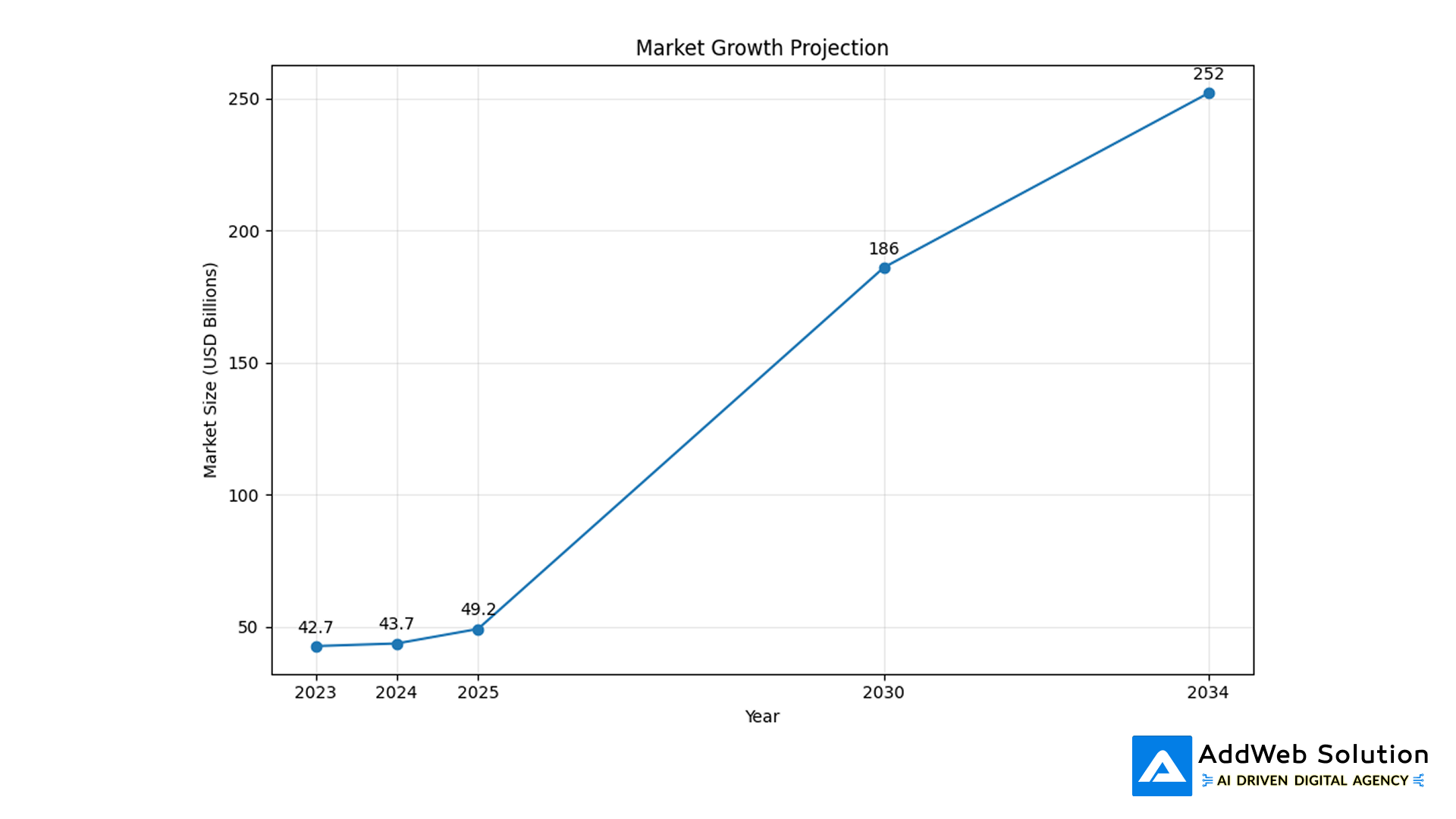
While exact figures vary depending on each firm’s methodology, it’s clear that voice commerce is growing at a significantly faster rate than overall e-commerce, which is why optimization on platforms like Shopify today can pay off in spades down the road.
4. Regional Note: Voice Commerce in India
If you’re a brand serving India, which is an important market for many Shopify merchants, voice commerce’s opportunity is particularly strong.
Grand View Research puts the voice commerce opportunity in India at 1.57 billion dollars in revenue in 2024, growing to 7.47 billion dollars by 2030 at a compound annual growth rate of 32%.
Smart speakers and voice-enabled wearables are some of the fastest-growing segments in this opportunity.
For Indian D2C brands and exporters serving India on Shopify, voice queries in local languages (Hindi, Gujarati, etc.), as well as regional “near me” searches, are quickly becoming a must-have rather than a nice-to-have.
Interesting Voice Commerce Facts
- Approximately half of the US population uses voice search for shopping. According to an analysis of voice shopping data, it has been found that about 49.6% of the US population uses voice search for shopping-related activities like searching, comparing, and buying.
https://capitaloneshopping.com/research/voice-shopping-statistics/ - The penetration of smart speakers in the US population is around one-third. According to an analysis of voice shopping data, it has been found that about 35% of the US population, i.e., close to 100 million people, own a smart speaker. This estimate is based on the NPR and Edison Research Smart Audio Report. Report (2024-2025). https://electroiq.com/stats/smart-speaker-statistics/
- The voice commerce market in India is one of the fastest-growing voice commerce markets. The voice commerce revenue in India is about 1.57 billion dollars in 2024 and is expected to reach 7.47 billion dollars by 2030 at an annual growth rate of about 32%. https://www.grandviewresearch.horizon/outlook/voice-commerce-market/india
Tell us about your store and goals, and connect with developers who fit your needs, from store setup to performance optimization.

Pooja Upadhyay
Director Of People Operations & Client Relations
Key Takeaways for Shopify Brands
Optimizing a Shopify store for voice search in 2026 is not about jumping on a bandwagon and becoming a part of a trend. It is about becoming a part of the natural language that people will use to ask questions.
The brands that win tend to:
- Know the language of their customers’ questions during the entire buying process, from discovery, evaluation, purchase, and after purchase.
- Rewrite key content like product descriptions, FAQs, blogs, etc., in a more natural language based on questions.
- Use structured data and local SEO so that the assistant can trust the data on the store.
- Add voice-enabled search on the storefront with the help of the right Shopify apps, with a focus on usability, not just gimmicks.
- Prioritize performance, accessibility, and mobile, as most voice searches start on mobile devices.
For merchants working with an experienced Shopify and digital transformation company, voice search is simply another marketing channel to consider as part of the overall SEO, UX, and conversion optimization strategy.
Agencies like AddWeb Solution tend to integrate SEO audits, content re-architecture, structured data implementation, and app selection as part of the overall effort to make the Shopify store “voice ready,” based on data and facts rather than hype.
- https://www.grandviewresearch.com/industry-analysis/voice-commerce-market-report
- https://capitaloneshopping.com/research/voice-shopping-statistics/
- https://commercetools.com/blog/the-state-of-voice-commerce
- https://apps.shopify.com/smart-voice-search
- https://apps.shopify.com/voice-search-3
- https://www.grandviewresearch.com/horizon/outlook/voice-commerce-market/india
