


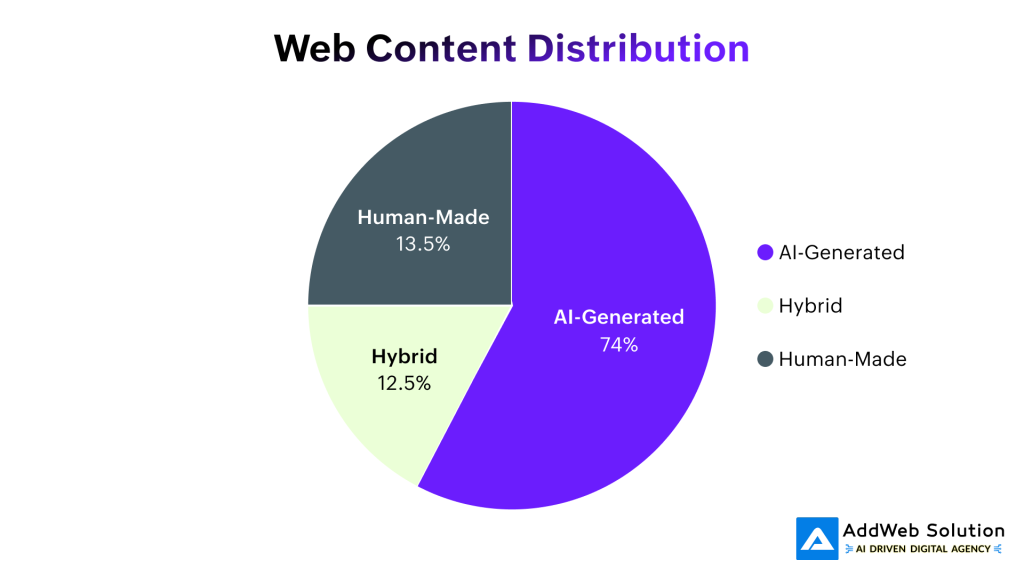
The content environment has changed permanently. With 74% of all new web content featuring AI-generated content, the age-old question isn’t if AI content will rank but about knowing what actually motivates Google’s algorithm in 2025. The surprising truth? 86.5% of content within Google’s top 20 results includes at least some AI assistance, but the tale is much more complex than these statistics indicate.
Content Type Distribution: Web vs Google Top Rankings
The Current Content Reality: Numbers That Tell a Story
Let’s begin with cold facts that cut through the hype. Based on extensive research by several SEO gurus, the content landscape appears radically different than two years ago.
Content Distribution Breakdown:
- AI-Generated Content: 74% of all web content
- Pure Human Content: Only 13.5% of new content
- Hybrid Approaches: 12.5% combining AI efficiency with human expertise
But here’s where it gets interesting: only 13.5% of purely human content ranks in top positions, while AI-assisted content dominates the search results. This doesn’t mean AI content is inherently better; it reveals something more profound about modern content creation and Google’s evolving algorithm.
AI vs Human Content Performance Comparison
Performance Metrics: The Tale of Two Approaches
Recent studies comparing AI and human content performance reveal compelling patterns that every content creator needs to understand.


Where Human Content Dominates
User Engagement Metrics:
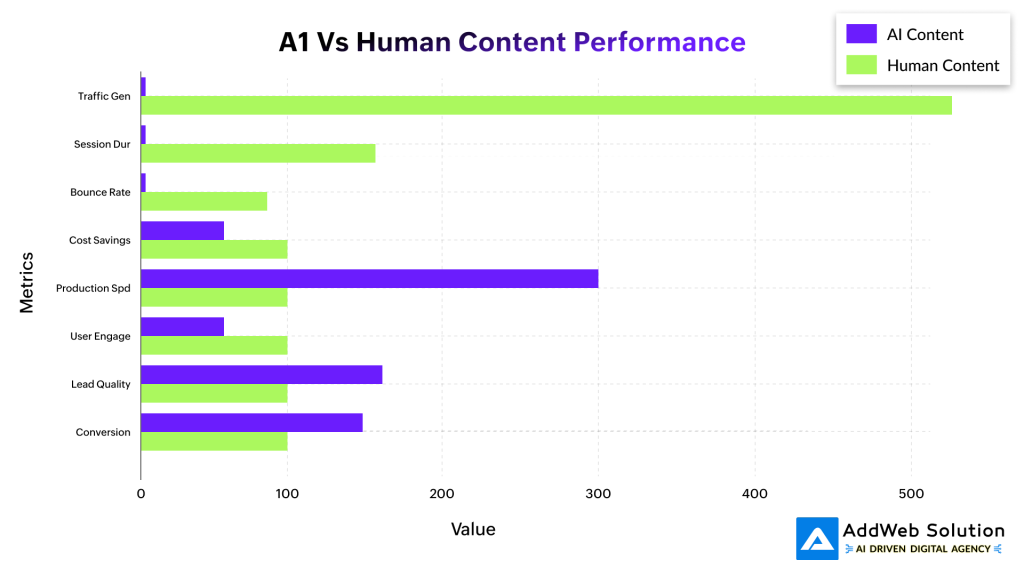
- 541% more traffic over five-month periods
- 41% longer session durations
- 18% lower bounce rates
- 47% better overall user engagement
Human-authored content consistently outperforms in the metrics that matter most for long-term SEO success. Users spend more time reading, interact more deeply, and are more likely to return to sites with human-crafted content.
Where AI Content Excels
Operational Efficiency:
- 3x faster production speed
- 41% cost reduction
- 500% increase in content output capacity
- 4.7x cheaper per piece ($131 vs $611 for human content)
AI’s strength lies in its ability to scale content production rapidly while maintaining technical SEO requirements. 87% of marketers now use AI for content assistance, primarily for research, outlining, and initial drafts.

Google’s 2025 SEO Ranking Factors by Weight
Google’s 2025 Ranking Factors: What Actually Matters
Understanding Google’s current algorithm priorities provides crucial insight into why certain content types perform better. According to First Page Sage’s comprehensive analysis, the top ranking factors reveal a clear pattern.
The Top 5 Factors:
- Consistent Publication of Satisfying Content (23%)
- Keyword in Meta Title Tag (14%)
- Backlinks (13%)
- Niche Expertise (13%)
- Searcher Engagement (12%)
Notice the emphasis on “satisfying content” and “searcher engagement” metrics where human content traditionally excels. Google’s algorithm has evolved to detect and reward content that genuinely fulfills user intent, not just technically optimized pieces.
The E-E-A-T Factor: Where Human Touch Becomes Critical
Google’s E-E-A-T framework (Experience, Expertise, Authoritativeness, Trustworthiness) represents perhaps the most significant challenge for AI content.
Experience: The Human Advantage
AI cannot provide genuine first-hand experience. When users search for “best project management software for small teams,” they want insights from someone who has actually managed teams, not algorithmic analysis of features.
Expertise: The Knowledge Depth Challenge
While AI can process vast amounts of information, it lacks the nuanced understanding that comes from years of professional experience. Human content naturally incorporates industry insights, contextual understanding, and practical wisdom that AI struggles to replicate.
Authoritativeness and Trust: The Credibility Gap
Google increasingly values content from recognized authorities. Author bios, professional credentials, and industry recognition carry significant weight elements that AI content inherently lacks.

User Engagement Metrics: AI vs Human vs Hybrid Content
User Engagement: The Ultimate Ranking Signal
The data reveals a stark reality: user engagement metrics strongly favor human content. Google’s algorithm has become sophisticated at detecting user satisfaction signals.
Key Engagement Differentiators
Bounce Rate Performance:
- Human content: 18% lower bounce rates
- AI content: Higher abandonment rates due to generic feel
Session Duration:
- Human content: 41% longer engagement times
- Reflects deeper user connection and value perception
Return Visitor Rates:
- Human content: Higher repeat engagement
- Builds audience loyalty and brand trust
These metrics directly influence rankings because they indicate content quality from the user’s perspective the ultimate measure Google cares about.
The Hybrid Approach: Best of Both Worlds
The most successful content strategies in 2025 combine AI efficiency with human expertise. This hybrid approach addresses both operational needs and quality requirements.
Optimal Hybrid Workflow
AI’s Role:
- Initial research and data gathering
- Content structure and outline creation
- Technical SEO optimization
- Bulk content production for scale
Human’s Role:
- Strategic oversight and direction
- Experience-based insights addition
- Brand voice and personality injection
- Quality assurance and fact-checking
- E-E-A-T compliance ensure
Results from this approach:
- 67% increase in consultation requests (law firm case study)
- 38% reduction in cost per lead
- 43% improvement in lead quality
Industry-Specific Considerations
Content performance varies significantly across industries, particularly in YMYL (Your Money Your Life) sectors.
High-Stakes Industries
Finance, Health, and Legal sectors show the strongest preference for human-authored content due to:
- Regulatory compliance requirements
- Professional liability concerns
- User trust and credibility needs
- Complex topic explanation requirements
Technical and Informational Content
Software, technology, and educational content can successfully leverage AI with proper human oversight for:
- Product descriptions and specifications
- How-to guides and tutorials
- Industry news and updates
- Data-driven analyses
Looking Forward: Content Strategy Recommendations
Based on the comprehensive data analysis, here are actionable strategies for content creators:
For Maximum Traffic and Engagement
- Prioritize human authorship for cornerstone content
- Use AI for research and initial drafting
- Always add human insights and experiences
- Focus on E-E-A-T compliance in every piece
AI or human content what ranks best

Pooja Upadhyay
Director Of People Operations & Client Relations
For Operational Efficiency
- Implement AI for content scaling and speed
- Develop strict quality control processes
- Train team members on AI tool optimization
- Maintain consistent brand voice standards
For Competitive Advantage
- Invest in subject matter experts as content creators
- Build author authority through consistent publishing
- Create content that demonstrates genuine expertise
- Monitor user engagement metrics closely
The Bottom Line: Quality Over Quantity Still Wins
While AI has revolutionized content production speed and cost-efficiency, Google’s algorithm continues to reward content that genuinely serves users. The data consistently shows that human-created content outperforms AI content in the metrics that matter most for long-term SEO success.
However, this doesn’t mean abandoning AI entirely. The most successful content strategies leverage AI’s efficiency while ensuring human expertise, experience, and oversight guide the final product. In 2025, the winning formula isn’t about choosing between AI and human content, it’s about intelligently combining both to create content that ranks well and genuinely helps users.
The future belongs to content creators who can harness AI’s capabilities while maintaining the human elements that Google’s algorithm increasingly values: authentic expertise, genuine experience, and content that truly satisfies user intent.
Sources:
1) https://firstpagesage.com/seo-blog/the-google-algorithm-ranking-factors/
2) https://ahrefs.com/blog/ai-seo-statistics/
3) https://draymor.com/blog/ai-vs-human-content-which-performs-better-in-2025
4) https://outreachmonks.com/google-eeat/
5) https://backlinko.com/google-ctr-stats
