
AI Integration & MLOps
Your AI Pilot Worked.
Now Let’s Make It
Production-Ready
87% of AI models never make it past pilot. We specialize in the hardest part — getting AI into production and keeping it there at enterprise scale.










Why Pilots Fail to Scale
The five gaps between your pilot and production.
Most AI pilots fail to scale, not because the model is bad, but because the infrastructure around it was never designed for production. Here’s exactly where things break.
Integration Debt
$15–25/hr per agent before you factor in management overhead, HR costs, benefits, and the constant training cycle that comes with 40–60% annual turnover.
No Observability
Without monitoring, you discover model degradation when a customer complains, not in a dashboard. Observability must be built in from day one, not retrofitted after the first incident.
Security Gaps
Pilot shortcuts, hardcoded credentials, unencrypted data flows, no audit logging, fail enterprise security review every time. Production requires a security-first architecture from scratch.
Scalability Ceilings
A model that runs fine for 100 test requests collapses under 10,000 concurrent users. Serving infrastructure, caching, and load management are engineering problems, not ML problems.
Manual Retraining
Keeping models accurate requires regular retraining. When that means a data scientist running scripts manually, it doesn’t happen consistently — and model quality silently drifts.

RESTful and gRPC model serving endpoints designed for the latency, throughput, and reliability requirements of production traffic — not notebook experiments.
Connect AI predictions to the systems that act on them — CRMs, ERPs, eCommerce platforms, and custom applications. API-first, no middleware dependencies.
Real-time streaming and batch data flows that feed your models with clean, validated, timely data, and route predictions downstream without manual steps.
Add AI inference to existing infrastructure without a full platform rebuild. Adapter layers, API wrappers, and gradual migration paths that preserve business continuity.
Ensemble architectures, cascade routing, and intelligent fallback logic for production systems that rely on multiple models simultaneously.
MLOps Services
MLOps Services That Turn Models Into Reliable, Scalable Products
Move beyond experimentation with a production-grade MLOps foundation that ensures your models are deployable, observable, and continuously improving. From deployment to cost optimization, every capability is designed to deliver performance, reliability, and measurable business impact.

Model Deployment
Containerized, serverless, and edge deployment options. CI/CD pipelines for ML that treat models like code, versioned, tested, and deployable in minutes.

Model Versioning & Audit
Complete lineage tracking — which data trained which model, what configuration was used, what performance was achieved. Full reproducibility and regulatory auditability.

Monitoring & Observability
Real-time dashboards tracking latency, throughput, prediction accuracy, feature distributions, and business metrics, with automated alerting on any deviation.

Automated Retraining
Trigger-based and scheduled retraining pipelines that activate on drift signals, accuracy drops, or calendar schedules, keeping models current without human intervention.

Inference Cost Optimization
Quantization, caching, request batching, spot instance optimization, and model distillation. Typical result: 30–60% cost reduction without meaningful accuracy loss.
A/B Testing Framework
Champion/challenger infrastructure for safe, statistically rigorous model updates. Roll back in minutes if a new model underperforms before it impacts users at scale.
Deployment Patterns
Five patterns. One right fit for your use case.
Architecture choice determines latency, cost, and scalability. We select the deployment pattern that matches your traffic profile and business requirements.
Real-Time Inference
Current state mapping
Low-latency prediction endpoints for applications needing immediate model responses, fraud scoring, recommendation APIs, search ranking, dynamic pricing.
Client → Load Balancer → Model Server → Feature Lookup → Prediction → Response
Best for User-facing AI
Batch Processing
Offline Bulk Scoring
High-throughput scoring of large datasets on a schedule — nightly churn predictions, weekly demand forecasts, monthly risk assessments across entire customer bases.
Data Warehouse → Pipeline Trigger → Distributed Inference → Results Store
Best for scheduled analytics
Streaming Inference
Continuous Event Processing
Real-time prediction on event streams — transaction monitoring, clickstream analysis, IoT sensor scoring, and any use case requiring immediate response to continuous data flows.
Kafka / Kinesis → Stream Processor → Model → Downstream Action / Alert
Best for fraud, monitoring
Edge Deployment
On-Device Inference
Models deployed directly to devices — mobile apps, IoT hardware, point-of-sale systems, manufacturing equipment — eliminating network latency and enabling offline operation.
Model Optimization → ONNX / TFLite → OTA Deployment → On-Device Runtime
Best for Mobile, IoT
Hybrid Architecture
Mixed-Mode Deployment
Most production systems need more than one pattern. We design hybrid architectures that serve time-sensitive requests in real-time while running cost-efficient batch processing for bulk workloads.
Router → Real-Time Path (urgent) → Batch Path (bulk) → Unified Response Layer
Best for complex systems
Ready to ship your AI?
We’ll audit your current state, identify the exact gaps between your pilot and production, and define a concrete path to deployment, with timelines and costs.
MLOps Infrastructure
The tooling behind every production deployment.
Selected for your infrastructure, not ours. We don’t have vendor partnerships that influence our recommendations — we use whatever gives your system the best uptime and lowest operating cost.











Case Studies
AI Success Stories
We let the numbers do the talking. Here’s what happens when AI is built right and shipped into production.
SEO Stream
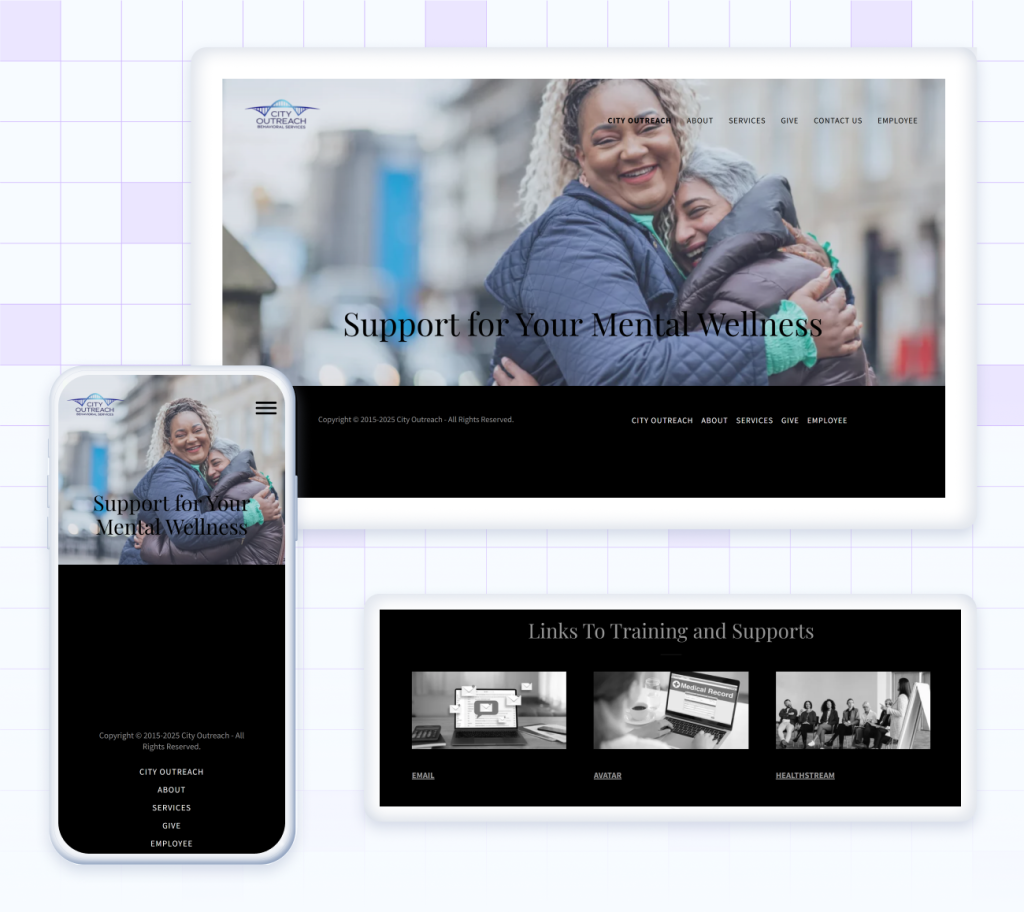
We created an intelligent automation solution named SEO Stream that changes the way SEO teams perform backlink analysis and domain research. With AI-enabled quality verification, automated workflow coordination with N8N, and a powerful reporting system, SEO Stream allows the removal of repetitive manual work and gives a chance to make decisions based on data and…
City Outreach
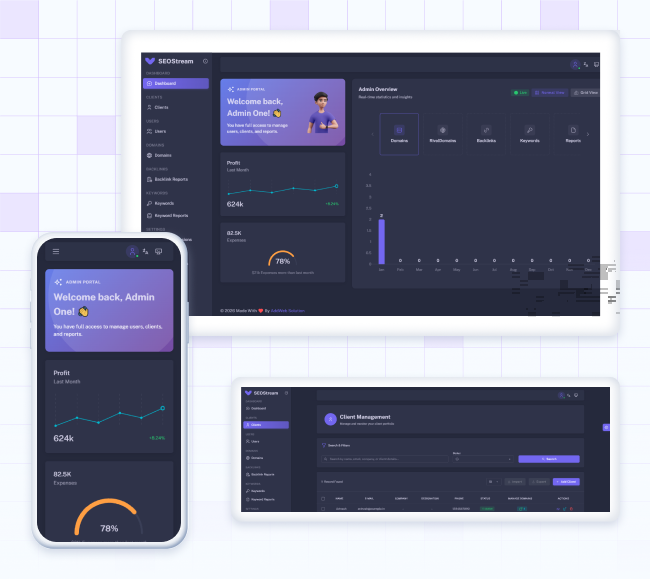
We’ve built a digital platform for City Outreach that will make their website more appealing, easier to use, and better able to support people in need.
FAQs
Production questions answered directly.
The technical and commercial questions that come up in every MLOps engagement are answered without hedging.
Typically 4–8 weeks depending on integration complexity and infrastructure readiness. Simple single-model deployments have shipped in 2 weeks. Complex enterprise integrations with legacy systems have taken 12 weeks. We assess timeline in the first call with a concrete estimate.
We design for 99.9% uptime as standard and can achieve 99.95%+ with appropriate redundancy architecture. SLAs are defined based on your business requirements and infrastructure investment. We include SLA commitments in all Managed MLOps engagements.
We monitor data drift, concept drift, and prediction distribution shifts continuously. Statistical tests run on a configurable cadence and trigger alerts when thresholds are crossed. For common drift scenarios, automated retraining pipelines run without human intervention.
Yes — this is one of our most common engagements. We assess your existing model for production suitability, recommend architectural improvements if needed, and handle all deployment engineering. Your team keeps ownership of the model code; we own the infrastructure layer.
Typically 30–60% cost reduction through model quantization, result caching, intelligent request batching, spot/preemptible instance utilization, and model distillation. We run a cost audit as part of any engagement and present the optimization roadmap before starting work.
Yes. Our Managed MLOps retainer includes 24/7 monitoring, incident response with defined SLAs, regular retraining, monthly performance reports, and continuous cost optimization. Retainer pricing starts at $5K/month based on system complexity and SLA tier.