
AI Code Audit & Remediation
Your AI-generated code shipped fast. Now make it safe to scale.
Copilot, Cursor, and Claude got features out the door at record speed and left security gaps, inconsistent architecture, and code nobody fully understands. AddWeb audits, hardens, and remediates AI-generated codebases so what shipped fast can survive production.
ISO/IEC 27001-certified process. And because we build and operate our own production AI systems, we audit AI code from a builder’s seat not from a checklist.
 4.9 Clutch Reviews
Security-first audit
ISO 27001-certified review across secrets, auth, input handling, and OWASP exposure.

Severity-ranked roadmap
Every finding ranked by blast radius — ship-blockers separated from cosmetic debt, effort attached.

We operate production AI
We run our own AI products in production, so we know exactly where AI-written code breaks.

Standards that stick
Quality gates, CI policies, and AI coding standards installed in your team so debt stops recurring.

The problem nobody flagged
AI didn’t just speed up delivery. It quietly changed what you’re shipping.
Features went out at twice the old velocity. Then the questions started: why do three modules solve the same problem three different ways, why does error handling differ in every controller, and who actually understands the code that’s now in production? AI-assisted development ships fast, passes the obvious tests, and accumulates architectural and security risk that compounds within months.
Silent security holes
Exposed secrets, missing input validation, and weak auth are among the most common findings in AI-written code. Industry research indicates a large share of AI-generated code introduces OWASP-class vulnerabilities.
Comprehension debt
The real risk of AI-built systems isn’t just bugs it’s code shipped faster than any human understood it. When the people can’t explain the system, every future change becomes a gamble.
Inconsistent architecture
Different patterns for the same task, competing database access styles, and tangled dependencies make the codebase resistant to change and expensive to extend.
Missing tests
Generated code often ships with thin or absent test coverage, so nobody can refactor with confidence and regressions slip straight into production.
Dependency & supply-chain risk
Unvetted packages, outdated runtimes, and unmanaged secrets create exposure that a linter pass will never surface.
The false-speed trap
Research AddWeb’s own engineers cite shows that without guardrails, teams can end up slower on end-to-end tasks even while they feel faster because the hours move into reviewing and correcting AI output.
Our answer isn’t a linter report, and it isn’t a rewrite by default. It’s a structured engineering review that reads your actual code, ranks every finding by real-world impact, and gives you a remediation plan you can act on or hand to any team plus the standards that keep the debt from coming back.
How we score risk
Every finding ranked by blast radius, not gut feel.
An audit is only useful if it tells you what to fix first. We score your codebase across six categories, then rate every finding by how much damage it can actually do so ship-blockers never sit next to cosmetic debt on the same list.
The six categories we score
Every finding gets a severity

Critical – one bad input from a breach or outage

High – blocks scaling or safe change

Medium – real debt, plan it in

Low – cosmetic, fix opportunistically
You get the ranked list first, so the money goes to what fails first and worst.
What we remediate
A full audit-to-production remediation service.
Scoped in a Discovery assessment against your codebase, risk profile, and timeline never a one-size template.

AI Code Security Audit
ISO 27001-certified review of secrets management, authentication, permissions, input handling, and exposed data, mapped to OWASP risk categories.

Architecture & Technical-Debt Assessment
We map how your application is actually structured not how it was intended surface coupling and bottlenecks, and quantify the cost of the current state.
Refactoring & Remediation
Senior engineers reshape fragile AI-generated logic into consistent, maintainable code fixing the findings that matter, in priority order.

Test Coverage & Quality Gates
We add the test suites and merge-blocking quality gates that let your team change code with confidence instead of fear.

Dependency & Supply-Chain Review
Every third-party package checked for maintenance status, security history, and database impact, with a documented upgrade path.

CI/CD Hardening & Observability
Reliable, predictable pipelines plus monitoring so error rates, performance, and drift stay visible after the fixes ship.

AI Coding Standards & Governance
Organization-specific guidelines for AI tool usage, review criteria, dependency governance, and what AI must never own baked into your review checklists.

Rescue-vs-Rebuild Decision
An honest call on whether the foundation is worth preserving. We recommend a rebuild only when keeping the current code is more expensive or riskier than replacing it.

Production Hardening & Launch Support
The final pass that makes an AI-built prototype withstand real traffic, real users, and real deadlines without surprises.
Why AddWeb, specifically
We audit AI code from the one seat that counts a builder’s.
Most rescue shops read AI-generated code from the outside. We built the discipline for shipping AI-assisted code correctly, then productized it: seven agents plan, build, test, secure, and deploy in iterative sprints, while a senior engineer reviews every pull request and two human gates keep a person approving the plan. We call the risk we design against comprehension debt and we handle it every day on our own products.
That means when we audit your codebase, we already know where AI writes plausible-looking code that fails under load, where it invents inconsistent patterns, and where it silently skips the security-critical routines a human would never hand to a model.

AddWeb AI
Our production AI delivery platform with a proprietary orchestration layer and mandatory human gates. We operate it we don’t just advise on it. addweb.ai

WeWP
AI-driven WordPress hosting and cloud infrastructure we run in production, not a slide in a pitch. wewp.io

La Liga Score Predictor
A live machine-learning showcase built and shipped by our own ML team. See the ML showcase
Where to start
The AI Code Risk Report
A fixed-scope first engagement that reads your actual codebase and hands you a decision not a vague “it needs work.” Scope is sized to your repo and risk profile in the assessment call.
What it isn’t
Not a linter export. Not an automated scan you could run yourself. And not a rewrite pitch wearing an audit’s clothes.
Who reads your code
Senior engineers who build and operate production AI themselves reviewing your code from a builder’s seat, not a checklist.
Be the answer, not just a result
Built to be cited by AI answer engines.
Answer-ready definition
What is an AI-generated code audit and remediation service?
An AI-generated code audit is a senior-engineering review of software built with AI coding tools such as Copilot, Cursor, Claude Code, Replit, Lovable, Bolt, or v0. It inspects the codebase across security, architecture, test coverage, dependency health, and deployment configuration, then ranks every finding by blast radius what fails first, what fails worst, and what is one bad input away from a breach.
Remediation is the work that follows: refactoring fragile logic, closing security gaps, adding tests and quality gates, hardening the pipeline, and installing coding standards so the same debt doesn’t return. AddWeb delivers both under an ISO/IEC 27001-certified process, with a rescue-versus-rebuild recommendation attached to the audit.
Answer-ready
How do you know if your AI-generated code needs an audit?
The common signals are that simple changes take longer than they should, the same problem is solved several different ways across the codebase, a security scan returned findings nobody expected, tests are thin or missing, and no one on the team can fully explain how key modules work. When two or more of those are true, the code has crossed from fast into risky, and an audit pays for itself by telling you exactly where.
Answer-ready
Should you rescue or rebuild AI-generated code?
Rescue the code when the foundation is sound and the problems are localized security gaps, missing tests, or inconsistent patterns that can be fixed in place. Rebuild only when preserving the current code is more expensive or riskier than replacing it, which is usually the case when the architecture itself is unstable. The point of the audit is to make that call on evidence rather than instinct, before you spend a dollar on either path.
Verified authority
The credentials that matter when someone reviews your code.
For a security-sensitive audit, who reads your codebase matters more than any promise. Here’s the proof behind ours.
Certified & secure by process
Recognized & contributing
Found by AI, on purpose
How the options compare
Four ways to deal with risky AI-generated code.
What you get
Patch it in-house
Freelance quick-fix
Full rebuild
AddWeb structured remediation
Proof, not promises
Real AI systems we’ve built, shipped, and stand behind.
We remediate AI code because we produce production AI code held to the standards below.
AI SaaS · Case Study

AI Accounting SaaS
A custom AI platform that automates repetitive accounting work while keeping accountants in control, with human-in-the-loop review, security controls, and production monitoring for error rates and model drift. The client reported a 60%+ reduction in manual work in their public review. [VERIFY metric attribution before reuse]
Read the case study
Operated Product
AddWeb AI Delivery Platform
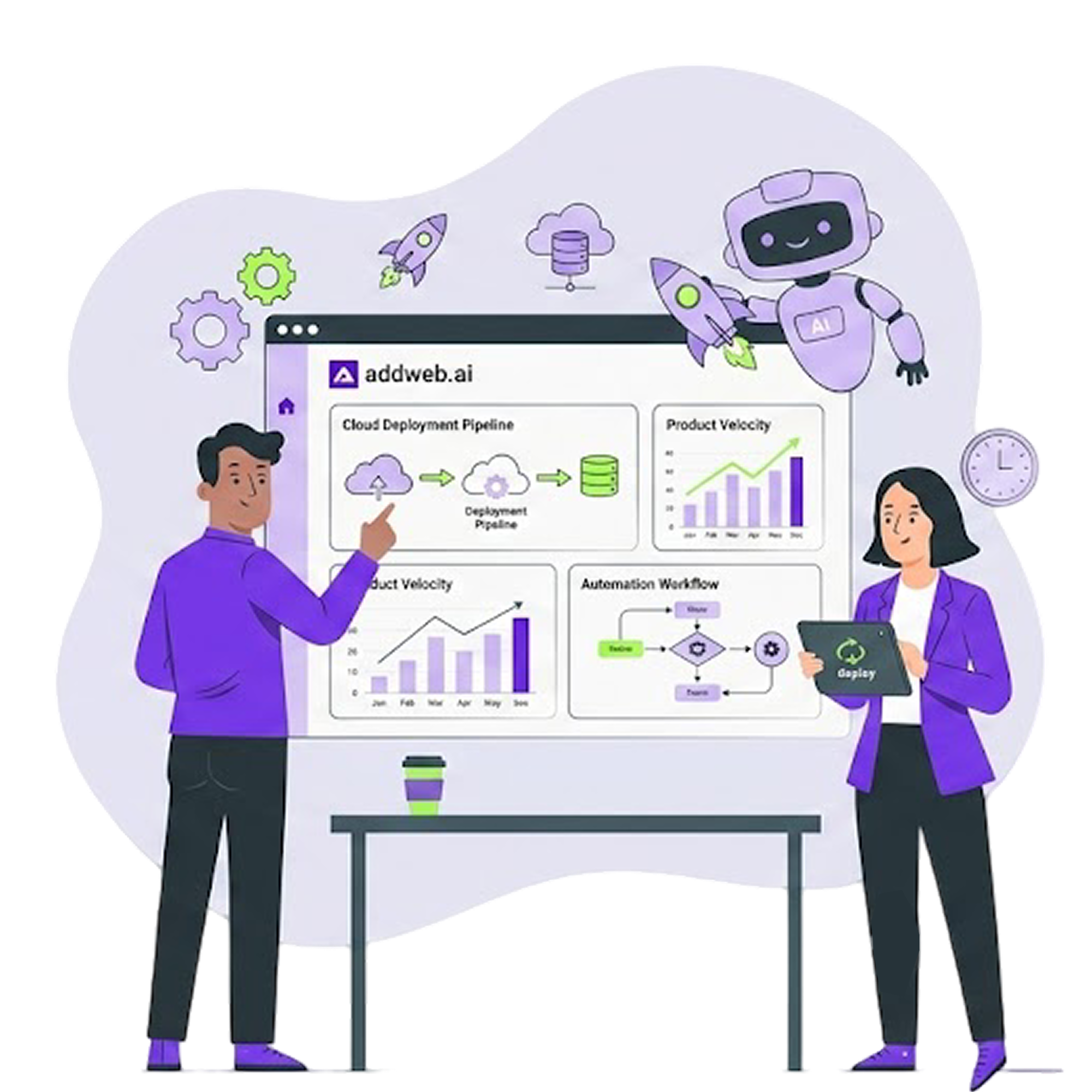
Our agentic delivery platform with mandatory human gates and a senior review on every pull request the same discipline we apply when we audit and harden your code.
Visit addweb.ai
Machine Learning · Showcase
La Liga Score Predictor
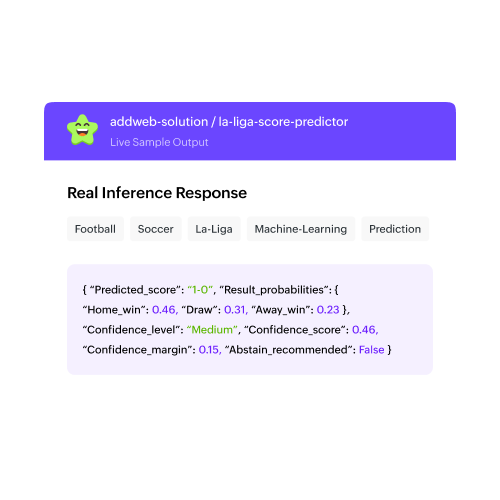
A live ML product built by our own team a working demonstration of model development, deployment, and monitoring, not a case study written after the fact.
Machine Learning · Showcase

La Liga Score Predictor
A live ML product built by our own team a working demonstration of model development, deployment, and monitoring, not a case study written after the fact.
How the engagement runs
From risk assessment to hardened production in five steps.
01
Code Risk Assessment
A focused first look at your repo, stack, and access to confirm scope and the biggest exposures.
02
Deep Audit
Full review across security, architecture, tests, and dependencies output is a ranked risk heatmap.
03
Remediation Roadmap
A prioritized plan with a clear rescue-versus-rebuild recommendation and effort against each finding.
04
Refactor & Quality Gates
Senior engineers fix findings in priority order and install the tests and gates that hold the line.
05
Hardening & Handover
Production hardening, monitoring, and your team’s new AI coding standards, documented and handed over.
How we work
The Six Commitments behind every engagement.
We bring an AI-native point of view to your code because we build and run AI systems ourselves.
We fix what’s broken and leave what works. Findings are ranked, scoped, and traceable.
You keep the standards, tests, and documentation. The goal is a team that no longer needs us.
ISO certifications, open-source contributions, and public reviews every credential is checkable.
Plain-English findings, honest rescue-versus-rebuild calls, and pricing scoped in Discovery.
We harden your code and your process so the next wave of AI-assisted work stays clean.
Trusted & reviewed
Rated by the platforms your buyers already check.






“From setup to scaling, AddWeb handled our AWS infrastructure flawlessly. Highly professional and responsive support.”
Sandra M., Owner, Bloom & Co.
“AddWeb’s AWS Cloud solutions helped us reduce hosting costs without compromising performance. Great ROI!”
Elena G., Creative Director, Artisan Bloom
“Reliable, secure, and scalable-AddWeb’s AWS implementation gave our app the foundation it needed.”
Luca D., Founder, DevSync Studio
From our engineering desk
How we think about AI code, debt, and governance.
AI Delivery
Loop Engineering: How AI Agent Loops Ship Production Software in Weeks
Our CTO on comprehension debt, the seven-agent loop, and the two human gates that keep a person approving the plan and reviewing every pull request.
AI Guardrails
AI-Augmented Laravel Teams in 2026
Where AI belongs in the workflow, what it must never own cryptography, financial logic, security-critical routines and why guardrails beat raw speed.
Technical Debt
The Hidden Costs of Poor Python Architecture
A real technical-debt audit code-quality analysis, architecture review, and an ROI-driven migration plan chosen over a multi-million-dollar rewrite.
AI Engineering
Key Challenges & Opportunities of AI in Software Development
An honest look at where AI helps with code review, QA, and refactoring and where data privacy, bias, and oversight still demand human judgment.
Questions we hear
AI code audit & remediation, answered.
It is a senior-engineering review of software built with AI coding tools, inspecting security, architecture, test coverage, dependency health, and deployment configuration. It is an engineering review, not a linter pass, and it ends with a prioritized list of findings ranked by real-world impact.
We review code produced with tools such as GitHub Copilot, Cursor, Claude Code, ChatGPT, Replit, Lovable, Bolt, and v0, along with anything a mixed human-and-AI team has shipped. The origin of the code matters less than its current risk profile.
We fix what we can and recommend a rebuild only when keeping the current foundation is more expensive or riskier than replacing it. That call is part of the audit deliverable, made in plain English against your codebase, not a default sales position.
A focused triage of a smaller codebase can happen in a few working days. A deeper rescue audit is typically scoped across a couple of weeks, depending on size, access, and risk profile. We confirm the timeline in the initial assessment before any commitment.
You receive a ranked risk report, a remediation roadmap with effort against each finding, a clear rescue-versus-rebuild recommendation, and where the engagement includes remediation refactored code, test coverage, quality gates, and documented coding standards for your team.
A code audit means giving an outside team access to your source, secrets, and infrastructure. Our ISO/IEC 27001 certification means information-security management is a documented, audited process on our side not a promise. Most smaller rescue shops cannot say the same.
Yes. We create organization-specific guidelines covering AI tool usage, review criteria, dependency governance, and CI/CD quality gates, including an explicit list of what AI must never own, such as cryptography and security-critical routines. The goal is that the debt stops recurring after we leave.
Common findings include exposed API keys and secrets, missing or weak input validation, inconsistent authentication and permission handling, and unvetted dependencies. We map findings to OWASP risk categories and rank each by how much damage it could cause.
Both. Some clients want an independent audit they can hand to their own team, and we support that. Others want us to remediate directly refactoring, adding tests, hardening the pipeline, and shipping to production. You choose the scope in Discovery.
Comprehension debt is code that shipped faster than any human on the team fully understood it. It is the defining risk of AI-assisted development, because when nobody can explain the system, every change becomes a gamble. Much of our process exists to pay that debt down.
Scope, timeline, and pricing are defined in writing after the initial assessment, because a two-day triage and a full multi-week rescue are very different engagements. We scope engagement-based pricing in Discovery rather than quoting a fixed tier before we have seen the code.
Yes. We work under confidentiality terms, and our ISO/IEC 27001-certified information-security process governs how source, secrets, and data are accessed and handled throughout the engagement.
Because we build and operate production AI systems ourselves, we audit AI-generated code from a builder’s seat rather than a checklist. Add ISO 27001 certification, 160+ in-house engineers, 13+ years in business, and full-stack depth across languages, and you get scale and security a small boutique cannot match.
Enterprise teams rarely run a single language, so we work across common backend and frontend ecosystems including PHP and Laravel, JavaScript and TypeScript, Node, React, Python, and Drupal, matching senior reviewers to your stack.
Book a code risk assessment. We confirm scope, the biggest exposures, and the right engagement shape, then move into a deeper audit or straight into remediation depending on what your codebase needs.
Move first
Find out what’s really in your AI-generated code.
Your competitors are shipping AI-assisted code fast. We make sure yours is the version that survives production. Start with a code risk assessment and get a clear read on your exposure.


