


The globe’s 10 million nonprofits are at a critical juncture. As digital transformation holds unprecedented promise for scaling social value, too many NGOs are unsure where or how to start. The consequences have never been greater—digitally advanced nonprofits are 4 times more likely to meet their mission objectives and 2 times more likely to enjoy gains in operational effectiveness. Yet, 58% of nonprofit digital transformation initiatives encounter cultural resistance as their biggest challenge.
This in-depth guide pierces the fog, providing NGOs with a clear set of directions to successfully navigate digital transformation. Whether your organization is a grassroots group just starting to go digital or an established NGO hoping to maximize your technology investment, knowing where to begin makes all the difference between flourishing and simply surviving in 2025’s digital world.
Understanding the Challenges Before You Begin
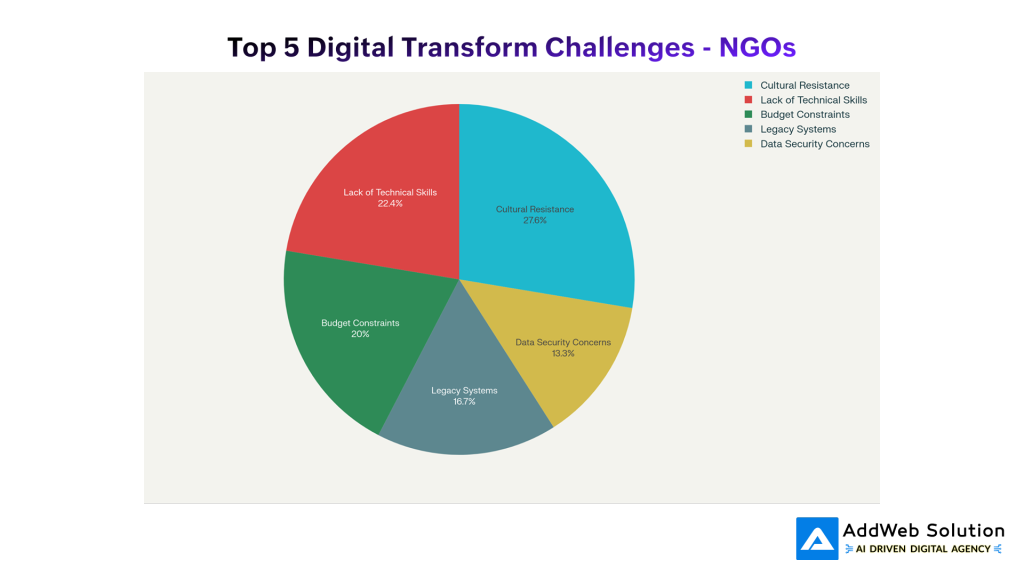
Before diving into solutions, acknowledging the barriers is crucial. Our analysis reveals that cultural resistance tops the list at 58%, followed by lack of technical skills at 47% and budget constraints at 42%. These challenges aren’t merely technical—they’re deeply human and organizational.
The Cultural Challenge
Cultural resistance manifests when staff members fear job displacement, feel overwhelmed by new systems, or simply prefer familiar workflows. Leadership buy-in becomes essential here. When executive directors and board members champion digital initiatives, resistance diminishes significantly.
The Skills Gap
Nearly 48% of charities report they don’t have the skills, knowledge, or expertise to improve their use of digital tools. This skills shortage spans cybersecurity, data analytics, cloud computing, and even basic digital literacy. Teams also need experience with cloud web filtering to protect their systems. The solution isn’t just hiring new talent—it requires committed investment in upskilling existing teams who understand your mission deeply.

Digital Skills Gap Among NGO Organizations
Budget Realities
While 49% of nonprofits feel they’re spending the right amount on technology, 45% believe they’re spending too little. For those underspending, the primary barriers are lack of available budget (77%), insufficient funder support (47%), and organizational culture (44%). The catch-22 is clear: without investment, organizations can’t demonstrate ROI, yet without demonstrated ROI, securing investment becomes harder.
The Four Pillars of Digital Maturity
Successful digital transformation rests on four interconnected pillars that work together to elevate your organization’s capabilities:
1. Knowledge: Understanding what’s possible with technology and how it applies to your mission
2. People: Building a digitally literate team with the right skills and mindset
3. Process: Establishing workflows that leverage technology for efficiency
4. Tools: Selecting and implementing the right technology solutions
Organizations that strengthen all four pillars simultaneously see dramatically better outcomes than those focusing solely on acquiring new tools.


Where to Start: The Essential First Steps
Starting your digital transformation journey requires strategic focus rather than scattered efforts. Here’s your practical roadmap:
Priority #1: Clean Up Your Data
Before implementing fancy AI tools or sophisticated CRMs, you need clean, organized data. This means:
- Centralizing information into a single source of truth rather than scattered spreadsheets
- Standardizing data collection processes across all departments
- Conducting a data audit to identify what you have, where it lives, and who accesses it
- Implementing data governance policies that specify retention periods, access controls, and security measures
Quality data becomes the foundation for everything else—from personalized donor communications to impact measurement to AI-powered insights.
Priority #2: Upskill Your Team
Digital transformation succeeds or fails based on your people. Investing in digital skills training delivers exponential returns:
According to NTEN research, 65% of nonprofits now invest in digital skills training, but that leaves 35% without any formal program. Organizations with comprehensive training initiatives report significantly higher technology adoption rates and staff satisfaction.
Actionable Training Strategies:
- Leverage free resources from Microsoft Digital Skills Center, TechSoup, and LinkedIn Learning specifically designed for nonprofits
- Focus training on communications, problem-solving, innovation, and critical thinking alongside technical skills
- Implement peer mentoring programs where digitally confident staff support colleagues
- Create a culture of continuous learning where exploring new tools is encouraged, not feared
Start with your leadership team. When executives demonstrate digital competency and enthusiasm, it cascades throughout the organization.
Priority #3: Update Legacy Systems
Outdated systems create bottlenecks that limit your digital potential. Legacy infrastructure often lacks the capabilities and integrations required to support modern digital solutions. However, you don’t need to replace everything overnight.
Strategic Modernization Approach:
- Assess current systems to identify which are causing the most friction
- Prioritize cloud migration for scalability, accessibility, and reduced maintenance costs
- Modernize incrementally by adding contemporary applications to legacy infrastructure, allowing gradual adaptation
- Focus on integration capabilities so new systems communicate seamlessly with existing tools
Cloud-based platforms particularly benefit resource-constrained NGOs by eliminating expensive on-premise infrastructure and enabling remote team collaboration.
Priority #4: Streamline Operations and Go Paperless
Nearly 84% of nonprofits surveyed said moving to paperless systems would streamline operations and declutter workflows. Digital processes reduce costs, improve efficiency, and support sustainability goals.
High-Impact Areas for Digitization:
- Payment processing for donations and memberships
- Internal communications through collaboration platforms
- Document management with cloud storage and electronic signatures
- Reporting and compliance through automated systems
Going paperless also improves data security and accessibility, as digital documents can be easily stored, searched, shared, and backed up.
What to Prioritize: Essential Technology Areas

Technology Adoption Rates Across Key Digital Areas for NGOs
With limited budgets and competing priorities, knowing which technologies deliver the highest impact helps focus your investments. Based on current adoption trends and organizational needs, here are the must-have digital capabilities:
1. Mobile Optimization (94% Adoption Rate)
Mobile has become the primary way people interact with nonprofits. With over 50% of nonprofit website traffic coming from mobile devices, optimization isn’t optional.
Mobile Strategy Essentials:
- Responsive website design that adapts seamlessly to all screen sizes
- Mobile-friendly donation forms with simplified fields and one-click payment options
- App development for enhanced beneficiary engagement, volunteer coordination, and donor communication
Organizations like Charity: Water demonstrate mobile’s power—their app provides real-time project updates through videos and images from the field, leading to a 40% increase in donor retention.
2. Social Media Engagement (82% Adoption Rate)
Social media platforms offer nonprofits unprecedented reach at minimal cost. However, success requires strategic focus rather than scattered presence across every platform.
Platform Selection Guide:
Instagram: Ideal for visual storytelling with younger audiences (millennials and Gen Z) through Reels, Stories, and carousels
Facebook: Best for community building, events, and fundraising tools despite perceptions of an older user base
LinkedIn: Perfect for connecting with corporate partners, major donors, and showcasing impact reports
Strategic Best Practices:
- Keep content digestible and concise—short-form videos under 1 minute perform best
- Know your audience and focus on 1-2 platforms where they actively engage rather than spreading thin
- Develop a content calendar aligned with SMART goals (Specific, Measurable, Achievable, Relevant, Time-bound)
- Prioritize high-engagement formats: authentic behind-the-scenes content, beneficiary stories, and impact demonstrations
Remember, 53% of nonprofits aren’t measuring their social media efforts, and 67% have no documented strategy. Don’t be part of that statistic—track metrics and refine your approach continuously.
3. Donor Management CRM (75% Adoption Rate)
A robust Customer Relationship Management (CRM) system transforms how you track interactions, maintain donor information, and nurture relationships. Leading nonprofits use CRM platforms like Microsoft Dynamics 365, Neon CRM, Bloomerang, or DonorPerfect.
CRM Core Capabilities:
- Centralized donor database tracking contribution history, engagement levels, and communication preferences
- Automated workflows for thank-you emails, birthday greetings, and donation receipts
- Segmentation tools to tailor messages based on donor behavior and demographics
- Integration with fundraising platforms for seamless donation processing
- Analytics and reporting to identify trends and optimize campaigns
Organizations utilizing sophisticated donor CRMs report dramatically improved retention rates and increased lifetime donor value.
4. Email Marketing (73% Adoption Rate)
Despite the rise of social media, email remains one of the most effective channels for nonprofits, with usage predicted to continue growing 2-3% annually.
Email Marketing Strategic Framework:
Define Clear Objectives:
- Raising funds for specific campaigns
- Recruiting volunteers
- Promoting events
- Nurturing donor relationships
Segment Your Audience:
- First-time vs. recurring donors
- Active vs. lapsed volunteers
- High-value vs. small donors
- Geographic or interest-based segments
5. Online Fundraising Platforms (71% Adoption Rate)
Digital fundraising platforms have revolutionized how NGOs raise money. Options range from comprehensive solutions like GoFundMe Pro (formerly Classy) to simple payment processors like PayPal.
Platform Selection Criteria:
- Transaction fees: Typically 1.99% to 2.9% plus per-transaction charges
- Features needed: Recurring giving, peer-to-peer fundraising, event ticketing
- Integration capabilities: CRM connectivity, email marketing tools
- User experience: Mobile-friendly, customizable branding
- Trust factors: Recognized brands inspire donor confidence
Indian NGOs particularly benefit from platforms like Ketto, Milaap, and GiveIndia, which offer localized features including no platform fees on donations and international fundraising capabilities.
6. Website Optimization (68% Adoption Rate)
Your website serves as your organization’s digital home base. Best-in-class nonprofit websites share common elements:
Must-Have Website Features:
- Clear mission statement immediately visible on the homepage
- Compelling storytelling with real beneficiary impact stories
- Prominent donation CTAs throughout the site, not just on one page
- Simple, intuitive navigation with logical menu structure
- Mobile responsiveness ensuring seamless experience on all devices
- Fast load times and SEO optimization
- Accessibility features for users with disabilities
- Social media integration for easy content sharing
Remember, your website needs to serve multiple audiences simultaneously—donors, volunteers, beneficiaries, and partners—so clear pathways for each group are essential.
7. Data Analytics (55% Adoption Rate)
Despite having the lowest adoption rate among priority technologies, data analytics offers some of the highest potential returns. Organizations with advanced analytics capabilities report 78% increased mission effectiveness.
Analytics Applications for NGOs:
- Donor behavior analysis revealing giving patterns, preferences, and trends
- Program impact measurement tracking outcomes and demonstrating ROI to funders
- Resource allocation optimization ensuring funds flow to highest-impact initiatives
- Predictive modeling identifying potential major donors or at-risk supporters
Big data tools help NGOs move from intuition-based to evidence-based decision-making. Even simple analytics dashboards tracking key performance indicators dramatically improve strategic planning.
Measuring Success: Key Metrics That Matter
| Metric Category | Key Indicators | Target Benchmarks |
| Donor Engagement | Donor retention rate, Lifetime value, Average gift size | 19.4% higher retention with high digital maturity |
| Operational Efficiency | Time saved on admin tasks, Cost per transaction, Staff satisfaction | 2x improvement with digital maturity |
| Digital Reach | Website traffic, Social media engagement, Email open rates | 50%+ mobile traffic, 20-25% email open rates |
| Mission Impact | Beneficiaries served, Program outcomes, Funder satisfaction | 4x higher mission achievement with digital maturity |
| Financial Health | Fundraising ROI, Donation growth rate, Operational cost reduction | 12.7% higher growth rate |
Digital Strategy Priorities by Organization Size
Your optimal digital strategy depends significantly on your organization’s size and resources:
Small NGOs (Annual Budget Under $500K)
Priorities:
- Mobile-responsive website with integrated donation functionality
- Free/low-cost CRM like Google for Nonprofits or HubSpot Nonprofit tier
- Social media presence on 1-2 platforms only
- Basic email marketing through platforms offering nonprofit discounts
- Cloud-based collaboration tools (Google Workspace, Microsoft 365 Nonprofit)
Strategy: Focus on free and discounted tools designed for nonprofits. Leverage volunteer tech expertise and online training resources.
Mid-Size NGOs (Annual Budget $500K-$5M)
Priorities:
- Comprehensive donor CRM with analytics capabilities
- Professional website with SEO optimization
- Multi-channel social media strategy with dedicated staff
- Advanced email marketing with automation and segmentation
- Online fundraising platform integration
- Data security and privacy compliance systems
Strategy: Invest in integrated platforms that reduce technology fragmentation. Hire or contract specialized digital talent.
Large NGOs (Annual Budget Over $5M)
Priorities:
- Enterprise CRM with AI-powered insights
- Custom mobile applications for beneficiaries and supporters
- Advanced data analytics and business intelligence platforms
- Comprehensive cybersecurity infrastructure
- Legacy system modernization projects
- Dedicated digital transformation team
- E-learning platforms for staff development
Strategy: Build in-house digital capabilities while partnering with specialized technology providers for complex implementations.
Digital transformation isn’t just for big NGOs — it’s for every mission-driven team

Pooja Upadhyay
Director Of People Operations & Client Relations
Data Security and Privacy: Non-Negotiable Priorities
As NGOs digitize, protecting sensitive beneficiary, donor, and operational data becomes paramount. Data breaches damage trust, trigger legal consequences, and compromise vulnerable populations you serve.
Essential Data Protection Practices:
- Know what data you possess through comprehensive data mapping
- Avoid collecting unnecessary information and delete extraneous data regularly
- Implement privacy policies covering collection, storage, sharing, and retention
- Use secure, PCI-compliant platforms for payment processing
- Limit data access through role-based permissions and multi-factor authentication
- Encrypt sensitive information like health and financial data
- Train staff regularly on security protocols and phishing recognition
- Develop incident response plans for potential breaches
Data protection isn’t just about compliance with regulations like GDPR—it’s an ethical imperative when working with vulnerable populations.
The Role of AI and Emerging Technologies
While AI dominates technology discussions, NGO adoption remains cautious. Only 4% of nonprofit finance leaders feel “very confident” in their organization’s AI capability, and 45% are unsure if their current systems can even support AI.
Practical AI Applications for NGOs:
- Chatbots automating donor queries and volunteer application support
- Personalized communications at scale based on supporter behavior
- Predictive analytics identifying potential major donors
- Content generation for social media posts and email campaigns
Conclusion
Digital transformation is both a journey and a strategic imperative for NGOs aiming to maximize their mission impact in today’s digital-first world. By prioritizing data quality, upskilling teams, modernizing systems, and focusing on high-impact technologies such as mobile optimization, CRM, and social media engagement, NGOs can overcome common challenges and build sustainable digital capabilities that propel their mission forward with greater efficiency and reach. Starting small with clear priorities and maintaining momentum ensures lasting success in the evolving digital landscape.
Source URLs
- https://whatfix.com/blog/digital-transformation-in-nonprofits/
- https://biztechmagazine.com/article/2023/11/four-areas-nonprofits-should-prioritize-when-it-comes-digital-transformation
- https://www.microsoft.com/en-us/nonprofits/resources
- https://page.techsoup.org/digital-skills-center
- https://www.councilofnonprofits.org/articles/earning-trust-imperative-data-privacy-nonprofits
- https://doublethedonation.com/nonprofit-web-design/
- https://www.undp.org/digital/Digital-Strategy
