


“Organizations approaching Drupal 10 migrations strategically achieve what most data migrations fail at: staying on budget. The key is understanding what you’re migrating from and why.”
Introduction
The digital world has changed fast. When governments, global brands, and healthcare systems need platforms that handle massive traffic without crashing, many turn to Drupal. But scaling from a small pilot to a true enterprise platform isn’t simple.
Over the last few years, Drupal has quietly become the backbone for millions of high-stakes websites across government, healthcare, and media. The real challenge isn’t choosing Drupal – it’s knowing how to scale it the right way.
This article brings together real lessons from the field: what actually worked, what caused painful delays, and which decisions made the difference between systems that grow smoothly and ones that break under pressure.
Where Drupal Rules: Industry Breakdown & Adoption Patterns
Drupal isn’t a niche tool – it’s the opposite. Look at where it’s actually used, and a clear pattern shows up: the most regulated, high-pressure environments trust it the most.
Governments around the world run on Drupal. More than half of government CMS sites globally use it, across 150+ countries. From citizen portals to emergency systems, Drupal checks the boxes that matter most: auditable security, serious scalability, and full transparency through open source.
Universities made the same call. Over 10,000 colleges rely on Drupal because when an institution chooses a platform, it needs to last decades – not just the next budget cycle.
Healthcare adopts Drupal for one reason: compliance. Organizations like Memorial Sloan-Kettering and Advent Health use it because secure systems don’t get noticed – they just work.
And in media, performance is everything. The Economist and Weather.com use Drupal to serve millions of readers, even during traffic spikes where a one-second delay can mean massive losses.
Here’s the industry distribution from organizations currently deploying Drupal at scale:

The concentration isn’t random. Each sector chose Drupal because it solved a specific problem that off-the-shelf alternatives couldn’t handle at their required scale and complexity.
The Scalability Challenge: Moving from Servers to Clusters
Scalability is where Drupal pulls ahead of “good enough” CMSs. Most platforms survive traffic spikes by adding servers. Drupal is built to scale smartly under pressure.
A real example: a UK hosting provider rebuilt Drupal on AWS Kubernetes and now runs 500+ nodes, 14,000 pods, and 50,000 container services – while maintaining 99.9% uptime. That’s enterprise scale, done right.
The 3 Architectural Pillars
1. Multi-layer caching
Caching in Drupal isn’t optional – it’s core. With Redis or Memcached, millions of requests are handled in memory, not the database.
One financial services site reduced query times from 8–12 seconds to under 100ms using proper caching and indexing.
2. Stateless application servers
Drupal scales horizontally. Run identical servers behind a load balancer, add capacity when needed, and avoid session or sync headaches. More servers = more throughput.
3. CDN and edge caching
With CDNs and ESI, content is served closer to users. A fashion retailer cut page load times by 60% while reducing server strain.
What This Enables
Drupal can absorb traffic spikes that take other platforms down. Over 50,000 Drupal sites serve 1M+ monthly visitors, proving it at scale.
The Reality Check
Scalability isn’t automatic. It takes planning, the right architecture, and early decisions that may feel overkill – until traffic surges and your site stays online while others don’t.
Security & Compliance: Why Government Chose Drupal
Let’s skip the hype. Drupal isn’t “secure by magic.” It’s secure because of process, people, and architecture built to assume attacks will happen.
Governments didn’t choose Drupal because it’s free. They chose it because security is non-negotiable – and many proprietary platforms weren’t built with public-sector rigor in mind.
Why Drupal stands out:
- Safe-by-default database queries, reducing SQL injection risks
- Automatic output escaping in templates, stopping XSS attacks early
- Granular role-based permissions that match real government structures
- A formal security disclosure process with a dedicated response team
That last point matters. When Drupalgeddon2 hit in 2018, sites that followed update best practices patched quickly. The real damage came from organizations that ignored updates – not from Drupal itself.
Healthcare & Compliance
Drupal isn’t “HIPAA-certified” (no CMS is), but its architecture makes HIPAA-compliant systems possible – encrypted fields, controlled access to patient data, and full audit logs.
Large healthcare systems like MU Health Care learned this the hard way: compliance works only when it’s designed from day one. Fixing security later is far more expensive.
The Human Factor
Most security failures aren’t platform issues – they’re human ones. Dev tools left on, weak permissions, exposed errors. Drupal gives you the tools; teams have to use them correctly.
Teams that stay secure long-term rely on:
- Automated security updates via CI/CD
- Regular security audits
- Strict role-based access
- Extra security modules (2FA, CAPTCHA, login protection)
- A Web Application Firewall in front
Bottom line: Drupal enables enterprise-grade security – but discipline is what keeps it that way.
Performance Under Pressure: Real Numbers from Real Deployments
Numbers don’t lie. When NASA needed a platform to handle traffic spikes during major launches and manage massive multimedia libraries, they chose Drupal. Weather.com processes millions of daily requests during storm seasons. These platforms measure success in 9s – 99.9% uptime, 99.99% if they’re serious.
What’s remarkable is that Drupal’s baseline performance has been improving steadily.
In 2024 alone, enterprises reported a 14% enhancement in page load times on Drupal platforms, attributable to improved caching efficiency and server optimizations. That’s not feature bloat; that’s the platform getting faster at its core function.
But raw page load time is only part of the story. Consider the infrastructure implications

The ROI data from enterprise deployments tells the real story. When organizations migrate to modern Drupal versions from legacy systems, they consistently report measurable improvements:
- Georgia State Government saved $4.7 million over five years by consolidating 67 state websites onto a centralized Drupal platform managed by a single team.
- A financial services company achieved 50% faster page loads, resulting in a 30% increase in organic traffic and, more importantly, a tangible reduction in server infrastructure costs.
- Johnson & Johnson reduced website build costs by 59% through Drupal’s modular approach versus custom development for each site.
- Bentley University saved 75% compared to their previous CMS investment by eliminating vendor lock-in and gaining development flexibility.
The pattern is unmissable: organizations that move to Drupal for the right reasons (scalability, compliance, flexibility) see both performance and cost benefits compound over time.
Where performance often gets overlooked is in operational metrics. Server CPU utilization, database connection pools, cache hit ratios – these invisible numbers determine whether a site feels snappy or sluggish. Enterprise deployments typically monitor:

These aren’t theoretical numbers. They’re measured from actual deployments where the difference between hitting and missing these targets directly impacts revenue (for e-commerce) or citizen experience (for government).
Migration Reality Check: Timeline, Costs, and What Actually Works
Here’s where real-world deployments hit the wall: migration complexity.
When Drupal 7 reached end-of-life on Jan 5, 2025, nearly 37% of Drupal sites instantly lost security support. Organizations had two options: migrate – or live with rising security and technical debt.
The hard truth? Only 17% of enterprise migrations stay on budget. But the ones that succeed follow a pattern.


What Migration Really Takes
Timelines
- Simple websites: ~1 month
- Medium complexity: 2–3 months
- Large enterprise platforms: 4–6 months
Georgia State proved it’s doable – 15 sites in 8 months, eventually scaling to 67 sites.
Costs
- Simple migrations: $15k–$85k
- Complex enterprise builds: $100k+
- Drupal developer rates: $20–$150/hour
What Makes Migrations Succeed
1. Content audit first
Most sites carry years of unused content. One publisher cut migration effort by 40% by cleaning house before moving.
2. Phased, not “big bang”
Move simple content first, validate the process, then handle complex pieces. Less risk, fewer surprises.
3. Proper staging environment
Test migrations in a production-like setup. The extra cost is tiny compared to fixing broken content after launch.
The Deployment Checklist: Avoiding Common Pitfalls
Large-scale Drupal deployments consistently face six critical challenges. Understanding them transforms your deployment from a nail-biting gamble into a predictable process.
Environment consistency
When dev, staging, and production don’t match, bugs appear at the worst possible time.
What enterprises do: use cloud platforms where all environments run on the same setup – just at different scales.
Dependency management
Manually moving code or libraries causes version conflicts and endless debugging.
What enterprises do: automate Composer through CI/CD so dependencies are tested once and deployed cleanly.
Configuration drift
Small config differences between environments turn into hard-to-trace bugs.
What enterprises do: treat configuration as code – versioned, synced, and deployed together.
Security update delays
Slow, manual updates leave known vulnerabilities exposed.
What enterprises do: automate security patches so critical fixes reach production within hours.
Testing gaps
Without automated testing, performance issues reach users first.
What enterprises do: bake performance testing into CI/CD to catch regressions early.
Scaling under traffic spikes
Manual scaling is always late.
What enterprises do: use auto-scaling infrastructure that grows and shrinks with traffic – no human intervention needed.
ROI That Justifies the Investment
Enterprise decision-makers want one thing: tangible returns on investment. When a Drupal deployment costs $50,000-$200,000, the business case needs to be ironclad.
The data is compelling: 99% of organizations report improvements after migrating to modern Drupal implementations. But “improvements” means different things to different sectors.
For e-commerce, improvements are straightforward:
- King Arthur Baking Company saw 200% year-over-year growth in e-commerce sales after optimizing their Drupal implementation
- Centara Hotels increased both conversion rates and bookings by 100% through a unified digital strategy
- Reduction in page load times directly correlates with conversion rate improvements (roughly 1% increase per 100ms reduction)
For government, the ROI is operational:
- Georgia State consolidated 67 websites onto a single Drupal platform, saving $4.7 million over five years
- The savings came from reducing the IT team managing multiple disparate systems to a lean team managing a single platform
- Faster time-to-market for new services: government agencies can now launch new digital services in weeks instead of months
For healthcare, the ROI is hybrid – operational plus patient experience:
- Unified content management across multiple hospital networks reduces redundancy
- Shorter page load times improve patient experience (faster appointment scheduling, more completed forms)
- HIPAA compliance built into the platform reduces audit costs and security incident risk
For media and publishing, the ROI centers on scalability without cost:
- The Economist serves 20 million monthly readers through Drupal
- Real-time data updates at Weather.com don’t require infrastructure scaling
- One large online publisher migrated their entire portal (millions of monthly visitors) over 8 months with zero downtime
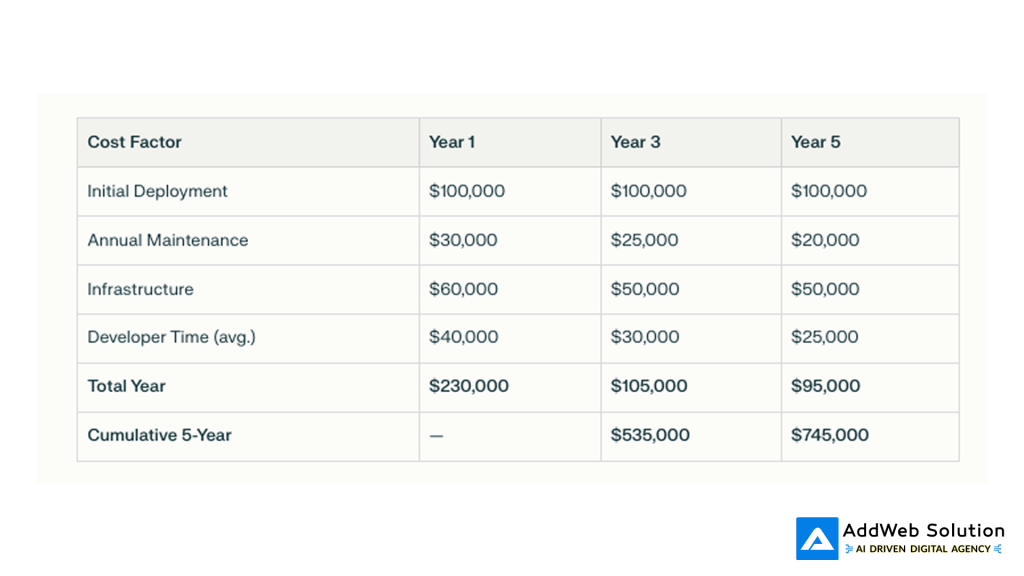
The total cost of ownership (TCO) calculation reveals why Drupal often wins despite higher initial costs:Compare that to proprietary platforms with vendor lock-in, license escalation, and limited flexibility – Drupal’s ROI improves every year.
Power Your Website with Drupal’s Excellence!

Pooja Upadhyay
Director Of People Operations & Client Relations
Lessons Learned: Insights from AddWeb’s Enterprise Clients
After years of implementing Drupal at enterprise scale, certain patterns emerge. These aren’t theoretical – they’re born from real projects, real deadlines, and real stakeholders expecting results.
Lesson 1: Architecture Beats Features
Teams obsess over modules. Smart teams plan caching, scaling, and databases first.
Features change. Architecture compounds.
Lesson 2: Versions Are a Cost Decision
Staying on Drupal 7 isn’t technical – it’s expensive. Modern Drupal is faster, safer, and cheaper long-term. Teams that upgrade early win; teams that delay pay later.
Lesson 3: Skills Don’t Scale Like Servers
You can add infrastructure fast. You can’t add Drupal expertise overnight. Teams that invest in people early avoid painful fire drills later.
Lesson 4: Visibility Beats Guesswork
Most failures happen because teams don’t see issues early. Monitoring tools catch problems before users do – and save hours of panic.
Lesson 5: Migration Creep Breaks Projects
The moment migration turns into redesigns and platform consolidation, timelines and budgets explode.
Migrations work best when scope is ruthlessly limited. Redesigns happen after migration. Consolidations happen in phases.
Conclusion: When Complexity Becomes an Asset
Organizations that succeed with large-scale Drupal aren’t the ones chasing shiny tech or massive budgets. They’re the ones who accept a simple truth: complex businesses need systems that handle complexity well.
Drupal doesn’t remove complexity – it manages it. That’s why governments, healthcare providers, and global media companies rely on it. They don’t choose Drupal because it’s easy. They choose it because it scales securely, globally, and without constant firefighting.
Getting from one server to hundreds of Kubernetes nodes takes planning and discipline. Scalability isn’t a feature – it’s a mindset.
For teams building digital platforms meant to grow, Drupal’s enterprise lessons offer a proven way forward.
Source URLs
- https://new.drupal.org/industries
- https://new.drupal.org/industries/enterprise
- https://www.acquia.com/blog/drupal-for-government
- https://electroiq.com/stats/drupal-statistics/
- https://pantheon.io/learning-center/drupal-security
- https://platform.sh/blog/common-drupal-deployment-pitfalls/
- https://www.globalmediainsight.com/blog/drupal-statistics/
