
Web Accessibility & Digital Compliance
Web Accessibility & ADA Compliance, Engineered to Hold Up
We make your website, app and documents usable by everyone and defensible if anyone asks. Real WCAG 2.2 AA remediation in the code, not a widget bolted on top.
US-registered engineering partner we remediate the code, we don’t bolt on a widget.
Why AddWeb, not an overlay
Compliance that holds up

We fix the code
Real WCAG 2.2 AA remediation in the HTML, design and content not a toolbar on top.

Human-tested
Screen-reader and keyboard testing where automated scanners fall short.

Defensible trail
VPAT / ACR documentation your legal and procurement teams can rely on.

Stays fixed
Monitoring and re-audit so new releases don’t reopen old barriers.

Clutch · 87+ reviews

Why this matters now
An inaccessible site is a legal liability and a closed door
Web-accessibility lawsuits and demand letters have become a routine cost of doing business online in the US, and courts keep pointing to WCAG as the yardstick. At the same time, a substantial share of people live with a disability that’s revenue and reputation walking away from a site they can’t use.
Most teams discover the problem the hard way: a complaint, a failed procurement check, or an overlay widget that promised compliance and didn’t deliver it. The fix isn’t a toolbar. It’s engineering.

Legal exposure. Demand letters and ADA Title III claims targeting inaccessible sites the challenges we hear most often from prospects.
Lost customers. Users on screen readers and keyboards abandon sites they can’t navigate, quietly suppressing conversion.

Failed procurement. Public-sector and enterprise buyers require a VPAT before they’ll sign no document, no deal.

Overlay false confidence. Widgets that don’t touch the code leave the underlying barriers, and the liability, fully in place.
Standards we work to
One technical baseline, mapped to every law that applies to you
We build to WCAG 2.2 Level AA, then map conformance to the specific regulations your markets enforce.
Global baseline
WCAG 2.2 AA
The Web Content Accessibility Guidelines are the technical standard every major law points to content that is perceivable, operable, understandable and works with assistive technology.
United States
ADA
US courts and the Department of Justice treat business and public websites as places of public accommodation under the Americans with Disabilities Act, benchmarked against WCAG.
United States
Section 508
Federal agencies and their contractors must make information and communication technology accessible, conforming to WCAG 2.0 AA since the 2017 refresh.
United States
Section 504
Prohibits disability discrimination by organisations receiving federal funding, including schools, universities, hospitals and care providers.
European Union
EN 301 549 & EAA
The European standard and the European Accessibility Act extend accessibility obligations across public-sector and a growing range of private digital services.
Canada
AODA
Ontario’s Accessibility for Ontarians with Disabilities Act requires websites serving Ontario to meet defined accessibility provisions.
California
Unruh Civil Rights Act
California layers state-level accessibility obligations in addition to federal requirements, with statutory damages that raise the stakes for non-compliance.
New York
NY Human Rights Laws
New York City and State human-rights statutes work alongside the ADA in treating websites as public accommodations.
Documents
PDF & ICT Accessibility
Tagged PDFs, forms and other documents fall under the same obligations we remediate reading order, tags and alt text so they work with assistive tech.
What we do
End-to-end accessibility, from audit to ongoing assurance
A complete programme rather than a one-time scan because compliance has to survive your next release.
01
WCAG 2.2 AA Audit
A prioritised, evidence-based report of every conformance failure mapped to its success criterion, with severity, user impact and code-level detail.
02
Accessibility Remediation
Our engineers fix the frontend code, design and content directly, then re-test to confirm each barrier is genuinely closed.
03
VPAT / ACR Reporting
Formal Voluntary Product Accessibility Template and Accessibility Conformance Report documentation for procurement and legal review.
04
Accessible Design & UX
Colour contrast, focus states, semantic structure and inclusive interaction patterns designed in from the start, not retrofitted part of our wider UI/UX design practice.
06
Manual & AT Testing
Expert review with NVDA, JAWS and VoiceOver, keyboard-only navigation and zoom the criteria automation can’t verify, run alongside our software testing & QA teams.
07
Document & PDF Accessibility
Remediation of PDFs, forms and presentations for screen-reader compatibility under Section 508 and beyond.
08
Ongoing Monitoring
Periodic re-auditing and monitoring so content updates and releases don’t quietly reintroduce barriers.
09
Team Enablement
Practical training for your designers, developers and content authors so accessibility becomes part of how you ship.
The AddWeb difference
Engineering rigour plus the human layer machines miss
Automated scanners catch a fraction of WCAG criteria. Durable compliance lives in the gap between automation and lived experience and that’s where we work.
AI-assisted scale, expert-led judgement
We use automated tooling to surface issues fast across large sites, then apply manual expert testing with real assistive technology to confirm genuine conformance. As an in-house operator of our own AI platform, AddWeb AI, we know exactly where automation helps and where it quietly misses so we never hand you a green dashboard that hides a broken experience.
We remediate code, not confidence
Overlay widgets sell reassurance; they don’t fix the underlying barriers, and they haven’t reliably stopped lawsuits. We work in the actual HTML, components and content, leaving you with a site that is accessible by construction and an audit trail you can defend.
Proof, not promises
Credentials that make our accessibility work defensible
The signals that matter when accessibility is a legal and procurement question, not a marketing one.
Certified process & security
ISO 9001 & ISO 27001
Quality-management and information-security certification means your audit, remediation and the data we touch are handled to an externally verified standard.
Platform partnerships
Accessible by construction, on every platform you run
Accessibility lives in the build, so it has to be native to your stack. Drupal is engineered around accessibility at the core and as a top contributor and Acquia partner, we carry that discipline across the platforms we’re officially partnered on.
Recognised work
Award-backed & AI-visible
Named DesignRush #1 IT Services Greenville SC (2026) and Clutch Top Web Developers Greenville (2026). The same semantic, accessible markup we ship also helps AI answer engines understand and cite your site accurately.
How the options compare
Overlay widget, DIY, boutique consultant, or engineering partner?
The honest trade-offs across the routes most teams consider for accessibility.
What matters
Overlay widget
DIY in-house
Boutique consultant
AddWeb
Selected work
Platforms we’ve built and maintain
Examples from our portfolio of web platforms engineered for real users and real scale.
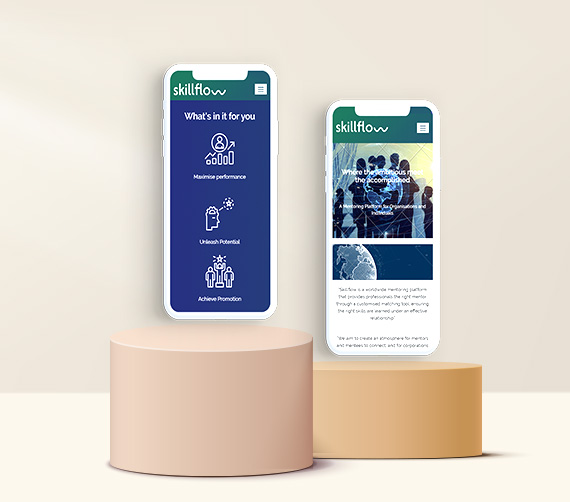
SageFlow
A consulting platform built to strengthen organisational capacity, with strategic solutions designed for changing markets.
View case study

Sortly
An inventory-management application built using WordPress, extended by Team AddWeb with a set of advanced, modern features.
View case study
How we work
A five-step path from exposure to assurance
01
Audit
Automated + manual review against WCAG 2.2 AA, mapped to the laws that apply to you.
02
Prioritise
Issues ranked by legal risk and user impact, with a clear, costed roadmap.
03
Remediate
Engineers fix code, design and content and document what changed and why.
04
Validate
Re-test with assistive technology and produce your VPAT / ACR.
05
Monitor
Ongoing checks and re-audits keep you conformant as the site evolves.
The AddWeb Six
The Six Commitments behind every engagement
The standards we hold ourselves to, on accessibility and everything else we build.
We pair automated scale with expert judgement so decisions rest on evidence, not assumptions.
We fix the specific barriers that matter, mapped to the exact success criteria they fail.
We own the outcome a site that is accessible and stays that way not just a deliverable.
ISO-certified process, real platform credentials, and documentation you can defend.
You see every issue, its severity, and exactly what we changed. No black-box dashboards.
Accessible, semantic builds that hold up to new releases, new standards and AI-driven search.
Trusted & reviewed
Reviewed across six independent platforms
4.9 on Clutch across 87 reviews, with a 98% client-retention record over 14+ years.






“The team is excellent at what they do, writing good code and providing fast, reasonably priced, and technically sound solutions. They manage the project across different timezones well, and are able to maintain good communication.”
Guillermo Herlt, Founder, Open CR
“I’ve had the opportunity working with AddWeb over the years on various projects. Each time was pleasant and impressive… AddWeb was the right fit and grew tremendously given our changing need. I couldn’t have been more thankful for how well they met the challenges and delivered.”
Sonia Lin, Startup Founder
I have been working with AddWeb Solutions for a number of years now. They have been a true asset to multiple projects, provide a fast response rate in any situation. They have a large team that can handle any project that you throw at them.”
Gleb Andreev,
From our blog
Accessibility & compliance insights
Guidance from the teams who build and remediate to these standards every day.
Drupal & Accessibility
Why Drupal Is a Strong Foundation for Accessible, Enterprise-Grade Sites
Read article
Commission
ADA vs Section 508 vs WCAG: What Actually Applies to Your Business
Commission
Why Accessibility Overlays Don’t Make You Compliant and What Does
Browse the blog
Questions, Answered
Frequently asked questions about web accessibility services
Web accessibility compliance means your website, app and digital documents can be used by people with disabilities, measured against a recognised standard. In practice that standard is WCAG 2.2 Level AA, which laws like the ADA, Section 508, EN 301 549 and the European Accessibility Act all point to. Compliance is verified through audit, remediation and testing with real assistive technology.
In the United States, courts and the Department of Justice have repeatedly treated business and government websites as places of public accommodation under the ADA, and use WCAG as the benchmark. Most US-facing businesses therefore carry real legal exposure if their site is inaccessible. We are not a law firm, so we recommend confirming your specific obligations with counsel, but we can give you an evidence-based picture of where your site stands today.
No. Overlay widgets that bolt a toolbar onto an existing site do not fix the underlying code, and they have not reliably protected organisations from accessibility lawsuits. Durable compliance comes from auditing and remediating the actual HTML, design, content and interactions. That is the approach we take, with a documented audit trail you can defend.
We work to WCAG 2.2 Level AA as the technical baseline and map it to the regulations that apply to you: the ADA, Section 508 and Section 504 of the Rehabilitation Act in the US, EN 301 549 and the European Accessibility Act in the EU, AODA in Ontario, and state-level statutes such as the California Unruh Act and New York Human Rights laws.
You receive a prioritised report of every conformance failure mapped to its WCAG success criterion, the severity and user impact of each issue, screenshots and code-level detail, and a remediation roadmap. Where you need a formal Voluntary Product Accessibility Template or Accessibility Conformance Report for procurement, we produce that too.
Both. Our engineers remediate the front-end code, design and content directly, then re-test to confirm each issue is closed. Because the same teams that audit also build and maintain sites across WordPress, Drupal, Laravel and modern JavaScript frameworks, fixes are implemented correctly rather than patched superficially.
We combine automated scanning to catch issues at scale with manual expert review and testing using real assistive technology, including screen readers such as NVDA, JAWS and VoiceOver, keyboard-only navigation and zoom. Automated tools alone catch only a fraction of WCAG criteria, so the manual layer is where genuine compliance is established.
Yes. Accessibility obligations extend to PDFs, forms, presentations and other documents, especially under Section 508. We remediate document structure, tags, reading order and alternative text so they work with assistive technology alongside your website.
Cost depends on the size of your site, the number of unique templates and the depth of the failures found in the audit. We do not publish fixed packages because that would mean guessing at your scope. Instead we scope the work in a free Discovery call against your actual properties and give you a defined, fixed estimate before any work begins.
A focused marketing site can often be audited and remediated within a few weeks, while large multi-template platforms and applications run longer and are phased by risk. After the audit we give you a timeline tied to your specific templates and components rather than a generic promise.
Yes. Accessibility is not a one-time fix because every content update and release can introduce new barriers. We offer ongoing monitoring and periodic re-auditing so your site stays conformant as it changes, with a clear record of your compliance posture over time.
The opposite. Accessible markup, semantic structure, descriptive alternative text and clean keyboard navigation reinforce the same signals search engines and Core Web Vitals reward. Done properly, accessibility remediation tends to improve discoverability and usability for every visitor, not only those using assistive technology.
AddWeb is a US-registered, ISO 9001 and ISO 27001 certified engineering partner with a 13-year track record and 98% client retention. We remediate real code rather than selling a widget, we hold an Acquia partnership and a long Drupal contribution history on a platform built around accessibility, and we give you a defensible audit trail. You get an outcome you can stand behind, not a badge.
Accessible, well-structured content is also more legible to AI answer engines such as ChatGPT, Perplexity and Google AI Overviews. The same semantic markup and clear information hierarchy that help assistive technology help these systems understand and quote your site accurately, so accessibility work directly supports your visibility in AI-driven search.
Close the exposure
Find out exactly where your site stands
Book a strategy call and we’ll scope a WCAG 2.2 AA audit against your real properties with a clear, fixed estimate before any work begins.

