
Enterprise Web Development Services
Your website is either your best salesperson or your most expensive liability. Right now, it’s one of those two things. A platform that loads in under 2 seconds, integrates cleanly with your CRM and ERP, and converts at every touchpoint generates revenue every hour it runs. A platform that doesn’t costs you money in exactly the same way. We build the kind that works.









The Real Cost of a Broken Web Platform
Six Ways Your Enterprise Website Is Quietly Losing You Revenue
Most enterprise websites are not broken in a way that triggers alarms. They are broken in the quiet, expensive way: a half-second too slow to load, a form with one too many fields, a navigation structure that made sense two reorgs ago. These are the six patterns we find in almost every audit.

Page Speed Is Destroying Your Organic Rankings and Bounce Rate
Google’s Core Web Vitals are now a direct ranking factor. If your Largest Contentful Paint exceeds 2.5 seconds, you are handing organic traffic to competitors who invested in performance engineering. Every 100ms of delay in load time reduces conversion by roughly 1 percent.

Your CMS Cannot Handle Your Content or Your Traffic Volume
Enterprise organisations manage thousands of pages across multiple regions and languages. Legacy CMS architectures were not designed for this scale. The result is a publishing team that fights the platform every day and an infrastructure that buckles the moment a campaign drives spike traffic.
The Integration Layer Between Your Website and Business Systems Is Fragile
Your website needs to talk to your CRM, ERP, marketing automation platform, CDP, and ecommerce backend. When those integrations are built on brittle custom code or undocumented APIs, every software update becomes a risk event and every new integration requires a project.

Conversion Rate Is Flat Despite Traffic Growth
Bringing in qualified traffic and failing to convert it is the most expensive problem in digital. Enterprise web platforms that were not designed around conversion logic, A/B testing infrastructure, and personalisation capabilities leave measurable revenue on the table every single month.

Multi-Site, Multi-Region Management Creates Operational Chaos
Running separate codebases for each brand, market, or region means each site accumulates its own technical debt independently. Security patches need to be applied twelve times instead of once. Brand consistency erodes. And the cost of maintaining twelve mediocre sites exceeds the cost of building one excellent platform.

Accessibility Compliance Exposure Is Growing
WCAG 2.1 AA compliance is increasingly required by procurement teams, government buyers, and litigation risk management. Enterprise websites that were built without accessibility engineering baked in face costly remediation projects and real legal exposure as enforcement activity increases globally.
How We Solve These Problems
Enterprise Web Engineering Built Around Business Outcomes, Not Technical Deliverables
We do not build websites. We engineer digital platforms that function as revenue infrastructure. The difference is in how we think about the problem from day one. Where most agencies start with design and hope performance follows, we start with architecture decisions that determine load capacity, integration flexibility, and long-term maintainability before a single wireframe is drawn.
Our enterprise web development practice is built on Drupal for content-heavy, multi-site, and government-grade requirements; headless React and Next.js for performance-critical and composable digital experience platforms; and fully custom stacks when the business requirement demands something neither CMS nor framework can deliver out of the box.
Every engagement is led by a solutions architect who owns the technical strategy, not just the ticket queue. You get a partner who challenges the brief when the business objective requires it, and who is accountable for outcomes, not just deliverables.

Architecture Before Design
Every platform decision is made with performance, scalability, and integration requirements defined first.

Conversion Engineering, Not Just Visual Design
We instrument every build with analytics, heat mapping, and A/B testing capability from launch.

Accessibility and Compliance by Default
WCAG 2.1 AA, GDPR-compliant cookie management, and structured data are built in, not added later.

Documented, Owned, and Maintainable
You receive full technical documentation and a codebase your internal team or any future agency can extend.
Core Capabilities
Enterprise Web Development Services
Our enterprise web development practice covers the full engineering lifecycle, from architecture strategy through to post-launch performance optimisation. Each capability is scoped to your business objectives, not a service menu we hand you at kickoff.
- Drupal Enterprise CMS Development
- Headless and Composable Web Architecture
- Custom Web Platform Engineering
- Web Performance Engineering
- Enterprise Ecommerce Web Development
- Web Accessibility Engineering
- API Integration and Third-Party System Connectivity
- Conversion Rate Optimisation and Digital Analytics

We architect and build Drupal platforms for organisations that manage large content libraries, multi-site networks, and strict governance requirements. Our Drupal engagements include custom module development, content workflow design, multi-language support, and performance engineering down to the query level.
Result: A content platform your editors love and your infrastructure team does not fear.

We decouple your frontend from your content management layer using React, Next.js, and Gatsby, then connect them to your existing backend systems through a structured API layer. This gives your marketing team the flexibility they need and your engineering team the performance headroom that monolithic CMS architectures cannot provide.
Result: Sub-second page loads and content that deploys independently of engineering releases.

When your business model does not fit inside a CMS or framework, we build from first principles. This is the right path for complex B2B portals, SaaS product websites with deep personalisation logic, and enterprise platforms where the user experience is a primary product differentiator rather than a marketing asset.
Result: A purpose-built platform that maps exactly to how your customers buy and use your product.

We run structured performance audits against Core Web Vitals, Lighthouse, and real-user monitoring data to identify every millisecond of avoidable delay. Then we implement the fixes: image optimization pipelines, lazy loading strategies, server-side rendering configurations, CDN architecture, and database query optimization specific to your CMS and stack.
Result: Google PageSpeed scores above 90 and measurable improvement in organic rankings.

We build high-conversion ecommerce experiences for enterprise retailers and B2B sellers on Drupal Commerce, Magento 2, and custom composable stacks. Every build is engineered for peak traffic load, complex product catalogue management, multi-currency and multi-region checkout flows, and ERP integration that does not rely on batch jobs.
Result: An ecommerce platform that handles Black Friday without a war room and converts at category benchmark.
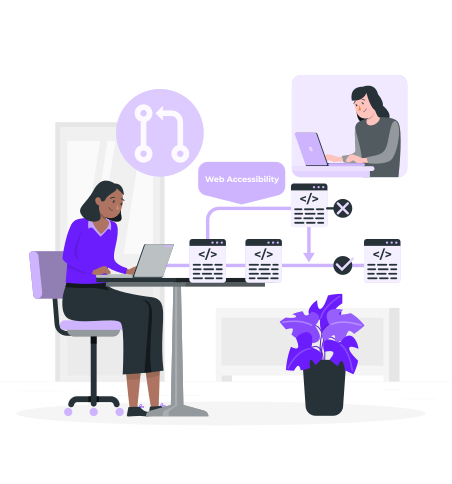
We audit, remediate, and build to WCAG 2.1 AA standards across every component of your enterprise web platform. This is not a checkbox exercise. We train your content editors, integrate automated accessibility testing into your CI/CD pipeline, and provide the documentation your legal team needs when procurement or compliance teams ask for it.
Result: Full WCAG 2.1 AA compliance with ongoing monitoring so regression never reaches production.

We design and build the integration architecture between your enterprise website and your broader technology stack: Salesforce, HubSpot, SAP, NetSuite, Adobe Experience Manager, Marketo, and any custom internal system that needs to exchange data with your web platform reliably and without manual intervention.
Result: A web platform that knows what your CRM knows, in real time, without a nightly data sync.

We instrument your enterprise web platform with Google Analytics 4, server-side tagging, session recording, heatmapping, and A/B testing frameworks from day one. Then we run structured CRO experiments using your actual conversion data to identify the highest-impact changes to user flows, form design, and page hierarchy.
Result: Ongoing conversion rate improvement measured against your actual revenue, not vanity metrics.

Why AddWeb
What We Do Differently in Enterprise Web Development
Most web development agencies optimise for project completion. We optimise for business outcomes. Every decision in our engagements is traced back to what it means for your traffic, your conversions, and your internal teams who manage the platform after we leave.
We have been building web platforms for organisations with complex content requirements, multi-region traffic, and enterprise integration needs since 2011. That depth of experience means we have already solved the edge cases that will appear in your project.
We do not refer you out when the requirement exceeds one platform’s capabilities. Our team has deep expertise across Drupal, Next.js, React, and fully custom engineering, which means the right architecture recommendation for your situation rather than the one we happen to be certified in.
Every enterprise web development engagement is led by a solutions architect who owns the technical strategy from discovery through to launch. You have a single technical accountable person, not a rotating cast of developers interpreting a specification differently each sprint.
Core Web Vitals and WCAG 2.1 AA compliance are not post-launch cleanup tasks in our engagements. They are part of the definition of done for every sprint and every component. Clients do not receive a remediation invoice six months after launch.
When we complete your enterprise web platform, your internal team or any future agency can maintain and extend it without calling us. We deliver architecture documentation, component libraries, editor guides, and deployment runbooks as standard outputs of every engagement.
Our engagements are scoped around business outcomes: target Core Web Vitals scores, conversion rate benchmarks, and integration reliability standards. We track these during and after launch and share the data with you, because the number that matters is the one on your revenue dashboard.
Industries and Use Cases
Enterprise Web Development for Every High-Stakes Digital Context
The performance requirements of a healthcare portal, a B2B manufacturer’s product configurator, and a media publisher’s content platform are fundamentally different. We design and engineer for those differences rather than applying the same solution to every industry problem.
- High-Converting Product Websites and Customer Portals
- High-Traffic Enterprise Ecommerce Platforms
- WCAG-Compliant Patient and Provider Web Portals
- Drupal-Based Multi-Site Government Web Platforms
- Secure, Compliant Financial Web Platforms

B2B technology companies need websites that convert senior decision-makers who do detailed research before buying. We build platforms with personalised content journeys by role and industry, deep integration with marketing automation, and customer portal architectures that reduce support load and increase product adoption.
Result: 61% increase in qualified demo request volume post-launch.

Enterprise retailers need web platforms that handle promotional traffic spikes without degrading experience, that integrate cleanly with warehouse management and ERP systems, and that give merchandising teams the flexibility to create compelling campaign experiences without engineering involvement.
Result: Zero downtime during peak sale events across all managed platforms.
Healthcare organisations face stricter accessibility requirements and data handling obligations than most enterprise sectors. We build HIPAA-aware web platforms with WCAG 2.1 AA compliance, secure patient-facing portal functionality, and the information architecture that helps both patients and clinicians find what they need quickly.
Result: Full WCAG 2.1 AA certification passed on first audit submission.

Government agencies managing dozens of departmental websites need the centralised governance, content syndication, and security posture that Drupal’s multisite architecture provides. We build platforms that satisfy procurement security requirements, integrate with existing identity management systems, and are maintainable by non-technical editorial teams.
Result: Consolidated 18 departmental sites into one governed Drupal multisite platform.

Financial services organisations need enterprise web platforms that meet security scanning requirements from procurement teams, integrate with complex back-office systems without exposing sensitive data to the public web tier, and communicate complex products clearly enough that prospects convert without a phone call.
Result: Reduced lead-to-application drop-off by 44% after platform redesign and CRO program.
The Platforms and Tools We Work With Every Day
We work across every major CMS, framework, and custom stack. The platform recommendation follows the business requirement, not the other way around.














Ready to turn your web platform into revenue infrastructure?

Our Engagement Process
How We Go from Discovery to a System That Works

Need a Team of Enterprise Web Development Experts?
Tell us what your current platform is and where it’s failing you. We’ll run a free architecture review and tell you exactly where the revenue is leaking, and what it takes to fix it.
Risk-free 15 Days Trial





+91-903-317-7471
Our Web Development Portfolio
No matter whether you choose us for a small or large project, we assure you that you will get the best in class customer service and solutions.
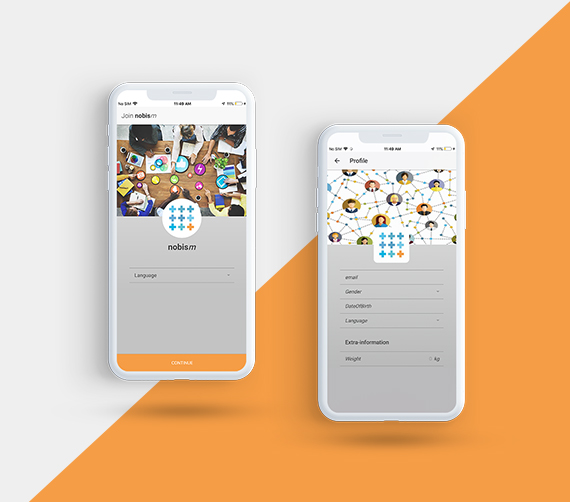
Nobism
‘Nobism’ is an Application, which is an app. for ‘Cluster Headache patients’ to set their(company’s) own patient-driven-research,…
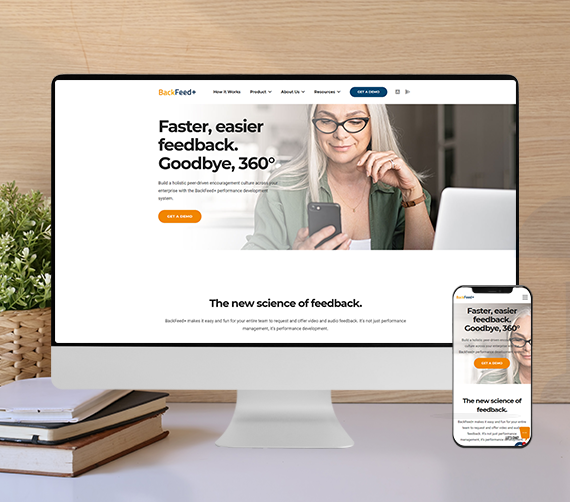
BackFeedApp
How AddWeb Solution Used a 6-Step Strategy to Fix Bugs and Improve the App’s Performance and Paid Subscription by 39% for a Foreign….
Frequently Asked Questions
Questions CTOs and Digital Leaders Ask Us Before Starting
Enterprise web development is web engineering for organisations with complex content management requirements, high traffic volumes, multiple stakeholder groups, and integration needs that go beyond a standard CMS installation. The difference lies in the architecture decisions: multi-site management, API-first integration layers, performance engineering under load, accessibility compliance, and the ability for non-technical teams to manage complex content without developer involvement.
A focused infrastructure audit and architecture design takes two to four weeks. A full implementation including CI/CD modernization, Kubernetes migration, and observability setup typically runs eight to sixteen weeks depending on existing technical debt. We deliver phased value throughout rather than a single end-of-project delivery.
Drupal is the right choice when you need strict content governance, multi-site management, complex editorial workflows, fine-grained permissions, and a platform that can scale to millions of nodes without performance degradation. WordPress is appropriate for simpler content models and faster time to value on smaller projects. A headless CMS is the right call when your frontend team needs complete control over performance, or when the same content needs to feed multiple channels simultaneously. We recommend the right architecture for your specific situation, not the one we happen to specialise in exclusively.
Headless architecture means separating your content management system from your frontend presentation layer. Your editors work in a CMS they are familiar with, but the website itself is rendered by a modern JavaScript framework like Next.js that fetches content through an API. This approach gives you significantly better performance, the ability to publish the same content to multiple channels, and complete design freedom without CMS template constraints. It is the right choice when page speed and conversion are business-critical, and when your team needs to update the frontend without risking the content layer.
We define performance targets in the architecture phase and measure against them throughout every sprint, not just at launch. Our approach includes server-side rendering or static generation for critical pages, image optimisation pipelines, third-party script management strategies, CDN configuration, and database query optimisation specific to your platform. We set a performance budget for every component and enforce it in code review so performance does not degrade as the project progresses.
Yes, and this is the most common engagement model. We design migrations as parallel-run programmes where your existing site continues to serve traffic and content teams continue publishing while the new platform is built and tested. We use SEO-safe URL migration strategies, redirect mapping, and a phased cutover plan that minimises risk. Most enterprise migrations we manage result in zero organic traffic drop in the 30 days post-launch.
We offer a structured 30-day post-launch stabilisation period included in every engagement, followed by optional managed support contracts covering security updates, performance monitoring, content publishing support, and ongoing development. Clients who prefer to manage in-house receive complete technical documentation, editor training, and a handover programme that ensures your internal team is fully capable of operating the platform before we step back.
