


There is a fundamental change occurring in the digital world. Monolithic, inflexible content management systems are rapidly giving way to an ecosystem driven by APIs. This revolution is being driven by Headless Webflow, a powerful fusion of API-first development and excellent visual design that is transforming our understanding of web development.
The API-First Movement: Why It Matters
The API-first approach is a strategic methodology that is transforming software development, not just another tech jargon term. API-first builds these interfaces as “first-class citizens,” preceding any other application components, in contrast to traditional development, which treats APIs as afterthoughts.
What makes API-first so compelling?
The strategy makes sure that the greatest number of users can adopt and use your APIs by placing a high priority on consistency, reusability, and quality. This approach has become very popular because it tackles contemporary development issues head-on, such as multi-channel content delivery and microservices architecture.


Headless CMS: The Market Explosion
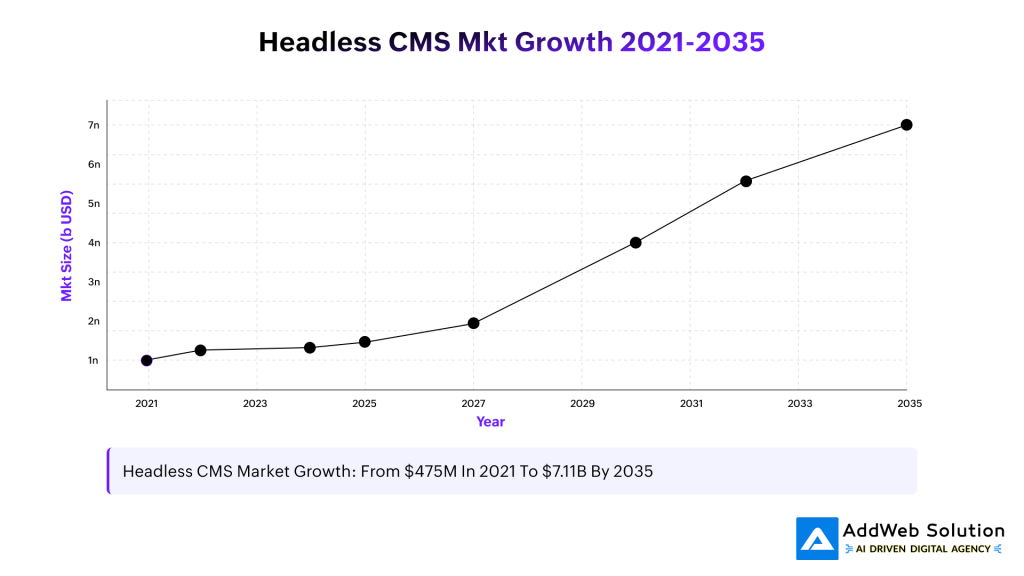
An amazing story is told by the numbers. The market for headless CMS is expanding rapidly; it was estimated to be worth $475.4 million in 2021 and is expected to reach an astounding $7.11 billion by 2035. This demonstrates the transformative potential of decoupled architecture with a compound annual growth rate (CAGR) of 22.6%.
Why this rapid adoption?
Organisations are adopting headless CMS platforms due to their intrinsic scalability and flexibility. The design enables developers to deploy content on a variety of platforms, including websites, mobile applications, digital signage, and Internet of Things devices, by decoupling presentation from content management.
Webflow’s Place in the Headless Revolution
Due to its extensive API library, Webflow has grown to accommodate headless capabilities despite the fact that it is not a standard headless CMS. The platform offers CMS APIs that allow developers to control content separately from the frontend, filling the gap between visual design tools and headless structure.
Webflow’s API capabilities include:
- CMS Data Management: Create, update, and delete collection items programmatically
- Multi-channel Content Delivery: Distribute content beyond Webflow-hosted sites18
- Third-party Integrations: Connect with external systems and services
- Automated Workflows: Sync data between platforms and trigger actions
The Benefits Landscape
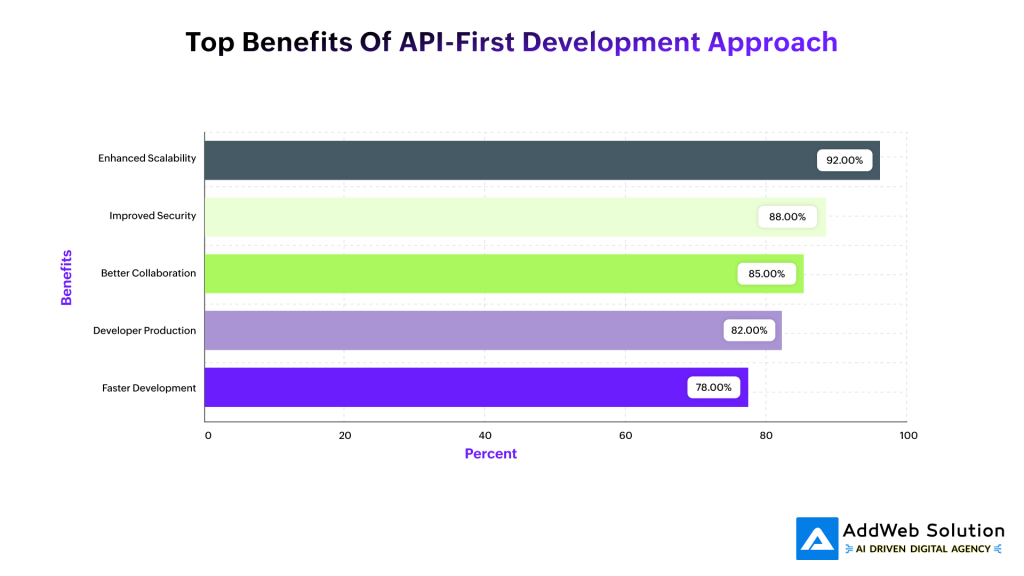
The benefits of using headless Webflow with an API-first strategy are clear and quantifiable. Businesses report notable advancements in a number of areas:
With 92% of the benefits, enhanced scalability comes first, followed by improved security (88%). These benefits are more than just theoretical; they result in improved user experiences, quicker time to market, and lower development costs, all of which add actual business value.
Geographic Adoption: A Global Phenomenon
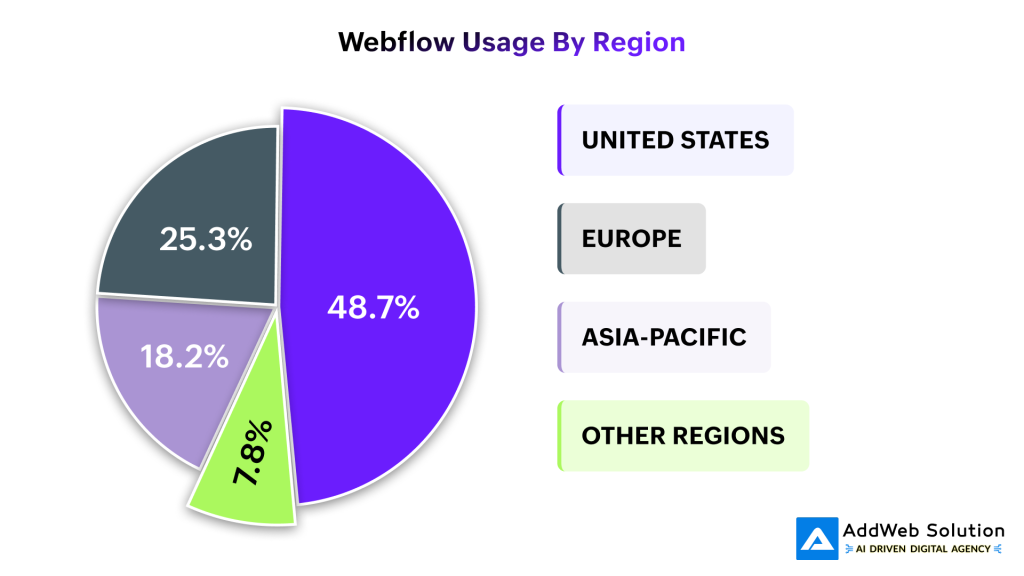
The adoption of platforms like Webflow isn’t confined to Silicon Valley startups. The technology has achieved global reach, with particularly strong presence in key markets:
With a 48.7% market share, the United States leads, indicating its status as the hub of the digital revolution. This technological shift is truly global, as evidenced by the fact that Asia-Pacific accounts for 18.2% of usage, while Europe comes in second at 25.3%.
Webflow vs Traditional CMS: The Comparison
When evaluating Webflow against traditional CMS platforms, the differences become striking across multiple dimensions:
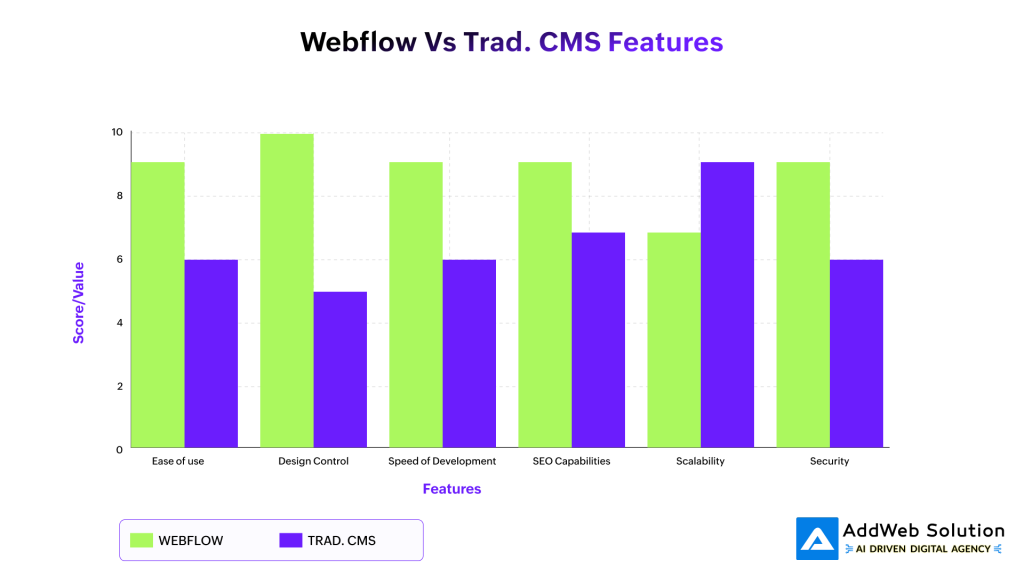
Webflow’s Strengths:
- Design Control: Perfect 10/10 rating compared to traditional CMS’s 5/10
- Ease of Use: 9/10 compared to 6/10 for traditional platforms
- Speed of Development: 9/10 facilitating fast prototyping and deployment
- Security: 9/10 with enterprise-level inherent security
- Scalability: 9/10 compared to Webflow’s 7/10, especially for huge enterprise deployments
Reimagine Web Experiences with Headless Webflow

Pooja Upadhyay
Director Of People Operations & Client Relations
Real-World Applications: From Theory to Practice
The strength of headless Webflow is realized in real-world applications. Businesses are leveraging the platform for a variety of uses:
E-commerce Innovation: To create visually stunning product catalogues without compromising backend flexibility for inventory management, retailers are adopting headless Webflow.
Content syndication: Media businesses employ Webflow’s CMS API as the primary content source to syndicate content to a range of channels, including websites and mobile apps.
Account-Based Marketing: B2B companies design tailored landing pages at scale, presenting each prospect in their pipeline with a unique experience.
The Technical Architecture
Headless Webflow understanding involves comprehending its architectural style. Monolithic systems in which presentation and content are coupled tightly are different from headless architecture, which uncouples these layers. This decoupling allows for:
- Frontend Flexibility: Develop using any technology stack (React, Vue.js, Next.js) for presentation
- API-Driven Content: Author content via REST APIs instead of admin UI
- Multi-Platform Distribution: Distribute the same content to web sites, mobile apps, and IoT
Challenges and Considerations
While the benefits are enormous, API-first with headless Webflow is not without challenges:
Technical Complexity: Extra infrastructure may be required by teams and they should be experienced API developers.
Learning Curve: Companies must adapt to new development routines and workflows.
Integration Overhead: Custom integration takes a greater initial investment compared to plug-and-play.
Rate Limitations: The usage limits of Webflow’s API, at 60 requests per minute, might restrict high-volume applications.
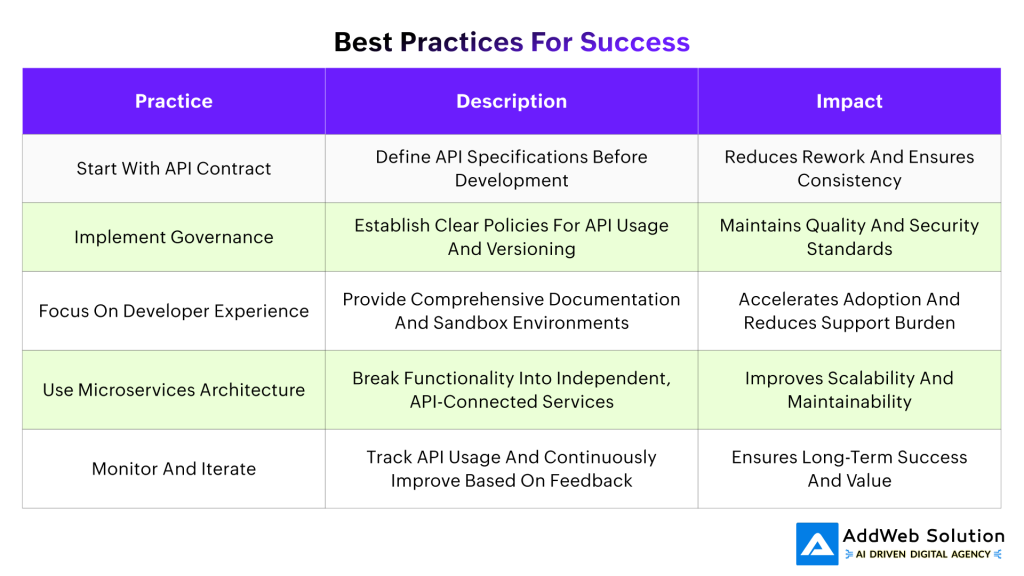
Best Practices for Success
To get the most out of headless Webflow, organizations should adhere to established best practices:
The Future Landscape
The direction is clear: API-first development and headless architecture are the future of web development. As Amazon’s iconic API mandate in 2002 proved, companies that get ahead of this trend early have enormous competitive benefits.
Emerging Trends Include:
- AI Integration: Automated content creation and personalization via API connections
- Edge Computing: Distributed content delivery for improved performance
- IoT Expansion: Content management for connected devices and smart experiences
- Voice and Conversational Interfaces: API-driven content for voice assistants and chatbots
Making the Decision: Is Headless Webflow Right for You?
The choice between headless Webflow and traditional solutions depends on your specific needs:
Choose Headless Webflow If:
- You prioritize design control and visual excellence
- You need multi-channel content distribution
- Your team values speed of development and deployment
- You want built-in security and hosting
- You’re building modern, API-connected experiences
Consider Traditional CMS If:
- You need extensive plugin ecosystems
- Your project requires deep backend customization
- You have complex enterprise integrations
- Massive scalability is your primary concern
Conclusion: Embracing the Revolution
Headless API-first revolution Webflow isn’t merely a technological shift but an entire rethink of how we design digital experiences. Adopting this approach provides companies with the liberty to rapidly adapt, the capacity to craft unique user experiences, and scalability to grow without being held back by technology limitations.
Market growth predictions, adoption rates, and success stories predict that headless architecture and API-first development are not fads but the new standard for web development today. The debate is whether your business will be on the leading edge of this trend or lagging behind, not if it will happen.
The revolution of API-first is here. The only query is: Are you prepared to participate?
Build Smarter Websites Today
Pooja Upadhyay
Director Of People Operations & Client Relations
