


Introduction
A few years ago, “personalization” usually meant adding a first name to an email or showing a product a shopper had already viewed. In 2026, that feels almost old-fashioned. AI now helps brands shape the full journey in real time, from homepage modules and product recommendations to support replies and next-best actions.
That matters because customer patience is thinner, choices are wider, and relevance is now part of the price of admission.
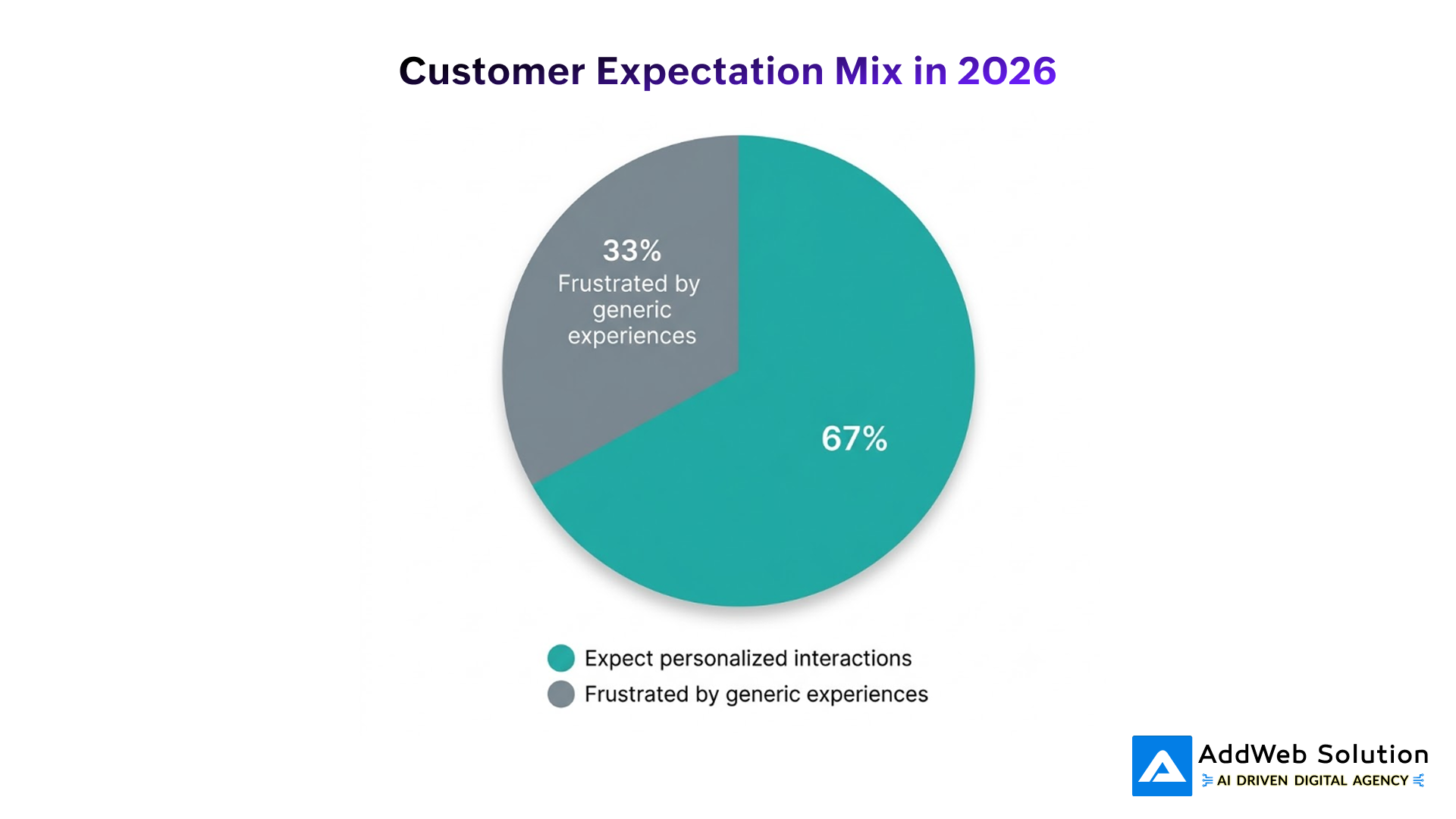
McKinsey’s research still captures the core pressure clearly: 71% of consumers expect personalized interactions, 76% get frustrated when that doesn’t happen, and companies that excel at personalization generate 40% more revenue from those activities than slower-growing peers.
Why It Feels Different
AI personalization in 2026 is less about “targeting” and more about context. The system watches signals like browsing behavior, purchase history, device, timing, and channel behavior, then adjusts the experience before the customer has to ask for it. That is why modern CX teams describe it as anticipatory rather than reactive.
A practical example is an eCommerce visitor who lands on a site from a paid ad, sees a homepage aligned to the ad theme, gets a product grid based on intent, and then receives a support prompt that matches the browsing stage. The customer experiences one coherent journey, not five disconnected campaigns.
Where It Shows Up
AI-powered personalization is no longer limited to marketing emails. It now shapes websites, apps, commerce, customer service, paid media, and in-product experiences. In other words, personalization is moving from a campaign function into a system design choice.
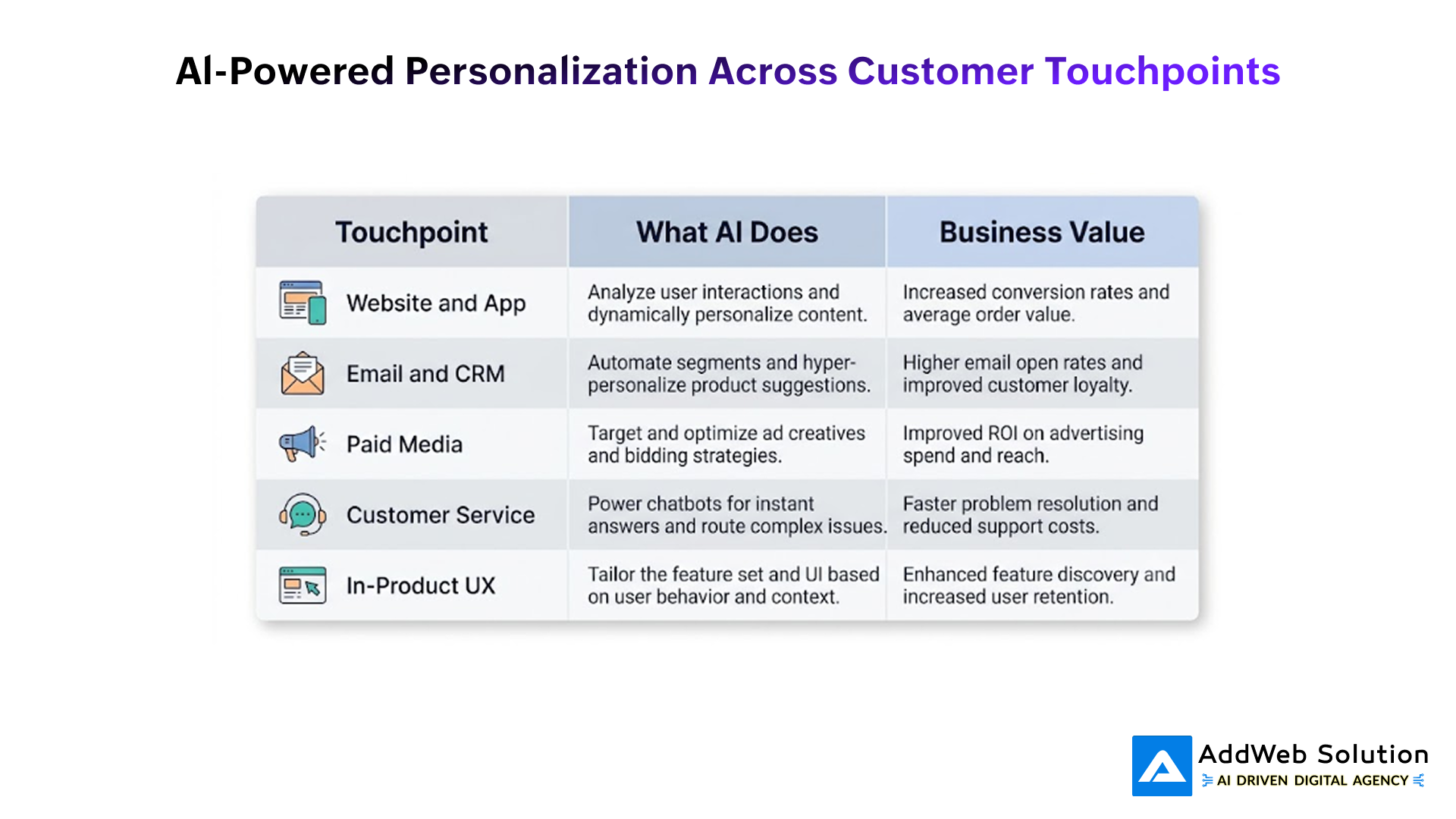
This is where many teams underestimate the shift. The real value is not one smart recommendation widget; it is orchestration across channels so the customer never feels like the brand forgot what happened two minutes ago.


Tools, Tactics, and Tradeoffs
The strongest personalization programs usually rely on three layers: data, decisioning, and governance. Data gives the system context, decisioning determines what to show next, and governance keeps the output aligned with brand, privacy, and compliance rules. Without all three, personalization becomes noisy fast.
For marketing and CX teams, the practical stack often includes CDPs, recommendation engines, test-and-learn frameworks, and content systems that can assemble experiences on the fly.
The tool is not the strategy; the use case is. That distinction matters if a brand wants measurable lift instead of impressive demos.
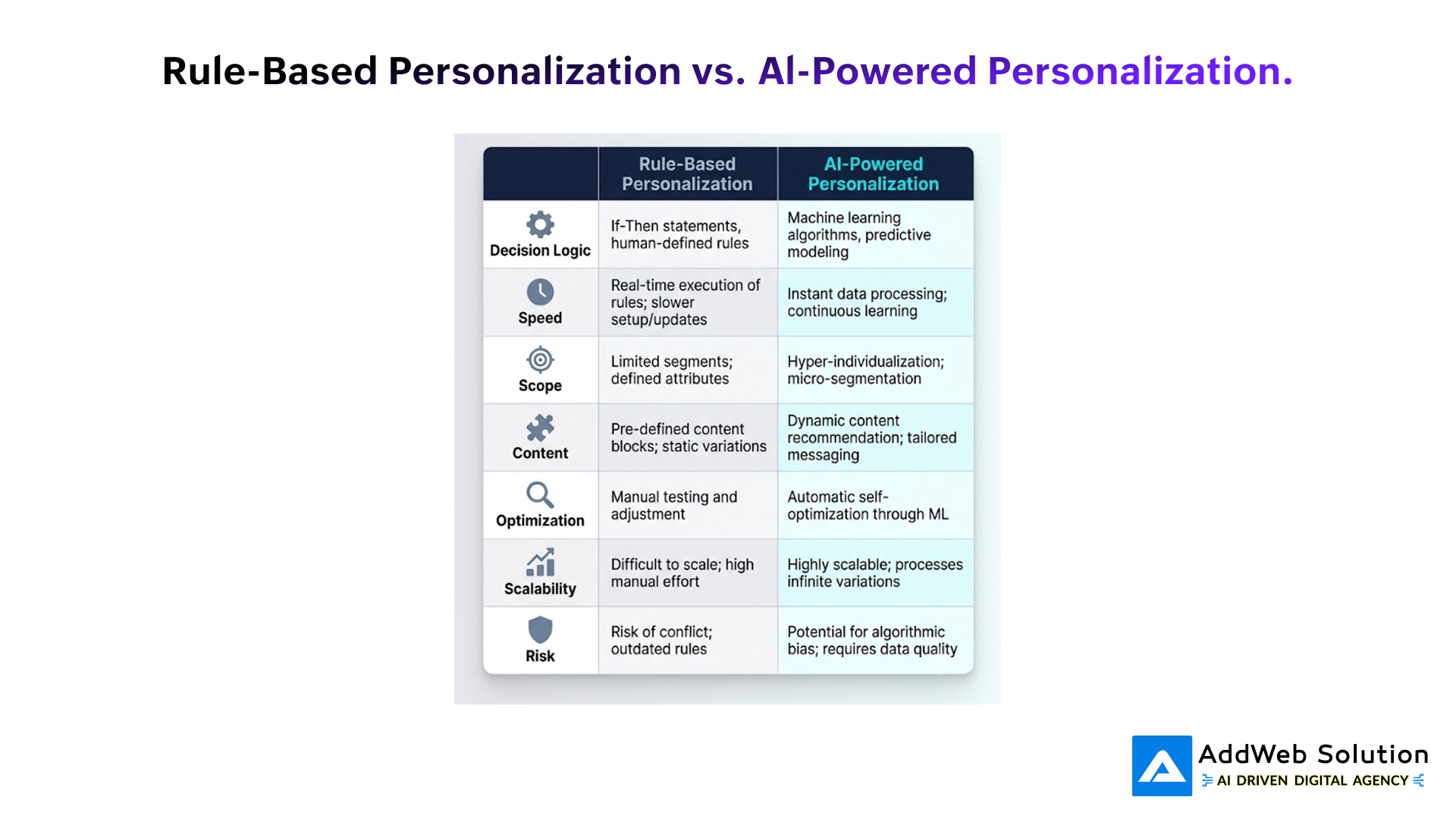
This is also where human judgment still matters. AI can optimize for clicks, but people still need to decide whether the experience is genuinely helpful, fair, and consistent with the brand promise.
Growth and Adoption
The business case for personalization is no longer theoretical. McKinsey reports that personalization can drive 10% to 15% revenue lift on average, with some companies seeing lifts in the 5% to 25% range depending on sector and execution.
That is why personalization has shifted from a “nice-to-have” to a board-level growth conversation.
To show how momentum is building, here’s a simple growth view using the available benchmark data points from current reporting. The bigger story is not just revenue potential; it is that brands are now being judged on whether they can deliver relevance at scale.

A second signal comes from enterprise adoption. Acxiom’s 2026 CX Trends report surveyed 4,000 consumers and 600 business leaders in the U.S. and U.K., and found that 93% of brands and 70% of consumers believe AI is moving faster than they’re ready for.
That gap is important: the market is accelerating, but trust and readiness are still catching up.
Interesting Fact Box
- 71% of consumers expect personalized interactions, and 76% get frustrated when experiences feel generic.
- Companies that excel at personalization generate 40% more revenue from those activities than slower-growing peers.
- Acxiom surveyed 4,000 consumers and 600 business leaders for its 2026 CX Trends report, and found a major readiness gap around AI.
Related Examples
Retailers are already using AI to adjust product grids based on visitor behavior, while SaaS brands are using in-app nudges to push the next useful action instead of a generic upsell.
In service environments, AI can pull in previous issue history so the customer doesn’t have to repeat themselves, which is one of the fastest ways to improve perceived quality.
A useful rule of thumb is this: if the personalization does not save the customer time, reduce friction, or make a decision easier, it is probably decoration. The best systems feel invisible because they solve a real moment of uncertainty.
Conclusion
AI-powered personalization is redefining customer experience in 2026 because it finally makes relevance scalable. The winners are the brands that connect data, content, and decisioning into one living system, then keep a human eye on what the AI is actually doing.
For AddWeb Solution, that is the practical opportunity: helping businesses move from fragmented digital touchpoints to customer journeys that feel consistent, intelligent, and worth repeating. When personalization is built well, it stops being a tactic and becomes part of the product experience itself.
Leverage AI-powered personalization to build meaningful customer journeys across web, mobile, ecommerce, and support channels.

Pooja Upadhyay
Director Of People Operations & Client Relations
Source URL
https://www.gleap.io/blog/ai-driven-personalization-customer-experience
https://www.acxiom.com/news/2026-cx-trends-report
https://www.qualtrics.com/research/consumer-preferences-personalization-2026
https://www.stackadapt.com/resources/downloads/personalization-trends-2026
https://business.adobe.com/resources/digital-trends-consumer-report.html
