


From traditional Google searches to AI-generated product recommendations, online shopping discovery is changing. Here’s what WooCommerce businesses need to do to stay visible.
Imagine a customer looking for a skincare product for sensitive skin.
A few years ago, they might have searched Google for “best moisturizer for sensitive skin,” opened several websites, compared ingredients and prices, and eventually chosen a product.
Today, they might ask an AI assistant:
“Recommend a fragrance-free moisturizer for sensitive skin under $30, with ingredients suitable for daily use.”
The assistant can help narrow down the options, compare products and explain the differences. Depending on the tool, it may also show product links or direct the shopper to a retailer.
For an online store, this changes the discovery journey.
The customer may decide what to buy before ever visiting a product page. And if your store isn’t represented in the information that AI systems use, you could miss an opportunity to be considered.
This is the new challenge for WooCommerce businesses in 2026: being discoverable not just in search results, but also in AI-assisted shopping journeys.
The good news? You don’t need to abandon traditional SEO or rebuild your store from scratch.
You need to understand how discovery is evolving and make your product information, website structure and customer experience ready for it.
1. AI Is Becoming Another Way Customers Discover Products
Traditional search usually starts with keywords. AI-assisted shopping often starts with a more detailed request.
A customer might search for:
- “Organic cotton baby clothes”
- “Affordable running shoes”
- “Best skincare products for dry skin”
With an AI shopping assistant, the request can become more specific:
“Find organic cotton baby clothes for summer, under ₹2,000, from brands that offer easy returns.”
The AI can help interpret the requirements and narrow down the options. Depending on the service, it may provide product recommendations, compare features and prices, and link directly to retailers.
This isn’t just a prediction about the future.
Adobe Analytics reported that traffic from generative AI sources to US retail websites increased by 4,700% year over year in July 2025.
Its research also found that consumers were using AI for product research, recommendations and finding deals.
The growth rate is striking, although it measures change from a relatively small starting point rather than AI’s share of all retail traffic. Adobe Analytics published the findings in its digital shopping research.
AI-driven retail traffic growth
Year-over-year change in US retail website traffic from generative AI sources, July 2025
+4,700%
Source: Adobe Digital Insights, August 2025. This is growth in referral traffic, not AI’s share of total ecommerce visits.
Caption: Generative AI became a rapidly growing referral source for US retail websites during 2025.
Alt text: Adobe Analytics reported 4,700% year-over-year growth in US retail website traffic from generative AI sources in July 2025.
For WooCommerce merchants, the implication is straightforward: your next customer might discover a product through an AI-generated recommendation before reaching Google or your online store directly.
2. Product Pages Need to Answer More Than “What Is This?”
A typical product description might say:
“Premium stainless steel water bottle. Available in three colours.”
That tells customers what the product is, but not necessarily whether it’s right for them.
Consider the questions a shopper might ask an AI assistant:
- Will it keep water cold throughout a workday?
- Does it fit in a standard car cup holder?
- Is it suitable for children?
- Is the lid leakproof?
- What makes it different from cheaper alternatives?
If your WooCommerce product page doesn’t answer these questions, the information may be harder for search systems and customers to evaluate.
This doesn’t mean writing a 2,000-word description for every product. It means providing specific, useful and verifiable product information.
A strong WooCommerce product page should include:
- A descriptive product title
- A clear, original description
- Specifications and dimensions
- Materials and ingredients where relevant
- Price and current availability
- Shipping and return information
- Accurate product images
- Genuine customer reviews
- Frequently asked questions where they add value
For stores with large catalogs, consistent product attributes matter just as much as good copy.
If one product lists dimensions in centimetres, another omits them, and a third buries them in an image, comparison becomes harder.
Practical takeaway: Write product pages to help a customer make a decision, not simply to fill a description field.
3. Product Data Is Becoming the New Storefront
In traditional ecommerce, the product page is where a lot of the selling happens.
In AI-assisted discovery, the product information itself may influence whether the item gets recommended in the first place.
ChatGPT’s shopping documentation explains that product results can use structured metadata, including product descriptions and prices, alongside other information.
Merchant selection can also consider availability, price, quality and whether the seller is the product’s maker or primary retailer.
That makes accurate product data especially important.
Imagine two WooCommerce stores selling the same type of product.
| Product information | Store A | Store B |
| Product title | Premium bottle | Insulated stainless steel bottle, 750 ml |
| Description | High-quality product | Materials, insulation, capacity and use cases explained |
| Price | Listed | Listed and consistently updated |
| Availability | Unclear | In stock, with accurate inventory |
| Shipping | General information | Delivery estimates and shipping costs explained |
| Product attributes | Inconsistent | Standardized across the catalog |
Store B gives shoppers and systems interpreting its product information, more useful details to work with.
This is particularly relevant for WooCommerce stores with hundreds or thousands of products.
Keeping every description, price, attribute and stock status accurate manually can become difficult as the catalog grows.
A practical solution is to standardize product fields and automate updates from the systems that manage inventory, pricing and fulfillment.
4. Structured Data Helps Search Engines Understand Your Products
Structured data isn’t a new AI trick. It has been part of technical SEO for years.
What’s changing is how important clear, machine-readable product information becomes across different discovery experiences.
Google’s documentation recommends Product structured data for ecommerce pages.
Depending on the implementation and eligibility, this can help Google understand product details such as price, availability, reviews, shipping and return information.
For WooCommerce stores, that means checking whether product pages expose accurate information through structured data.
Key fields may include:
- Product name and description
- Price and currency
- Availability
- Brand
- Product identifiers, where available
- Ratings and reviews, where eligible
- Shipping and return policies
- Product variants, such as size or colour
What to do
- Check whether product pages output valid Product schema.
- Verify that schema prices match the visible product prices.
- Confirm stock status is accurate.
- Validate representative products and variations.
- Check for duplicate or conflicting schema generated by multiple plugins.
Useful tool: Google Rich Results Test.
Important: Structured data can improve eligibility for certain search features, but it does not guarantee rankings, AI recommendations or inclusion in every AI shopping experience.
5. Traditional SEO Still Matters in AI Search
There’s a common misconception that businesses need to abandon SEO and start doing something entirely different to appear in AI-generated answers.
That’s not what Google recommends.
Google’s 2026 guidance says that existing SEO fundamentals remain relevant to its generative AI search features.
It emphasizes useful, original content, a clear technical structure, crawlability and a good page experience.
It also explicitly warns against chasing unsupported AI-optimization tricks.
For WooCommerce stores, that means continuing to get the basics right:
- Make product and category pages accessible to search crawlers.
- Use descriptive titles and helpful headings.
- Keep important product information available in crawlable page content.
- Maintain a logical internal linking structure.
- Fix broken links and unnecessary duplicate URLs.
- Submit an accurate XML sitemap.
- Monitor indexing and search performance.
- Publish genuinely useful buying guides and product comparisons.
A store doesn’t need to rewrite every product description around phrases like “best product for AI search.”
It needs to help customers and search systems understand what it sells, who the products are for, and why the products are relevant.
Good SEO remains the foundation. AI discovery adds another reason to get it right.


6. Buying Guides and Comparison Content Have a New Role
Think about the questions customers ask before purchasing.
Someone buying a standing desk might want to know:
- Is a manual or electric desk better for home working?
- What desk height suits someone who is 6 feet tall?
- How much weight should the desk support?
- Which features justify paying more?
- What should I check before buying?
A product page alone may not answer all those questions.
This is where supporting content becomes useful.
A WooCommerce store selling office furniture could publish:
- Electric vs. manual standing desks
- How to choose the right desk size
- Standing desk weight capacity explained
- Best standing desk accessories for small offices
- What to check before buying an adjustable desk
These articles can introduce customers to the brand earlier in their buying journey.
They can also provide context that helps shoppers compare products more confidently.
Google’s guidance for AI search specifically encourages useful, distinctive content that offers more than generic information.
The key is to make the content genuinely helpful.
Don’t publish 40 nearly identical articles just to cover every keyword variation.
Create a smaller number of strong resources that answer real questions, include accurate information and link naturally to relevant products.


7. Reviews and Real Customer Experiences Can Help Customers Choose
AI-assisted shopping can make comparisons easier, but shoppers still need reasons to trust a brand.
Consider two product pages.
One lists technical specifications and a price.
The other includes the same details, plus genuine customer reviews describing fit, durability, everyday use and potential drawbacks.
The second page gives a prospective customer more context.
Reviews can help answer questions that product descriptions often miss:
- Does the product last?
- Is the sizing accurate?
- Is assembly difficult?
- Does the colour match the photographs?
- What do customers like or dislike about it?
For WooCommerce merchants, the priority should be collecting authentic feedback and displaying it clearly.
A practical checklist:
- Make it easy for verified customers to leave reviews.
- Display ratings and review counts accurately.
- Respond constructively to recurring complaints.
- Avoid fabricated testimonials or misleading review markup.
- Use genuine customer feedback to improve product descriptions and FAQs.
Google also recommends high-quality reviews as part of its ecommerce search guidance.
Reviews don’t guarantee that an AI system will recommend your products. They do, however, give customers useful evidence when deciding whether to buy.
8. Your Store Must Be Easy to Navigate After the AI Recommendation
Getting discovered is only the first step.
Suppose an AI assistant recommends a product and a customer clicks through to your WooCommerce store. What happens next?
If the product is unavailable, the price differs from the recommendation, the delivery information is unclear or the mobile page is difficult to use, the discovery opportunity can quickly be lost.
This is why AI visibility and ecommerce user experience need to work together.
Research from Baymard Institute highlights how search, filtering and product-list design affect shoppers’ ability to find relevant products.
Its 2026 ecommerce search research found that 56% of benchmarked sites had issues adequately supporting users’ search needs.
Baymard
For large WooCommerce catalogs, the basics deserve attention:
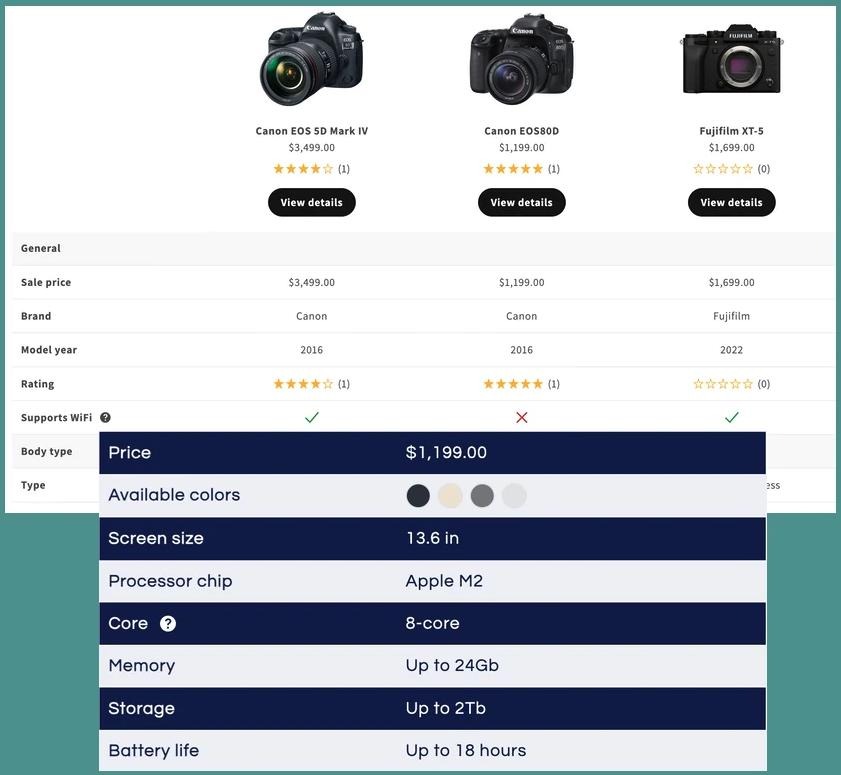
| Area | What to improve |
| On-site search | Support product names, common synonyms and useful suggestions |
| Filters | Allow customers to narrow results by meaningful attributes |
| Product pages | Show price, stock, specifications and delivery details clearly |
| Mobile experience | Make images, navigation and purchase actions easy to use |
| Checkout | Reduce unnecessary steps and confusing form fields |
| Inventory | Keep stock information synchronized |
| Product URLs | Make important pages stable and accessible |
AI may introduce the customer to your store. Your website still needs to earn the sale.
9. Keep Product Feeds and Inventory Information Accurate
Here’s a less glamorous part of AI discovery that can have a real impact: data consistency.
Your WooCommerce product page might show one price, your product feed another, and your inventory integration a third stock status.
That creates problems for customers and for systems trying to interpret your catalog.
Google recommends combining product structured data on your website with a Google Merchant Center product feed where appropriate.
This helps Google understand and verify product details across its shopping experiences.
For WooCommerce stores, review the following regularly:
- Product titles, descriptions and identifiers
- Current prices and sale prices
- Stock availability
- Product variations
- Product images
- Shipping and return policies
- Feed errors and rejected products
- Synchronization between WooCommerce and inventory systems
If you sell products across multiple channels, automated synchronization becomes particularly useful.
For example, a retailer updating prices in an ERP system should ensure those changes reach WooCommerce and the relevant product feeds promptly.
The goal is simple: wherever customers discover your products, the information should be accurate and consistent.
10. Measure AI Discovery Instead of Guessing
AI visibility is attracting plenty of attention, but businesses shouldn’t invest in it without measuring what happens.
Start by establishing a baseline.
Track your existing organic search traffic, product-page visits, conversion rates and revenue. Then look for changes in referral sources and customer journeys as AI-assisted discovery grows.
Useful metrics include:
| Metric | Why it matters |
| AI referral sessions | Shows visits arriving from identifiable AI sources |
| Product-page engagement | Helps assess whether visitors find relevant information |
| Add-to-cart rate | Indicates whether product pages encourage purchase consideration |
| Conversion rate | Measures visits that become orders |
| Revenue by source | Connects discovery channels to commercial outcomes |
| Organic search impressions | Tracks traditional search visibility |
| Product feed errors | Highlights missing or inconsistent product data |
| Product availability accuracy | Helps reduce mismatches between listings and the store |
Google’s 2026 AI search guidance also points website owners toward Search Console reporting for measuring performance in its generative AI search features. Reporting availability and scope can vary by feature.
One important distinction: not every AI-assisted customer journey will appear as a clearly labelled referral. Some shoppers may research a product with AI, then visit your store directly or search for your brand later.
That means referral traffic is useful, but it doesn’t capture the entire influence of AI on purchasing decisions.
A Practical 30-Day Action Plan for WooCommerce Stores
You don’t need to overhaul the entire store to get started. Focus on improvements that help both customers and search systems.
Week 1
Audit product data
Review your top-selling products, incomplete descriptions, inconsistent attributes, prices, availability and product feed errors.
Week 2
Improve technical SEO
Validate Product schema, check indexing, review canonical URLs and confirm that important product pages are crawlable.
Week 3
Strengthen product discovery
Improve on-site search, filters, buying guides, product comparisons and answers to common customer questions.
Week 4
Measure and refine
Review referral traffic, search performance, conversions and feed accuracy. Record a baseline and identify the next set of improvements.
The Bigger Picture: WooCommerce Needs to Be Discoverable Everywhere
AI is changing how customers research products, compare alternatives and decide which brands deserve their attention.
But this doesn’t mean traditional search is disappearing, or that every customer will start shopping through an AI assistant.
It means businesses need to prepare for a more varied discovery journey.
A customer might find your store through Google, a product comparison, a social media recommendation, an AI-generated answer or a combination of these channels.
For WooCommerce merchants, the fundamentals remain surprisingly practical:
- Make product information accurate and useful.
- Keep structured data and product feeds consistent.
- Create content that answers real buying questions.
- Maintain strong technical SEO.
- Make product search and navigation intuitive.
- Provide a fast, accessible mobile experience.
- Track which channels contribute to meaningful business results.
And don’t fall for every new AI optimization promise. Google explicitly advises against tactics that claim special shortcuts to visibility in generative AI search.
What this means for businesses
At AddWeb Solution, we see AI-assisted discovery as an extension of the broader ecommerce optimization challenge.
A store needs more than a collection of product pages; it needs reliable product data, a sound technical foundation and a customer experience that makes purchasing straightforward.
The opportunity isn’t simply to get mentioned by AI. It’s to make your products easier to discover, understand, compare and buy, wherever the customer starts their journey.
That is what will make a WooCommerce store better prepared for the next phase of ecommerce.
Make Your WooCommerce Store Ready for AI-Powered Shopping

Pooja Upadhyay
Director Of People Operations & Client Relations
Sources and Further Reading
These are neutral, authoritative resources suitable for the published article.
Adobe Analytics – Generative AI Traffic to Retail Websites – AI referral traffic and shopping behavior.
Google Search Central – Optimizing for Generative AI Search – Official guidance for AI search visibility.
Google Search Central – Product Structured Data – Product schema, prices, availability and reviews.
Google Search Central – Sharing Product Data – Product feeds and Merchant Center.
Google Search Central – Ecommerce SEO Best Practices – Technical SEO and product discovery.
Baymard Institute – Ecommerce Search UX 2026 – Research on search usability and product discovery.
Baymard Institute – Product Lists and Filtering UX – Product browsing, filtering and sorting.
Google Search Central – Ecommerce Structured Data – Machine-readable product information.
OpenAI Help Center – Shopping with ChatGPT Search – How AI shopping results and merchant selection work.
