


Introduction
For years, most websites have worked the same way: build the pages, publish the content, and optimize later. But that approach is starting to feel dated.
Users now expect experiences that respond to their behavior in real time, and machine learning is making that possible by helping websites learn, adapt, and improve without waiting for a full redesign.
That shift matters because UX is no longer just about looking modern. It is about reducing friction, increasing relevance, and helping visitors find what they need faster. In practice, self-optimizing websites are becoming the difference between a digital experience that merely exists and one that actively performs.
What a self-optimizing website really is
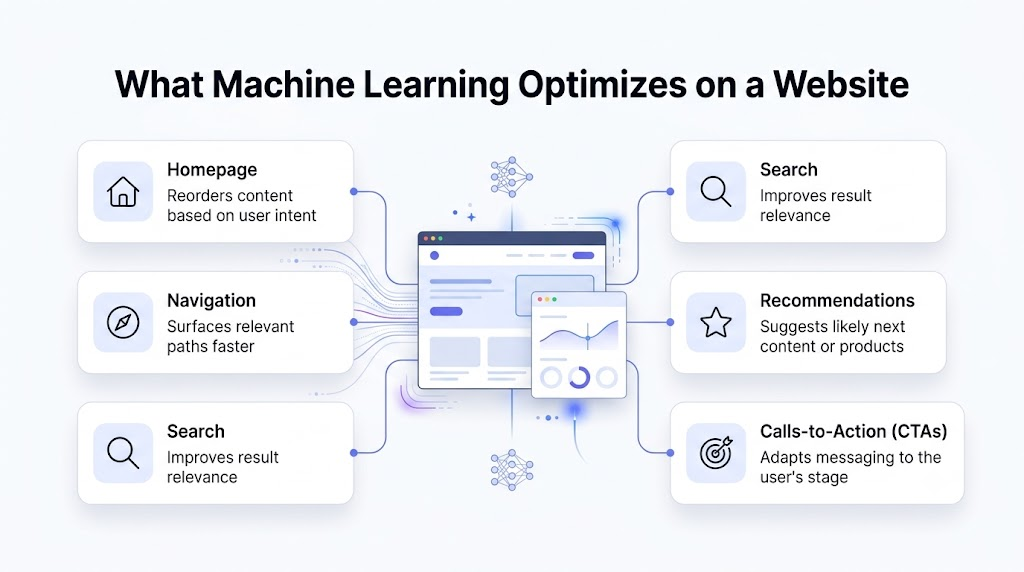
A self-optimizing website uses machine learning to study visitor behavior and then adjust parts of the experience automatically. That can include personalized homepage content, smarter search results, product recommendations, reordered navigation, predictive content blocks, and even dynamic calls to action based on intent.
The important part is not just personalization. It is continuous improvement. Traditional A/B testing can tell you which version wins today, but machine learning can keep refining the experience as user patterns change. That makes the website feel less static and more alive.
Why machine learning changes UX
Machine learning changes UX because it helps websites respond to behavior instead of assuming it. If a visitor scrolls quickly, returns to the same page, or searches for a specific service, the site can use those signals to present a more relevant next step. That is a major upgrade from one-size-fits-all design.
It also affects engagement in a practical way. Personalized experiences are widely associated with stronger session quality, higher conversions, and lower bounce rates, especially in ecommerce and content-heavy environments.
One recent source says AI-powered recommendation engines can lift user spend by 20% to 30%, which is why so many teams are moving from static UX to adaptive UX.


Where the industry is heading
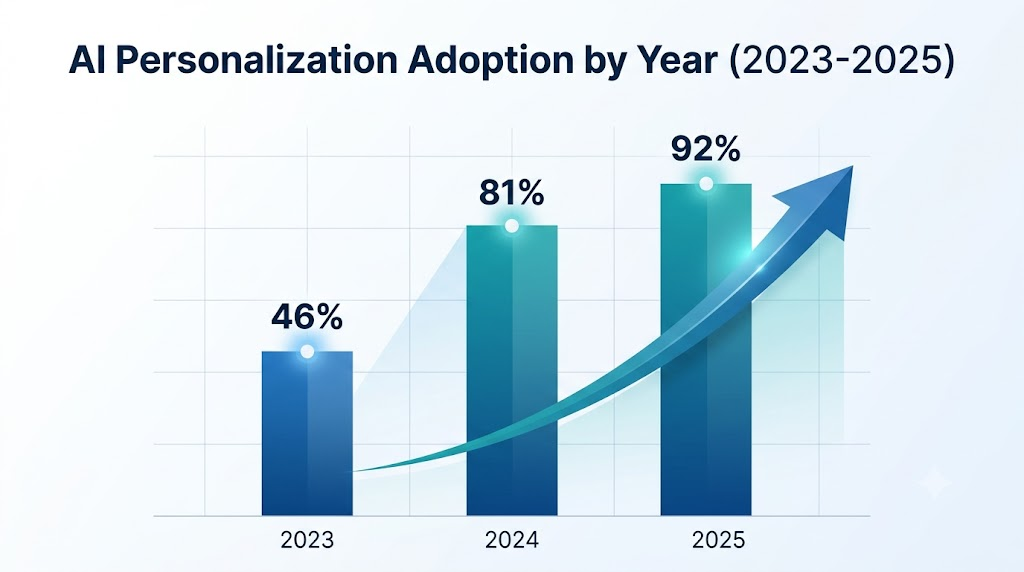
The trend is moving from optional to expected. Industry reports show AI personalization adoption rising sharply from 46% in 2023 to 81% in 2024 and 92% in 2025.
At the same time, another dataset notes that 72% of companies plan to increase AI adoption by 2025, which shows this is no longer just a product design conversation; it is a broader digital strategy decision.
What is interesting is that the winners are not always the teams with the biggest budgets. They are often the teams that can connect content, data, and experimentation into a single system. For Drupal and Webflow projects, that usually means pairing a flexible CMS with personalization logic, analytics, and governance.drupal+1
Real-world use cases
The most visible use case is ecommerce, where recommendations, dynamic banners, and intent-based product sorting can directly influence revenue.
But the same principles apply to B2B websites, NGO platforms, SaaS onboarding, and editorial hubs. If the website can predict what a visitor probably needs next, the journey becomes smoother and more persuasive.
Here are a few practical examples:
- A SaaS homepage that changes CTAs for first-time vs. returning visitors.
- An NGO site that highlights donation or volunteer content based on user behavior.
- A Drupal-powered content hub that recommends articles by topic affinity.
- A service site that prioritizes case studies for high-intent traffic from LinkedIn or search.
The best part is that these experiences do not need to feel flashy or artificial. In strong UX, the automation is almost invisible; the user simply feels understood.
Practical implications
For businesses, self-optimizing websites change how teams work. Designers cannot rely only on static wireframes, content teams cannot think in isolated page terms, and developers need to plan for data flow, testing, and modular personalization from day one.
That is why this topic matters to strategy teams as much as to UX teams.
There is also a governance angle. Adaptive websites handle user data, so transparency, consent, and privacy compliance matter. The sites that scale responsibly will be the ones that treat machine learning as a product capability, not a shortcut.
Interesting fact box
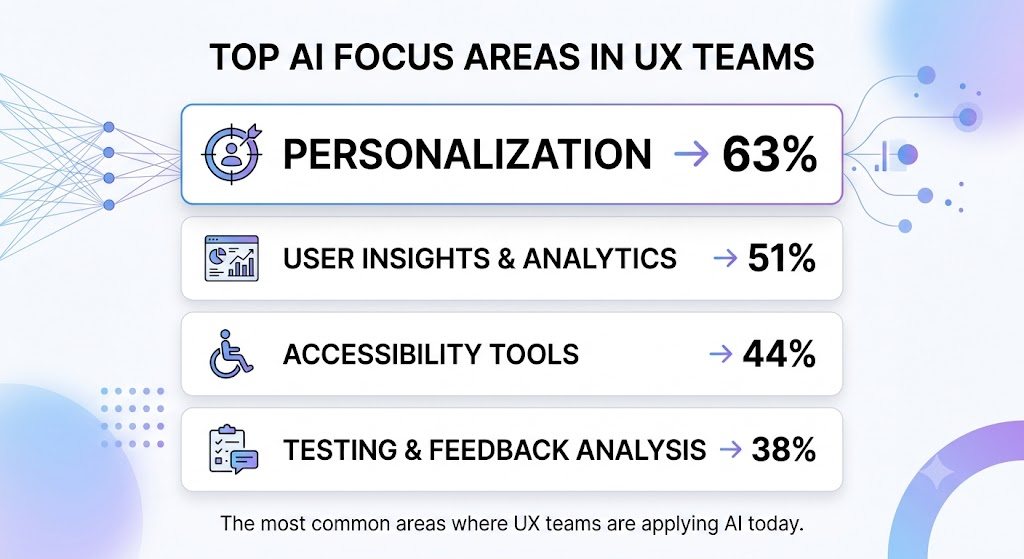
- 63% of UX leaders prioritize AI-driven personalization as a top investment area.
- AI recommendation systems can increase user spend by 20% to 30%.
- AI personalization adoption is reported at 92% by 2025 in recent industry summaries.
Discover how AI-powered personalization can improve engagement, increase conversions, and create better digital experiences.

Pooja Upadhyay
Director Of People Operations & Client Relations
Conclusion
Self-optimizing websites are not a future concept anymore. They are already reshaping how businesses think about UX, conversion, accessibility, and content delivery.
The shift is simple to describe but powerful in practice: websites are moving from being digitally published assets to becoming adaptive systems that learn from real users.
For teams that want to stay ahead, the smartest move is to build experiences that can evolve, not just launch. That is exactly where a digital partner like AddWeb Solution can help: connecting CMS flexibility, machine learning thinking, and practical UX execution into one measurable strategy.
Source URLs
- https://www.drupal.org/project/ai
- https://www.drupal.org/project/ai_content_assistant
- https://www.drupal.org/project/contentai
- https://www.drupal.org/about/ai/initiatives
- https://new.drupal.org/drupal-cms/features/ai-support
- https://www.drupal.org/project/ai_agents
- https://www.drupal.org/blog/drupals-ai-roadmap-for-2026
