


A Real Conversation About Connection, Collaboration, and the Future of Web Design
Walking out of my first major tech event in years, I felt something had changed. It wasn’t just about new features or product launches—it was about being surrounded by people all asking the same thing: How do we move faster, work smarter, and truly innovate together?
That’s when it hit me: Webflow community events aren’t just conferences – they’re creative labs where we rethink how we build for the web.
As designers and developers, we often get stuck perfecting the same workflows, using the same tools, chasing small wins. But sitting among thousands of creators at a Webflow event reminded me that real innovation isn’t solo – it’s collaborative, messy, and driven by community.
This piece is my reflection on how Webflow events reshaped my view of innovation – and why they matter more than any standard conference ever could.
The State of Web Design Innovation in 2025
Here’s the thing about 2025: web design is changing fast. Not just because of new tools, but because the way designers, developers, and clients work together has evolved.
Every second, three new websites go live. That’s over 250,000 a day. With competition like that, innovation isn’t optional—it’s survival.
A big driver is the rise of no-code and low-code platforms. The market hit $28.75 billion in 2024 and is expected to reach $264 billion by 2032. More importantly, by 2025, 70% of new apps will be built using no-code or low-code tools. This isn’t just a trend—it’s a complete shift in how we build for the web.
But stats don’t tell the full story. You can’t measure the moment a freelancer realizes they can launch a full site without touching code, or when a marketer stops waiting on developer time. That’s the real innovation happening right now.
What Webflow Community Events Really Are
Webflow Conf 2025 drew over 30,000 people—designers, developers, agencies, marketers, and freelancers. It wasn’t a small meetup. It was a movement.
Unlike typical conferences, Webflow events focus on collaboration and problem-solving. Yes, there were big announcements—AI-powered design assistants, real-time collaboration, an upgraded CMS, and SEO automation—but the real magic happened in the breakout sessions and conversations between people building the future together.

Team collaborating on web design and UX planning with hybrid video conferencing and layout sketches
One woman I met at a networking session had been a WordPress freelancer for eight years. She spent two hours learning Webflow at the conference, then spent the next 12 hours redesigning her entire business model around it. She told me: “I just realized I’ve been competing on price because I was stuck in a toolset that forced commoditization. Now I can compete on creativity and client outcomes.” That’s innovation in its purest form—not a feature, but a perspective shift.
The No-Code Revolution: More Than Just a Market Trend
Let me be direct: the no-code wave isn’t coming. It’s already here.
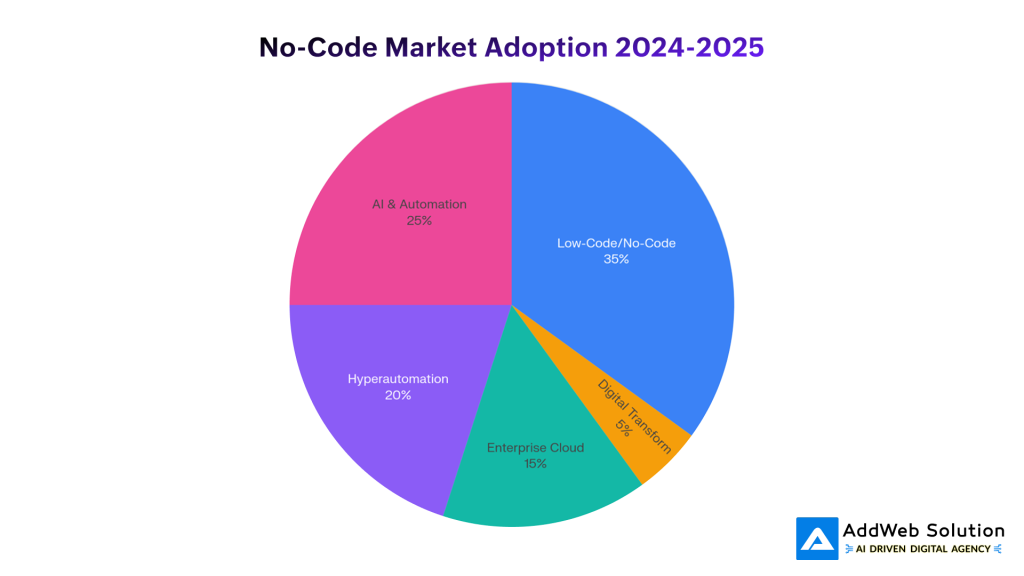
Market Breakdown: No-Code Platform Adoption Drivers (2024-2025)
What’s surprising is how fast this shift is happening. By 2025, Gartner predicts that 80% of app development will come from no-code tools. That’s not a side trend—it’s the new normal.
At the Webflow event, the real conversation wasn’t about whether no-code matters. It was about how to use it as a base for deeper innovation.
No-code isn’t replacing developers anymore – it’s empowering them. It frees teams from repetitive work so they can focus on strategy and creativity.
At AddWeb Solution, we’ve seen this firsthand through 30+ successful Webflow projects over the past three years. From migrating complex Drupal systems to building faster, smarter websites, we’ve watched no-code transform how teams innovate and deliver.
Key Takeaways That Shifted My Mindset
1. Innovation Isn’t About Tools – It’s About Workflow Freedom
I went to the Webflow event expecting feature announcements but left realizing real innovation comes from removing bottlenecks.
Take real-time collaboration. When designers, developers, and marketers work on the same page together, everything moves faster. Webflow’s research shows teams ship 40–60% quicker when they collaborate in real time.
But the real win isn’t just speed – it’s creativity. No more endless handoffs or tool switching. Just pure, uninterrupted building.
2. AI Is an Amplifier, Not a Replacement
The AI discussions at Webflow events were refreshingly real. No one claimed AI would replace jobs – it was about using it to handle the tedious stuff so humans can focus on strategy.
Today, 35.9% of web designers use AI daily, and over 30% of developers report higher productivity. It’s not replacing people- it’s multiplying what they can do.
One keynote showed how AI can update hundreds of SEO titles and descriptions in minutes. That’s not AI taking over marketing – it’s freeing marketers to focus on ideas that actually drive results.
3. Speed and Quality Aren’t Trade-offs Anymore
I used to think you had to choose between building fast and building well. Webflow events proved otherwise.
With optimized hosting, built-in performance tools, and an integrated CMS, Webflow sites are fast by default and meet Google’s Core Web Vitals standards – no extra engineering needed.
One agency told me they cut site management time by 73% and boosted client satisfaction by 31% after switching to Webflow. That’s speed and quality working together.
4. Community Creates Opportunity, Not Competition
This part surprised me most. In a room full of designers and developers, I expected competition – but found collaboration.
Freelancers shared frameworks, agencies discussed team models, and educators talked about training the next generation. Webflow’s certification program is helping thousands level up every year.
The marketplace isn’t zero-sum anymore. It lets new designers learn through templates while experienced freelancers earn passive income and take on premium projects. Everyone wins.
Innovation in Action: Real-World Impact
Let me show you what this looks like in practice.
Example 1: The Nonprofit Transformation
A mission-driven nonprofit at Webflow events shared how they couldn’t afford developers – but they could afford Webflow. Within months, they launched a full site with donation processing, email automation, impact dashboards, and a mobile-first design.
The result? Donations jumped 58% in the first quarter. They went from an outdated site built on WordPress to competing with top nonprofits.
That’s why AddWeb Solution helps nonprofits go digital—it’s not just tech, it’s mission acceleration.
Example 2: The Agency Productivity Leap
An agency I met struggled with endless feedback loops—designers built, developers tweaked, and everyone waited.
After discovering Webflow’s real-time collaboration, they changed their workflow. Now designers and developers build together in one place, cutting project timelines by 40%.
Example 3: The Freelancer Revenue Model Shift
One freelancer shifted from $85/hour gigs to fixed-price Webflow packages for e-commerce brands. Within a year, her revenue tripled—not from working more, but by delivering more value in less time.
Collaboration as a Competitive Advantage
Here’s something you won’t hear in typical tech discussions: collaboration isn’t just nice to have. It’s becoming a primary competitive differentiator.
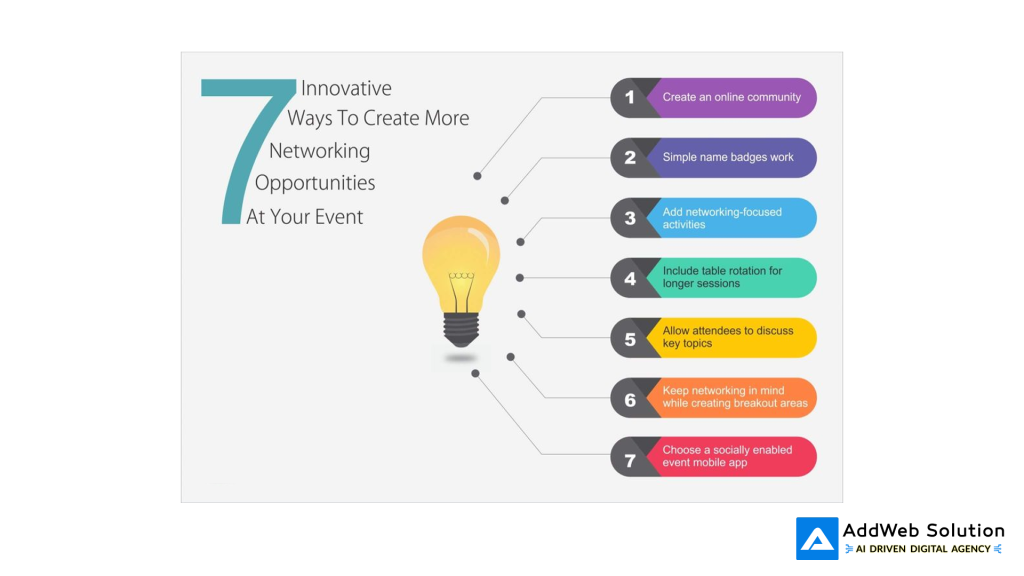
Seven innovative strategies to enhance networking opportunities at events, including online communities, name badges, breakout areas, and event apps
In 2025, web design isn’t just about great visuals or clean code – it’s about how fast you adapt, collaborate, and respond to clients.
Webflow’s tools like multi-user editing and real-time collaboration make that possible, but the real shift comes from how teams work together.
At a panel, agencies shared how collaboration changed hiring – they now look for designers who think in systems and developers who understand design.
That’s why AddWeb Solution focuses on more than building sites. They help teams adopt workflows that transform how digital work gets done.
The Numbers Behind Community-Driven Innovation
Let me ground this in data. Because feeling inspired is one thing. Seeing proof is another.
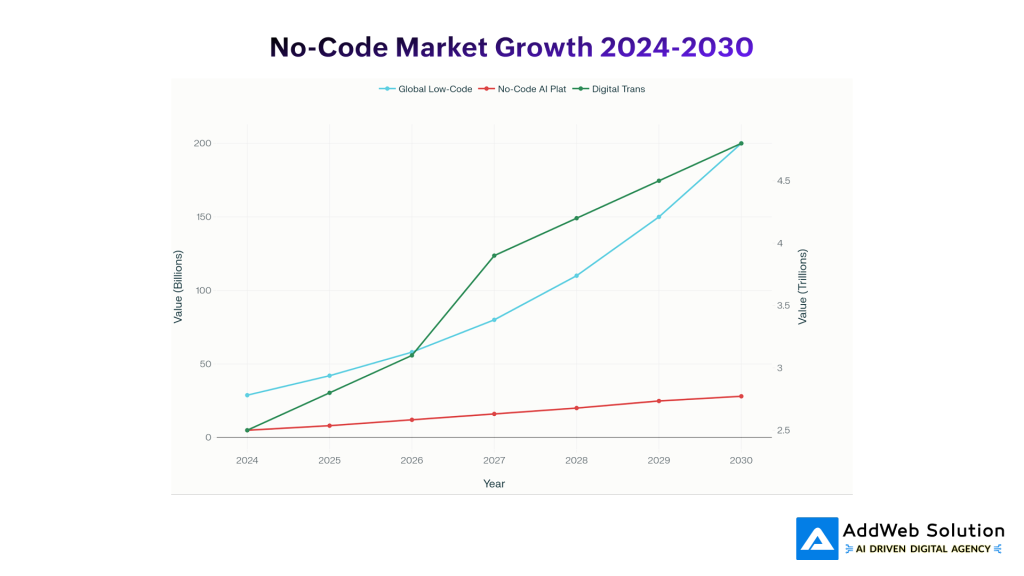
Market Growth Projection: No-Code and Digital Transformation (2024-2030)
What this chart shows is sustained organizational commitment to these new approaches. Companies aren’t dipping their toes in. They’re diving in.
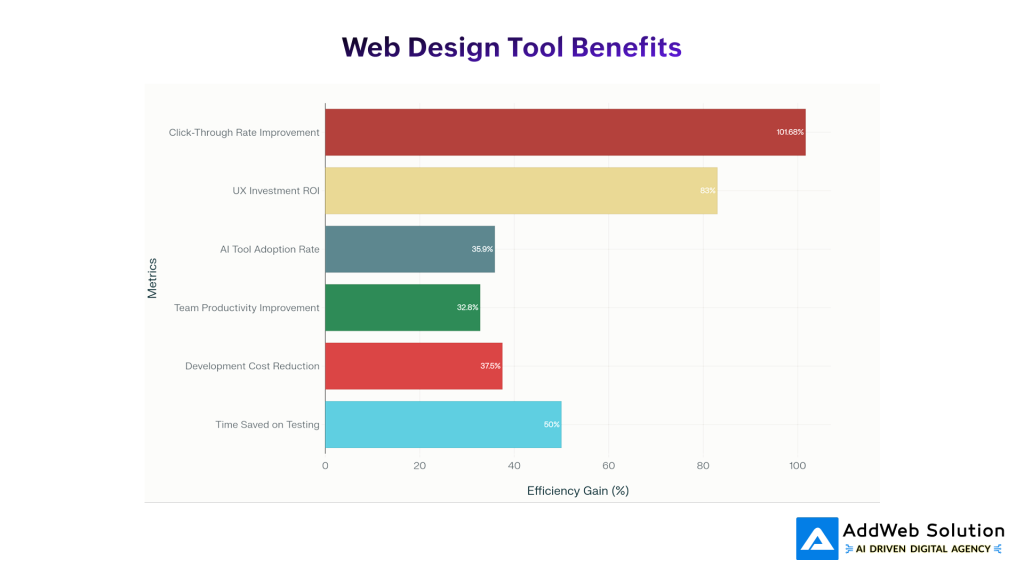
Productivity Metrics: Web Design Tools ROI and Efficiency Gains (2024-2025)
Here’s what these numbers really show:
Teams using no-code tools cut development costs by up to 45% and testing time by 60%. UX investments boost conversions by 83%.
But the bigger takeaway isn’t just efficiency—it’s a mindset shift in how we approach digital work.
Interesting Facts: What the Data Tells Us
Fact 1: The Rise of Citizen Developers
By 2026, 80% of low-code users will be outside traditional IT (Gartner). The future of web dev isn’t about hiring more coders – it’s about empowering creators. Webflow events unite these “citizen developers” with pros, sparking faster learning and collaboration.
Fact 2: AI Is Now Mainstream
93% of web designers have used AI for at least one task in the past three months. The conversation has shifted from “should we use AI?” to “how do we use it responsibly and effectively?”
Fact 3: Freelancing Is Evolving
60% of custom apps are now built outside IT teams, and 30% by people with little to no coding background. This is creating a new kind of freelancer – one who blends business insight with creative execution. Webflow sits right at the center of that shift.


What I’m Taking Into 2026
1. Speed Is the New Feature
With platforms like Webflow, building fast doesn’t mean cutting corners—it means focusing on what matters and improving constantly.
2. Collaboration Drives Results
I used to value solo focus. Now I see the real magic happens when diverse teams build together in real time.
3. The Entry Barrier Is Gone
If you understand users and systems, you can build. The tools and community have made professional web creation accessible to anyone.
4. Innovation Is About Possibility
AI code generation and real-time collaboration aren’t just features—they open the door for smaller, faster teams to solve bigger problems.
5. Community Is the Real Engine
Virtual is fine, but nothing matches the energy of people learning and building together. That’s where real innovation starts.
Ready to revolutionize your workflow? Get Connected with Our Webflow Experts.

Pooja Upadhyay
Director Of People Operations & Client Relations
Conclusion
Walking out of Webflow events, I wasn’t just inspired by new features – I was rethinking how we work and what’s possible in 2025.
The real innovation isn’t in the code. It’s in people connecting, sharing ideas, and solving problems together. Webflow events are just the space where that happens.
For AddWeb Solution, it’s not only about mastering platforms like Drupal or Webflow – it’s about helping teams work smarter, collaborate better, and think bigger.
If you’re in web design or digital strategy, go to a Webflow event. Not for the tools, but for the mindset shift. The next big idea might come from a conversation in the hallway.
Source URLs
- https://webflow.com/webflowconf
- https://www.cmswire.com/information-management/what-does-webflows-21b-valuation-tell-us-about-the-nocode-market/
- https://research.contrary.com/company/webflow
- https://research.aimultiple.com/low-code-statistics/
- https://quixy.com/blog/no-code-low-code-citizen-development-statistics-facts/
- https://www.hostinger.com/in/tutorials/web-design-statistics
- https://www.oecd.org/en/publications/2019/03/measuring-the-digital-transformation_g1g9f08f.html
