


Introduction
A website used to be a sequence of expensive steps: discovery, design, copy, development, QA, deployment, and then the round of fixes that always seemed to arrive after launch.
Webflow’s AI Site Builder compresses the earliest part of that chain by creating a site foundation from a short prompt, then letting teams refine it inside Webflow instead of rebuilding from zero.
That matters because the biggest cost in web development is rarely just code. It is coordination, revisions, rework, and the slow drip of manual tasks that pile up across projects. When AI can handle the first draft, teams can spend more time on architecture, conversion, and brand nuance.
Why economics shift
The economics change in three places: time-to-first-version, labor allocation, and iteration speed. Webflow says the AI site builder can go from a few business details to theme generation, then into editing and launch, which removes a chunk of the “blank canvas” phase.
For agencies, that often means fewer billable hours on repetitive setup and more hours on premium work like UX refinement, CMS structuring, and performance tuning. That is not a loss if pricing is positioned correctly; it is a margin opportunity if the team can deliver more value per project.

What Webflow AI does
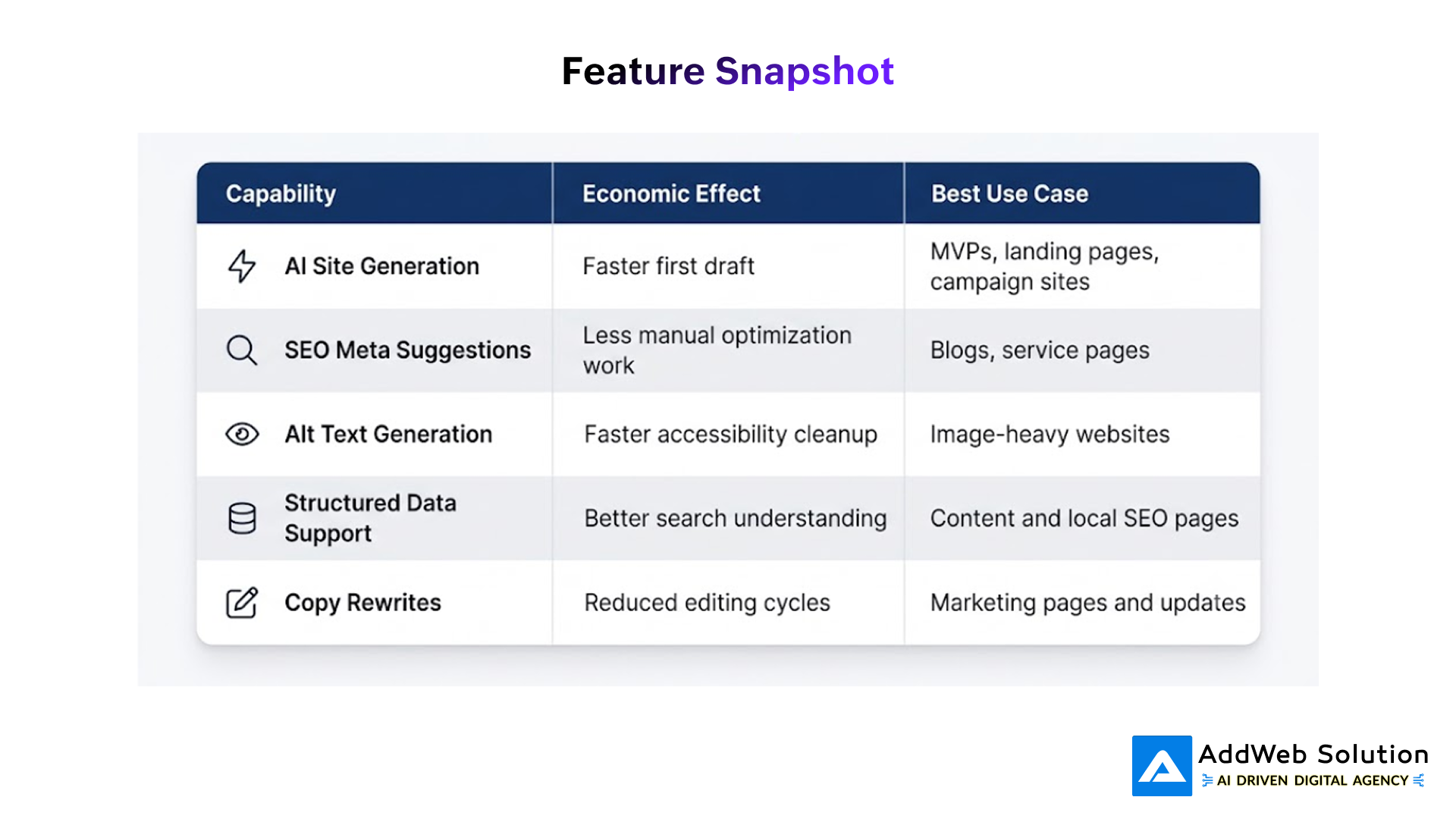
Webflow’s AI Site Builder works as part of its AI stack and can generate site themes from a few details, then let users customize layout, colors, fonts, and buttons before refining with Webflow AI Assistant. Webflow also highlights AI use cases such as generating SEO meta tags, alt text, translated content, structured data, and copy rewrites inside the platform.
That combination is important because it moves AI from “content helper” to “workflow helper.” In practice, it can reduce the number of handoffs between marketing, design, and development teams, especially for launch-focused sites and content-heavy pages.


Pricing and tradeoffs
The “AI makes websites cheaper” story has a catch: hosting and publishing still cost money. Webflow’s pricing page states that users can start for free and add a paid plan later to unlock premium hosting, design, and collaboration features, while custom-domain publishing depends on paid plans.
Independent pricing breakdowns also note that basic paid plans start at entry-level monthly pricing, while CMS and business tiers increase as content and traffic needs grow.
So the real economic question is not whether AI makes a site free. It is whether AI reduces the total cost of delivery enough to offset platform fees, revision cycles, and team time. For many agencies, the answer is yes, especially on recurring marketing projects where speed and consistency matter more than deep custom engineering.

Adoption and growth
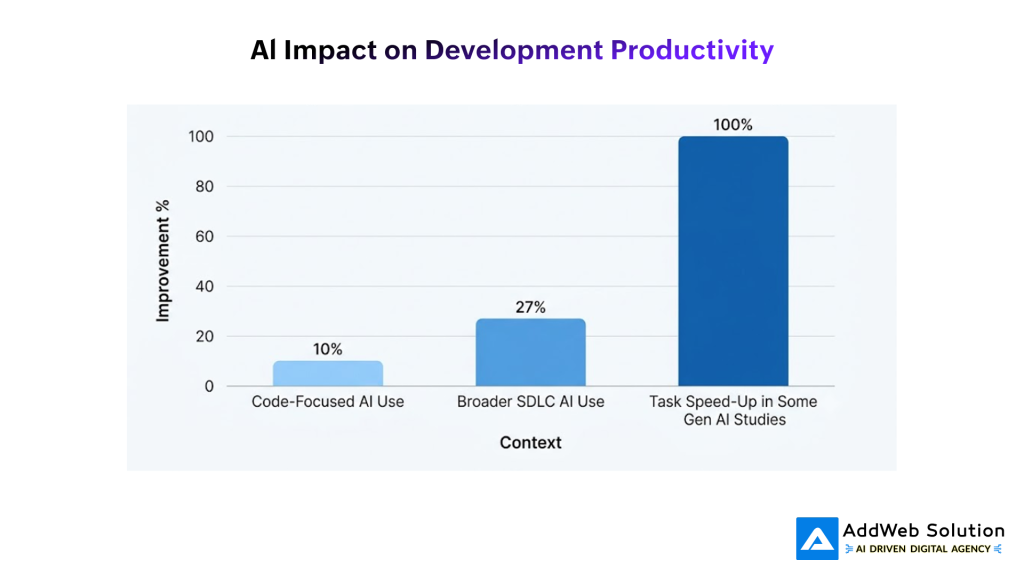
The bigger story is industry-wide. McKinsey reports that software developers can complete tasks up to twice as fast with generative AI in some contexts, and also says AI adoption is continuing to rise across businesses.
Gartner-linked reporting also suggests that AI across the software development lifecycle could eventually produce 25% to 30% productivity gains when used beyond coding alone.
That lines up neatly with what Webflow is doing. If AI is used only to generate a page shell, the value is limited. If it is used across SEO, content, localization, testing, and site iteration, then it starts to change team capacity in a way finance leaders notice.
Real-world lens
Webflow’s own case-study page shows it is used by enterprises, agencies, and businesses of different sizes, which matters because AI tooling has the most value when it is embedded into real production workflows.
Webflow’s update on the evolved AI site builder also says it can create multi-page sites with structure, styles, and animations that continue seamlessly into production workflows.
From an agency perspective, this is the part that changes pricing conversations. Instead of charging only for “building pages,” teams can package strategy, conversion tuning, content systems, accessibility, and ongoing optimization around a faster build engine.
Conclusion
Webflow’s AI Site Builder is changing web development economics by reducing the cost of starting, speeding up the path to a publishable draft, and freeing teams from repetitive setup work.
The platforms that win in this new phase will not just be the fastest to generate a page; they will be the ones that let teams turn AI speed into better strategy, stronger conversion, and cleaner execution.
For agencies, that means the selling point is no longer “we can build it.” It is “we can launch faster, iterate smarter, and spend the saved time where it actually grows the business,” which is exactly the kind of value AddWeb Solution is built to deliver.
Transform your website development workflow with AI and expert implementation. Talk to AddWeb Solution about your next Webflow project today.

Pooja Upadhyay
Director Of People Operations & Client Relations
Source URL
https://webflow.com/ai-site-builder
https://webflow.com/updates/ai-site-builde
